

Audio By Carbonatix
A new scientific study has found excessively high levels of arsenic and mercury in fish from Ghana’s Keta Lagoon, raising serious concerns about public health, particularly for children, who are most vulnerable to toxic exposure.
The recent study by Peer-review, a scientific work by researchers and evaluated by other experts in the same field, has revealed startling levels of arsenic and mercury in the Keta Lagoon.
The study, published in ‘Scientific Reports,’ recently examined twelve fish samples collected during the minor rainy season from various points in the lagoon.
The results revealed an alarming 75 per cent of the samples containing arsenic levels above the World Health Organisation (WHO) safety threshold, while mercury levels exceeded WHO limits in all twelve samples.
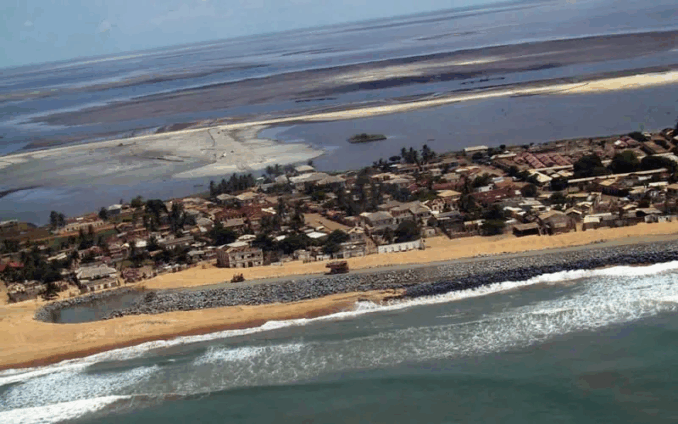
The Keta Lagoon, situated in southeastern Ghana, is a sandbar-separated coastal lagoon, whose “closed” nature makes it especially prone to the accumulation of pollutants.
Its ecosystem supports local communities, who depend heavily on fishing for food and livelihood, putting residents at significant risk of exposure to harmful contaminants.
The researchers deployed rigorous laboratory procedures to ensure the accuracy of their analysis, including advanced techniques such as Inductively Coupled Plasma Mass Spectrometry and atomic absorption spectrometry methodology.
The study’s statistical analysis, according to Dr Richard Tsiwah Cobbinah, Department of Chemistry, Kwame Nkrumah University of Science and Technology (KNUST) and Lead investigator, showed significant differences in contamination levels among sampling sites, suggesting varied pollution sources across the lagoon, with correlation data also pointing to industrial and agricultural runoff as likely contributors.
“The health risk assessments painted a grim picture. According to the study with adults, hazard index (HI) values were well above safe levels at 14.5, while for children, the HI soared to 44.1,” he added.
Cancer risk assessments confirmed that all metals except cadmium posed long-term cancer risks for children, with arsenic, mercury, and chromium being of highest concern. Non-carcinogenic risk was also elevated, particularly for children, whose target hazard quotient (THQ) values were far beyond the acceptable limit.
The findings underscore the urgent need for environmental regulation, pollution control, and community education. While the study was limited by its small sample size and seasonal scope, it highlights a clear and present danger that calls for immediate government action.
The Researchers recommend expanding the scope of future studies to include a broader dataset across seasons and locations, and stress the need for sustainable lagoon management and stricter enforcement against illegal dumping and runoff.
Until then, they urge caution in the consumption of fish from Keta Lagoon, especially by children and pregnant women.
The findings have sparked fear and panic about the potential health risks associated with consuming fish and other seafood from the Keta lagoon, which may be contaminated.
Other information gathered from the Environmental Protection Agency indicated that arsenic is a naturally occurring element in the earth’s crust that could be found in the soil, water, food, and air, and be a carcinogen could cause discolouration and lesions, cancer of the skin, bladder, lung, neurological problems, and cardiovascular diseases.
Arsenic and mercury could also have serious health implications on humans, especially for vulnerable populations such as pregnant women, children, elderly individuals, and people with pre-existing medical conditions, among others.
Mr. Etsey Gago, a fisherman at Keta, told the GNA that the high levels of arsenic and mercury found in the Keta Lagoon were not just a concerned for human health but also the fish and other aquatic life in the area, while the toxic substances could accumulate in the fishes and other aquatic organisms to cause a range of health problems and potentially death.
He said the findings highlighted the need for urgent action to address the pollution in the Keta Lagoon and urged the government and other stakeholders to work together to identify the sources of the contamination and develop effective strategies to combat the levels of arsenic and mercury in the lagoon.
“The health risks associated with consuming fish and other seafood from the lagoon are a major concern. The government and health officials must take steps to educate the public about the potential risks and provide guidance on safe consumption practices.”
He said the lagoon is an important ecosystem that supports a wide range of plant and animal life, and the pollution was likely to have a significant impact on the environment and urged fisherfolks on the lagoon to be more vigilant in their activities.
Latest Stories
-
Guidelines, regulations of cryptocurrency in Ghana fall short of comprehensive oversight – IMF
32 minutes -
COCOBOD’S GH¢16.3bn SPV: Real progress toward a sustainable cocoa sector
53 minutes -
Ghana lose Morocco friendly as Atlas Lions turn to Mali
3 hours -
2026/2027 GPL: Kelvin Nkrumah strike sends Medeama top of league table
3 hours -
Emmanuel City crowned champions of maiden Global Game Scouting Tournament
3 hours -
Thomas Partey loses father Jacob Teye Partey
3 hours -
Martin Kpebu explains when EOCO can arrest Manhyia South MP after securing court warrant
4 hours -
EOCO’s reasons for seeking Manhyia South MP arrest warrant not justified – Kpebu
4 hours -
MTN Ghana warns SMEs against sharing PINs amid digital fraud risks
4 hours -
Yendi nursing students warn restricted access to skills lab could affect their training
4 hours -
Minority awaits formal notice of arrest warrant for Manhyia South MP – Annoh-Dompreh
4 hours -
LTIF announces 2026 Pan-African edition in Accra from October 6-7
4 hours -
Mfantsipim needs broader funding partnerships to bridge infrastructure gap – Prof Baiden
4 hours -
MP status must not shield anyone from law enforcement – Kwakye Ofosu
4 hours -
EOCO had tactical team ready to arrest Baffour Awuah – Felix Kwakye Ofosu
4 hours