

Audio By Carbonatix
Gold’s role in the global economy and protecting the financial security of nations cannot be overemphasized. It is a necessity to hedge declining currencies globally.
Mining is an important economic activity in Ghana, contributing significantly to the country's export earnings, revenues, and employment and about 6% of GDP.
The Minerals Commission Report estimates that artisanal and small-scale mining sector employs about 1,000,000 people.
According to the Ghana Statistical Service, about 2.4% of the labour force has been employed in the mining industry for the past two decades.
However, the substantial rise in the country’s unemployment rate often leads many young people to engage in illegal small-scale gold mining otherwise known as ‘Galamsey’, as a swift and effective method to support themselves financially.
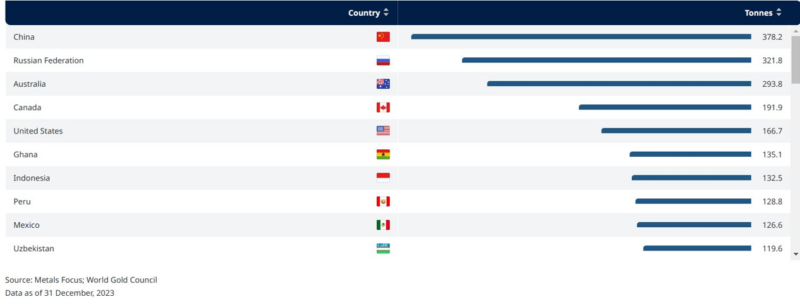
By December 2023, Ghana had produced 135.1T of gold, ranked 6th global gold producer and Africa’s largest gold producer by the World Gold Council. Figure 1.0 shows that China was the world’s leading gold producer (378.2T) followed by Russia (321.8T) by end of 2023.
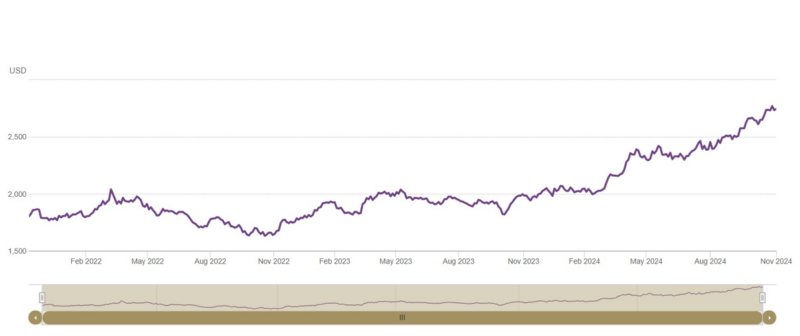
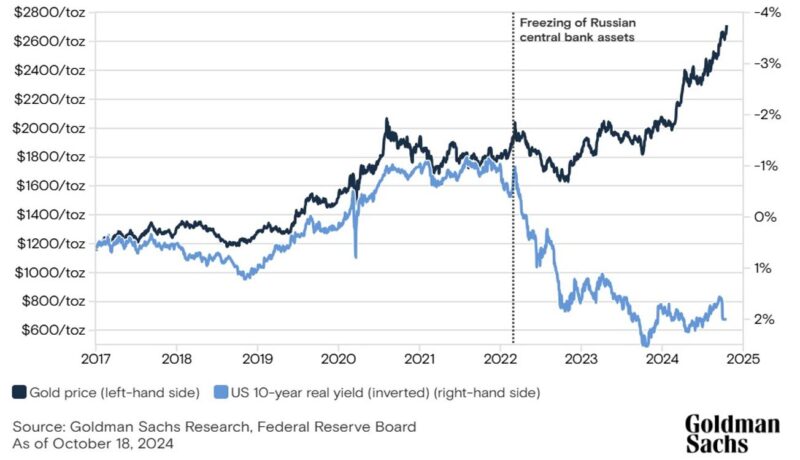
As gold is projected to hit an all-time high of $3,000 per troy ounce by the end of 2025, ‘Galamsey’ activities have also increased.
By mid-2024, only 36% of Ghana’s gold valued at $1.7billion was from legal small-scale mines. Figures 2.0 and 2.1 show projections of gold pricing by 2025.
Mercury is pre-dominantly used in ‘Galamsey’ together with other pollutants contaminating over 60% of Ghana’s water resources according to the Ghana Water Resources Commission.
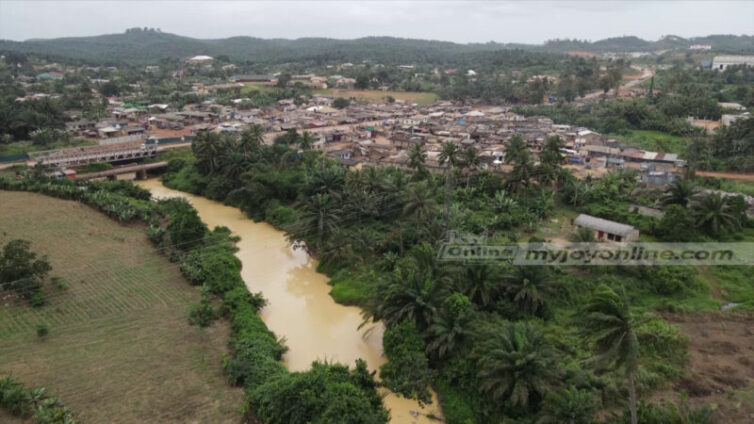
In August this year, the Ghana Water Company Limited, Ghana’s main potable water supplier added that, it would be unable to supply Cape Coast (Central Region) and other neighboring communities with adequate drinking water due to the relentless heavy metals pollution of the Pra River.
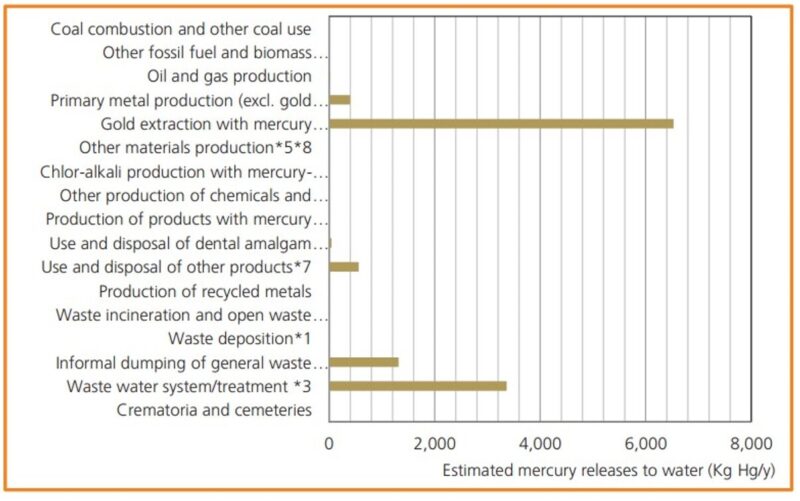
It recorded an average turbidity of 14,000NTU instead of 2,000NTU which is desired for adequate treatment. Figure 3.0 reveals that an average of 6500kg of mercury is released into water bodies per year.
Organic methylmercury causes impairments in neurological development in foetuses and young children and of damaging the central nervous system of adults.
Statistics from the Ghana Health Service indicate a continual rise in birth mortality rates, stillbirths, and other birth-related complications in regions impacted by illegal mining.
Also, people are most likely to be exposed to harmful quantities of mercury through consumption of fish contaminated with methylmercury.
According to the Responsible Gold Mining Principles, the use of mercury in the extraction of gold in gold processing facilities has been banned as it is in support of the Minamata Convention.
Ghana became a signatory to this in 2014 with ratification in 2017 as it had pre-existing and malfunctioning laws criminalizing its import, possession or buying and selling.
Promoting sustainable and responsible mining practices is by far, the most feasible way to address the impacts of this problem. Government incentives and support can facilitate this transition for those currently engaged in ‘Galamsey’ as standards of practice as by the European Union (EU).
The use of mercury and cyanide in ore processing is regulated by specific requirements enacted by the EU to ensure safe use and to prevent risks for human health and the environment.
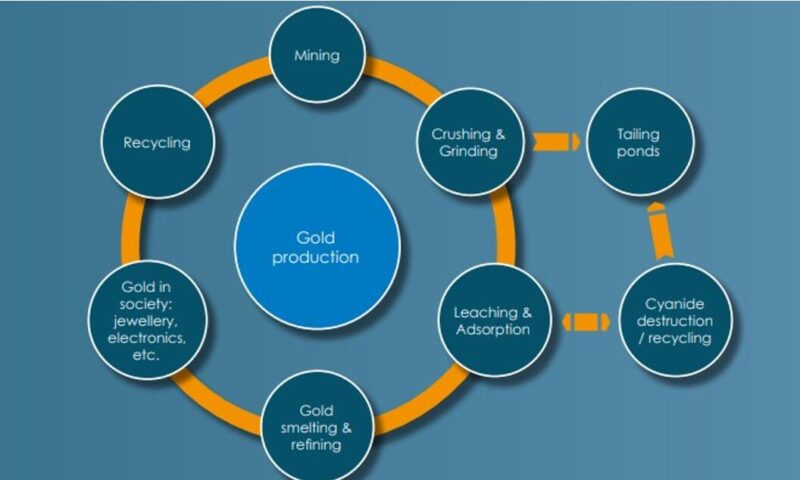
According to the Mining Waste Directive and its accompanying Reference Document, the combination of cyanide-based gold recovery with subsequent cyanide destruction is deemed a Best Available Technique (BAT). They require that dilute solutions of mercury/cyanide be used to recover gold from the ore in a closed-loop process as described in Figure 4.0.
Banning mercury/cyanide use in mining at EU level has been widely discussed but largely unjustified due to the global economic decline to result out of it as gold may have to be refined outside of the EU where ideal standards exist.
Additionally, despite significant investments made to find cheaper technologies which could replace cyanide, suitable, efficient and more environmentally friendly alternatives simply do not exist on an industrial scale at this time.
Current efforts which will have to be made include developing a more comprehensive regulatory framework that enhances the capacity of the Minerals Commission and other relevant agencies to effectively monitor and manage small-scale mining.
This includes improving licensing processes, enforcement mechanisms, and inter-agency coordination.
Establishing a system for regular review and adaptation of mining policies based on emerging challenges, stakeholder feedback on mercury use in mining and technological advancements will be essential to forge a resilient approach to responsible and sustainable mining.
This will help to address gaps and enhance responsiveness to illegal mining activities.
Latest Stories
-
NPP demands sack of officials over Ghana’s cocaine busts, accuses Mahama of weak leadership
32 seconds -
Fully mobilise back to Dome-Kitase road this week – Roads Minister directs First Sky Construction
4 minutes -
2027 AFCONQ: Baba Rahman latest to pull out of Black Stars squad
14 minutes -
CPP renews call for return of properties seized after Nkrumah’s overthrow
17 minutes -
Education Minister challenges universities to align programmes with job market needs
23 minutes -
Adequate provisions made for feeding in Senior High Schools —Education Minister
25 minutes -
Demonstrations don’t start road projects; resources do – Roads Minister tells Dome-Kitase residents
25 minutes -
Who is Ghana Jollof? The woman behind the viral TikTok account
32 minutes -
Sekou Nkrumah calls for democratic socialism and clear ideology to revive CPP
43 minutes -
World Vision Ghana, Somoco Ghana partner to improve healthcare access in Agortime
44 minutes -
Adopt scientific formula for setting transport fares – COPEC urges operators
59 minutes -
What Is Wrong With Us: The world must be ashamed that childhood has become so dangerous for so many children
59 minutes -
Extractive revenue volatility threatens GH₵30bn expressway dream; contingency measures needed – CIPAC
1 hour -
Agribusinesses must invest across entire value chain, not just land and machinery – Gladys Sampson
1 hour -
BHOBU Games marks 10th edition in grand style
1 hour