

Audio By Carbonatix
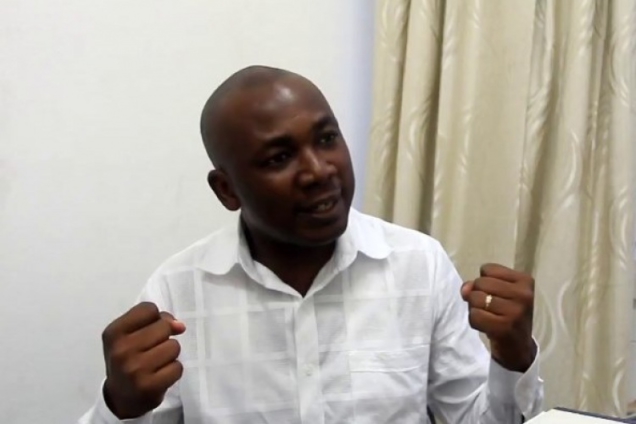
Associate Professor of Finance at the University of Ghana Business School, Professor Godfred Bokpin says Government has been insensitive to Ghanaians in efforts to revive the economy.
The Economist said the Akufo-Addo-led administration, despite its advocacy for burden-sharing has not done much in that regard.
He explained that the only reason there are resentments and disapproval of the debt exchange programme is due to government’s failure to demonstrate equity, fairness and burden-sharing.
Prof. Bokpin noted that in the current difficult times, the government’s call for burden-sharing should be exhibited through cutting down expenditure and the size of government.
“This is a government that has preached burden-sharing more in words and practiced less in reality and that is what makes it painful. I believe that the reactions we are getting from organised labour and different occupational groups and a lot of stakeholders that will be affected by the debt exchange, are actually a resentment for the government’s insensitivity.
“Government has done very minimum in burden-sharing. In times like this the low-hanging fruits essentially are cutting down the size of government, merging some of the ministries because money is not flowing,” he said on Top Story, Monday.
Government has announced a ten-day deadline for Domestic bondholders to exchange their investment instruments to the new modalities set by government under the Domestic Debt Exchange programme.
Reacting to this, Prof. Bokpin said government’s decision is a harsh one. He argued that the deadline given to the bondholders will not provide enough time for the financial institutions to be engaged in internal processes before subscribing.
“The approach I see the government is using is more or less through regulatory cohesion to bring participating financial institutions into compliance. Even if you look at the timelines that government has given, it does not even allow for internal processes and governance processes within the respective participating financial institutions to be respected.
“This is a significant event and some may even require shareholder and board approval and all of that and so how do you just put pressure on heads of institutions to commit their institutions to something like this,” he queried.
A number of key interest groups have opposed the debt exchange programme with concerns that it will affect their investments.
The Chamber of Corporate Trustees of Ghana, the Trades Union Congress, the Ghana Medical Association, the Ghana National Association of Teachers and other groups have all rejected the programme.
Latest Stories
-
Kenya confirms second Ebola case – a relative of the first victim
1 hour -
Hidden video recording device found in cabin of Australian navy ship
1 hour -
Saudi Arabia overturns death sentence for man over Facebook comment, Sri Lanka says
2 hours -
Burnham says he wants to ‘repair bridges’ between Ukraine and US
2 hours -
Pope walking and recovering ‘as expected’ after surgery, doctors say
2 hours -
Total expenditure as of July 2026 amounted to GH¢147.07bn, 16% below target – BoG
3 hours -
Total revenue & grants stood at GH¢144.5bn in July 2026, slightly below target – BoG
4 hours -
Ghana Sports Fund urges sports federations to submit credible proposals and measurable targets
4 hours -
Sally Rooney books withdrawn in UK over Palestine Action support
4 hours -
Musk says US government may be behind slowdown of Ukraine drone speeds
4 hours -
Picking Chief Justices nearing retirement could give Mahama immense power – Bentil
4 hours -
Netflix to shed 1,000 jobs in steepest cuts since 2022
5 hours -
Burnham had two hospitality dinners with Man City chairman, deleted records show
5 hours -
Semenyo ‘froze’ after alleged racist abuse, court told
5 hours -
‘Shameless’ – Mourinho critical of Vinicius Jr ban timing
5 hours