

Audio By Carbonatix
Japanese motor industry giants Toyota and Honda say they have agreed to give their workers in the country the biggest pay rises in decades.
They are the latest firms in the world's third-largest economy to increase wages as prices jump.
Official figures published last month showed Japan's rate of inflation was at its highest level in over 40 years.
That has put pressure on businesses and authorities to help people as their spending power shrinks.
Each year Japanese firms typically hold pay talks with unions for weeks before announcing their decisions around the middle of March.
The car makers have not said why this year's announcements were made earlier than usual.
On Wednesday, Toyota said it will meet union demands for pay and bonuses, with wages increasing by the most in 20 years.
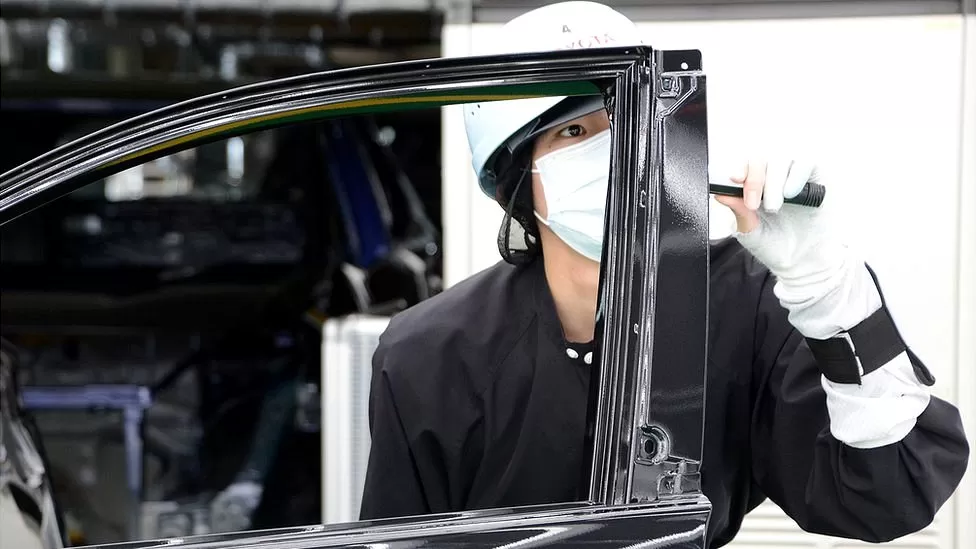
Toyota's incoming president Koji Sato said that he hoped the move would have a positive impact across Japan's motor industry and "lead to frank discussions between labour and management at each company."
The company declined to provide further details when approached by the BBC.
Meanwhile, rival car maker Honda told the BBC that it had "fully answered" union requests for wage increases and bonuses.
The company said it will raise salaries by 5%, marking the biggest increase since 1990 and above Japan's rate of inflation.
A Honda spokesperson said the extra money will largely be distributed to younger employees as starting salaries are boosted.
"Despite the severe business environment, management has a strong desire to create an environment in which all employees can... push forward with their work with a sense of urgency," the spokesperson added.
Earlier this year, Japan's prime minister Fumio Kishida called on firms to raise wages to help people struggling with rising prices.
In January, the owner of fashion chain Uniqlo, Fast Retailing, said it would raise the pay of staff in its home country by up to 40%.
The company said the new pay policy would apply to full-time employees at its headquarters and company stores in Japan from the beginning of March.
For decades both prices and wage growth in Japan had been stagnant.
In recent months inflation around the world jumped as countries eased pandemic restrictions and the war in Ukraine pushed up energy prices.
In December, Japan's core consumer prices rose by 4% from a year earlier, double the central bank's target level and the highest rate in 41 years.
Latest Stories
-
Reparatory justice: Mahama announces high-level UN side event in September
2 minutes -
Bosome Freho Assembly invests first tranche Common Fund in water and education projects for 19 rural communities
2 minutes -
YIPs Ghana honours 5 outstanding students at 2026 Tertiary Achievers Awards
2 minutes -
NSMQ 2026: TAMASCO triumphs over St. Hubert and Labone to clinch ticket to the semi-finals
2 minutes -
US and Iran trade strikes for first time in weeks
4 minutes -
Non-interest banking will not replace conventional banking – Dr Johnson Asiama
6 minutes -
Non-interest banking products available to everyone, not just Muslims – Asiama
10 minutes -
Dolly Parton laid to rest alongside husband in Nashville
11 minutes -
Accra Mall celebrates Legends Reimagined with Weekend Vibes this September
12 minutes -
Tibule Advertising marks ‘Gong Gong Awards’ debut with a win for indomie
18 minutes -
Nurturing market-ready solutions that create jobs: KIC AgriTech Challenge Pro teams first pitch commenced
21 minutes -
Teacher unions to call off planned strike after engagement with Education Minister
27 minutes -
EPA more than triples accumulated fund to GH¢375m in a single year under Prof. Browne Klutse – SIGA
34 minutes -
Imaging professionals trained on Ghana’s first paediatric cancer imaging protocol
40 minutes -
‘Bawumia will become President whether NDC likes it or not’ – Amin Adam
41 minutes