


Audio By Carbonatix
Nigeria’s next president will have a lot on his plate. In the weeks leading up to tomorrow’s election, Africa’s most populous country has seen acute shortages of both gasoline and hard currency, leading to chaotic scenes at gas stations and banks across the nation.
It was the culmination of eight years in which Nigerians have, by nearly every metric, become poorer and less safe.
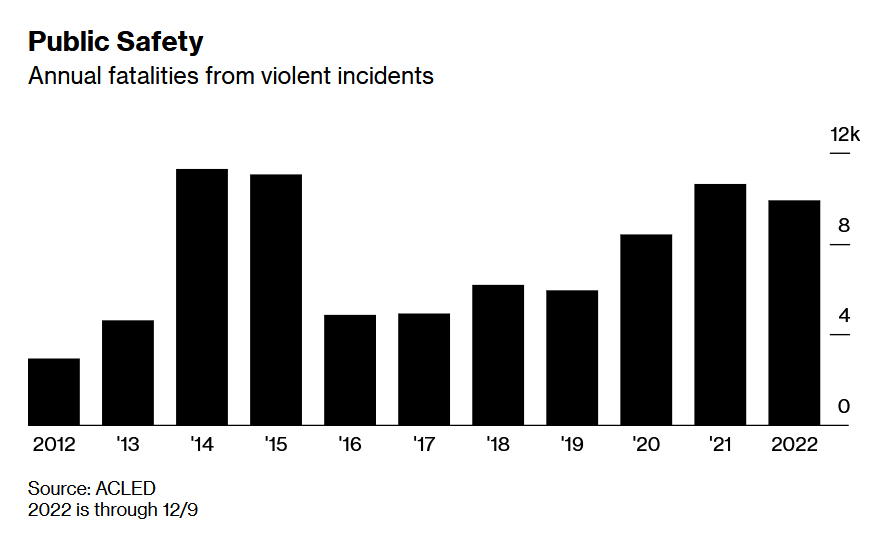
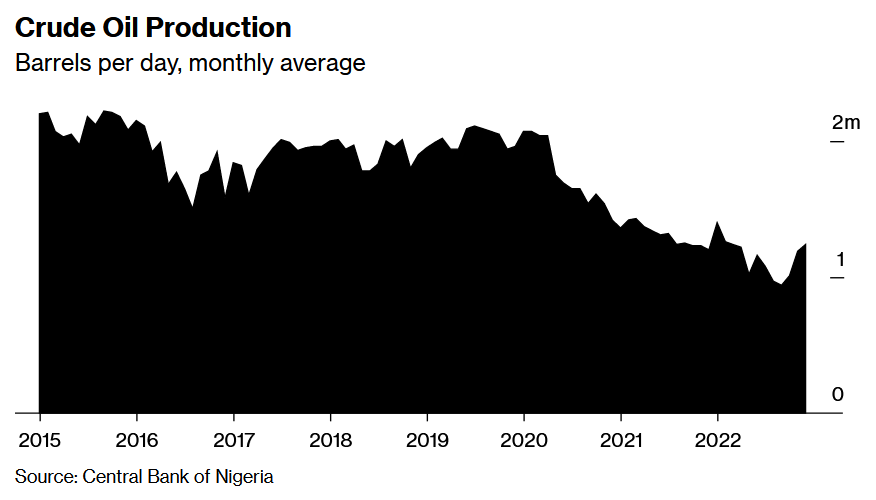
Criminality and violence has spread throughout the country, driven by Nigeria’s stark economic deterioration over the course of President Muhammadu Buhari’s time in office. Production of oil, the lifeblood of the economy, fell to a multidecade low last year; inflation hit a 17-year high; and economic growth slumped, averaging just 1.1% annually from 2015 to 2021.
The three candidates vying to replace Buhari have all promised to fix the economy and sort out insecurity. But the challenge is immense.
At least half of Nigerians are under- or unemployed, a figure that rises to two-thirds for young people, who make up the majority of the population.
Roughly two-thirds of Nigerians — 133 million people — now live in multi-dimensional poverty, according to government data released in November, meaning they lack access to basic necessities including water, food, healthcare and shelter.

The lack of economic prospects is fueling a brain drain. Approvals of visa applications to the UK, Nigeria’s onetime colonial ruler, soared last year.

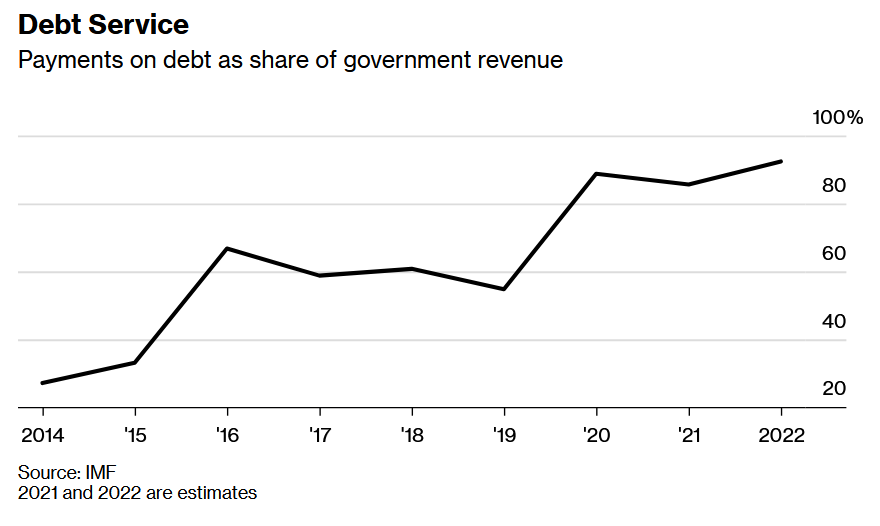
The Buhari administration has built or completed some major infrastructure projects. But it has not done enough to boost revenue, and borrowing to fund construction of highways and railways and to cover budget deficits has sent debt service costs skyrocketing.
The International Monetary Fund estimates that interest payments will consume 111% of federal government revenue this year.
Ruling party candidate Bola Tinubu, opposition party nominee Atiku Abubakar and surprise third-party contender Peter Obi have all promised to enact crucial reforms that the World Bank and International Monetary Fund have long clamored for, including cutting a popular gasoline subsidy that cost the country more than half what it made pumping crude last year.
But those policies come at a political cost, and Nigerians are already disillusioned with the government. Righting the ship will not be easy.
Latest Stories
-
Two Scots charged in Australia over 107kg ketamine raids
9 minutes -
Rapper Yung Filly tells trial ‘vibes were good’ with woman who accuses him of rape
18 minutes -
Historic first as Archbishop of Canterbury meets Mahama on maiden Africa visit
27 minutes -
170 parcels of suspected indian hemp seized in Tamale; 2 arrested
44 minutes -
FAA delaying flights at New York, Philadelphia airports
55 minutes -
Philadelphia 76ers confirm signing of NBA superstar LeBron James
1 hour -
A Nigerian soldier is arrested for tipping off criminals – but does it go deeper?
1 hour -
US singer D4vd to go on trial for murder in death of 14-year-old
1 hour -
Johnson & Johnson offers up to $5.5bn to settle baby powder lawsuits
2 hours -
Gold slips as firm dollar weighs; focus turns to Fed meeting
2 hours -
Meta disregarded its own research on teen harm, Tennessee tells jury
2 hours -
Nigeria tells South Africa to curb xenophobic attacks on migrants, questions state response
2 hours -
Ghana faces a deadly gap between rising heat and its slow-growing electricity supply – Report
3 hours -
Climate change projected to cause more AC adoption for the wealthy and shorter lives for the poor – Report
3 hours -
Wildfire now nine miles from French city of Bordeaux, mayor warns
4 hours