

Audio By Carbonatix
A new report published by the Danish Embassy has shown that the value of food losses and waste in Ghana is estimated at $1.9 billion per annum.
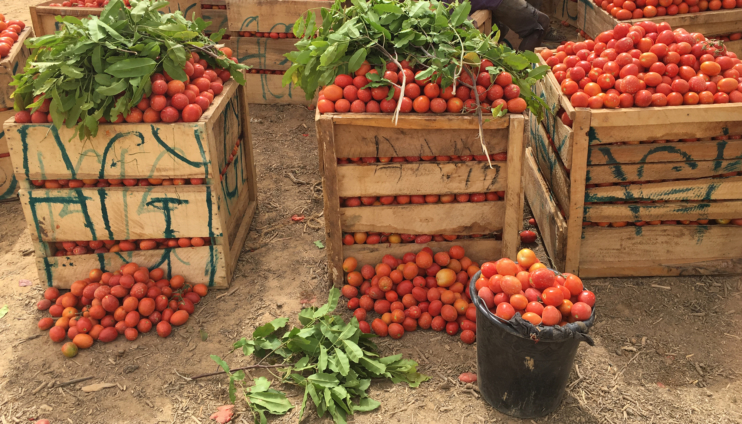
According to the report, post-harvest losses of tomato, yam, mango, citrus and chilies accounted for the loss.
Speaking on the sidelines of a seminar organised by the embassy on food loss, Lead Researcher of the study, Dan Acquaye revealed that yam topped the chart with $560 million per annum.
“After the research, we realised that if you take tomato, yam, mango, citrus, and chilies with the areas that we performed the analysis, the food losses was about $1.9 billion per annum”.
He pointed out that the commonest or highest is yam.
“We were surprised that the food loss of yam was over $560 million per annum”.
He added that the post-harvest loss of mango was about $300 million with tomatoes alone accounting for over $60 million per annum.
March 12 marks the day of Sustainable Development Goal 12.3, which aims to reduce food losses along production and supply chains.
Ahead of the day, the Embassy of Denmark organised a seminar to seek solutions from Danish and Ghanaian stakeholders, following the launch of a feasibility study for cold chain business and investment in Ghana by the Embassy.
Danish Ambassador to Ghana, Tom Norring emphasised the need to form partnerships in finding solutions to challenges facing the agric sector in Ghana.
“Denmark is actually traditionally a farming country, hence we’ve developed a lot of solutions of which some will be applicable here and others need to be adopted to be applicable in Ghana”.
"We have companies that developed solutions for food losses such as providing cold storage, cold chain among others. We want to bring in some Danish companies to match with some Ghanaian companies to form partnerships. We believe that these kinds of partnerships create real ownership on both sides,” he stated.
The report commissioned by the Danish Embassy on food loss and waste in Ghana is titled, “Feasibility Study for Cold Chain Business” which involves the transportation and distribution of temperature-sensitive products.
Latest Stories
-
Gauff’s flaw forgotten on winning US Open return
2 hours -
Birds stop play but Medvedev flies into third round
2 hours -
LA Clippers fined $30m by NBA over Leonard scandal
2 hours -
Uber to cut over 3,000 jobs in major global restructuring
2 hours -
Tiger Woods gets five-year driving ban after reckless driving plea
2 hours -
South African airline behind daring stadium stunt cancels next flyby
2 hours -
PURC urges ECG to address outages, metering delays
3 hours -
Police engage traders over alleged harassment, extortion on Aflao-Accra highway
3 hours -
Uber shuts operations in Nigeria and Uganda with immediate effect
3 hours -
Netherlands moves billions in gold to London in ‘crisis preparedness’ move
3 hours -
Legal vacation does not halt urgent court cases – Chief Justice
3 hours -
Keta residents react with mixed feelings to fresh fuel price hike
3 hours -
Managing Director on GH¢150,000 bail over five dud cheques
4 hours -
BOSTenergies reports strong 2025 performance, pays first-ever dividend to government
4 hours -
Carlos Queiroz reappointed as Black Stars head coach
5 hours