

Audio By Carbonatix
The Ghana Revenue Authority (GRA) has been urged to develop unique techniques to ensure tax compliance by the informal sector to prevent a reoccurrence of the current economic crisis.
Ghana’s informal sector, even though makes up about 60 percent of the workforce contributes less taxes to the economy.
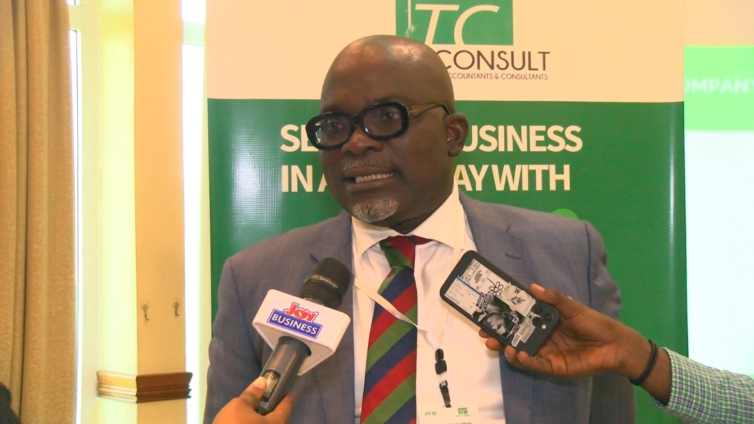
Speaking on the sides of a Public Financial Management (PFM) Seminar, Managing Partner of Trust Consult, Charles Mensah also urged the public to play their role as citizens by religiously filing their taxes.
“People should learn to pay taxes, people should learn to collect receipts. People do not know that every April, the following year, one needs to file and pay their tax”.
Using developed countries as an example Mr. Mensah said in advanced countries filing of taxes are a serious requirement for individuals and businesses that must not be breached.
“In other countries, citizens file their taxes religiously but here, people only file taxes when they need a service which needs documents indicating that they are tax compliant,” he said.
He warned that non-compliance will deny the country of the needed revenue required to develop the country.
“To prevent a recurrence of the current economic crisis, I think whatever findings are in the Public Financial Management report are implemented to the later”, he said.
He argued that there is the need to educate Ghanaians to be conscious of the collective wellbeing of the country through tax payment.
“I think there should be commitment across all board. Also, we need to look at the public good. The public good here means that all the services we enjoy must be funded but donor funding will not help us”.
Mr. Mensah maintained that Ghanaians must be reminded of the importance of generating revenue internally as opposed to going out to beg for aid.
“What we need is our own sources of funding; which is taxes. We need to implement a system where cars go to markets and other places to help people in the informal sector file their taxes,” he said.
Mr. Mensah indicated that if organisations operate in the light of public good, they will build the capacity of their account holders which will in turn, ensure proper accountability of funds.
“After listening to some spending officers and account holders, we realised that they needed a refresher course or training. We feel that things happen in institutions not because people have the intention of making it happen but people do not actually know the rules. So we organised this training to take them through the rules, the procurement act and the legislative instrument supporting the PFM act,” he stated.
His message to Public Financial managers was “make sure that whatever you do in the office, you’re doing it for the public good and therefore, do things right.”
Latest Stories
-
Today’s front pages: Wednesday, September 16, 2026
6 minutes -
Regulating establishment of EV charging stations: my thoughts
47 minutes -
Open Letter to the Chairperson and Members of the Constitution Review Implementation Committee – Preserving the People-Centred Character of Ghana’s Constitutional Reform Process
1 hour -
Catholic Bishops demand 20% quota for Catholics in mission schools
2 hours -
GES releases outstanding 2023 Capitation Grant arrears to basic schools
3 hours -
TikTok used to recruit Ghanaian Girls into sex trade in mining communities – Challenging Heights
3 hours -
Recurrent brouhaha over SHS school placement: Which way out of the quagmire?
3 hours -
Auditor-General must explain missing Local Gov’t, Transport ministries Covid spending – Davis Ansah Opoku
3 hours -
COVID Audit: PAC Vice Chair says ‘no arrests’ yet over alleged missing fumigation spending
3 hours -
Old farming practice is offering new hope for climate action in Zuuku
4 hours -
Auditor-General’s own audit objective raises questions over omission of Local Gov’t spending – Manasseh Awuni
4 hours -
Auditor-General reported GH¢96m, but Local Gov’t spent GH¢299m on fumigation – Manasseh Awuni
4 hours -
GH¢299m COVID fumigation spending audited but left out of report, says Manasseh Awuni
5 hours -
Telecel CEO Obo-Nai champions integrity in leadership
5 hours -
Novartis backs Ghana Medical Trust Fund, eyes partnership to expand specialist care
5 hours