

Audio By Carbonatix
El Nino is on the horizon, which can lead to severe heat waves and droughts in many countries, including India, and could take a $3 trillion toll on the global economy, new research published in the journal Science has warned.
El Nino, the band of warm ocean water that spans from South America to Asia triggering far-reaching weather changes, has persistently reduced country-level economic growth, attributing $4.1 trillion and $5.7 trillion in global income losses to the 1982-83 and 1997-98 events, respectively.
The 2023 El Nino is predicted to come at a time when sea-surface temperatures are at an all-time high, according to the research.
"The last major El Nino occurred in 2016 and made that year the hottest in recorded history. Global warming has only intensified in the seven years since. In addition, the world is coming out of an extended La Nina and the two phases can strengthen each other," the researchers wrote.
The US National Oceanic and Atmospheric Administration projects the chances of El Nino setting in by late summer as higher than 80 per cent.
"The deck is potentially stacked for a really big El Nino. Our results suggest that there will likely be a major economic toll that depresses economic growth in tropical countries for potentially up to a decade," said Christopher Callahan, a doctoral candidate at Dartmouth College in the US.
The result could be trillions of dollars in productivity lost globally relative to a world without this El Nino.
Justin Mankin, an assistant professor of geography, and Callahan project that global economic losses for the 21st century will amount to $84 trillion as climate change potentially amplifies the frequency and strength of El Nino -- even if current pledges by world leaders to reduce carbon emissions come to fruition.
The researchers estimate that the El Nino predicted for 2023 alone could hold the global economy back by as much as $3 trillion by 2029.
The findings, Mankin said, highlight a critical and understudied factor shaping the economic toll of global warming -- year-to-year variations in climate conditions.
"Our welfare is affected by our global economy, and our global economy is tied to the climate," Mankin said. "When you ask how costly climate change is, you can start by asking how costly climate variation is."
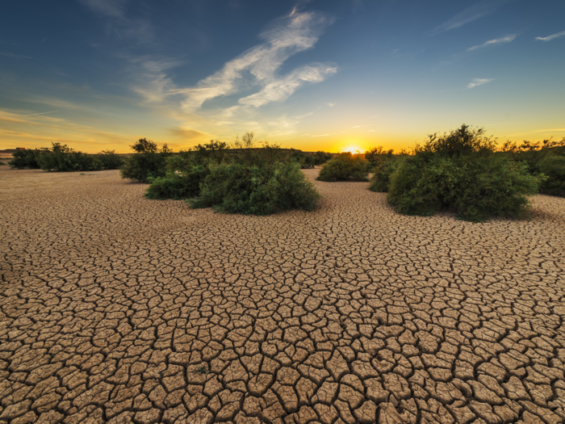
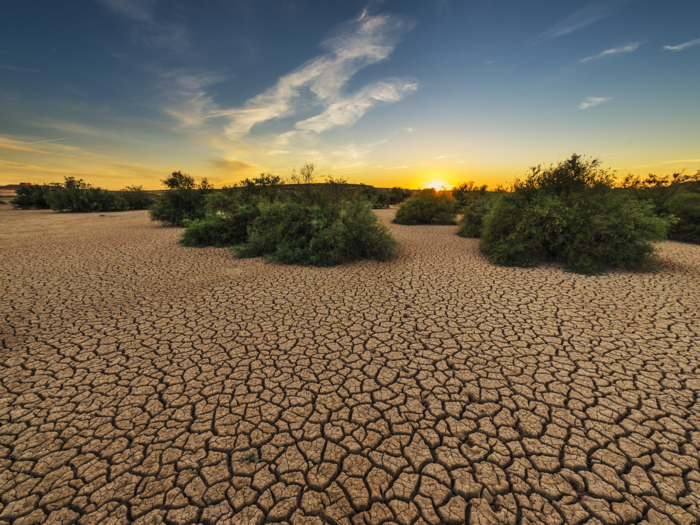
In the years it strikes, El Nino results in devastating floods, crop-killing droughts, plummeting fish populations, and an uptick in tropical diseases.
Latest Stories
-
CLOGSAG’s Bampoe Addo was a formidable voice for workers – FWSC eulogises
6 minutes -
Galamsey destroys over 100 acres of farmland at Akyem Atobriso
10 minutes -
GRIDCo completes tower replacement on Tema-Achimota transmission line
29 minutes -
Republic Bank-JoyNews Habitat Fair Mini Clinic ends on a high note at Achimota Retail Centre
33 minutes -
7-month-old baby found dead in a drain at Obuasi Old Estate
2 hours -
Tunisia coast guard recovers eight bodies of migrants whose boat sank
2 hours -
One man diagnosed with prostate cancer in the UK ‘every eight minutes’
2 hours -
We couldn’t afford prepaid credit after I lost 2012 election – Obuobia Darko
2 hours -
NSMQ 2026: Kpando SHS brush aside Abor, Jukwa to storm One-Eighth stage with 32 point gap
3 hours -
Duncan Amoah: Gov’t should create conditions for 24-hour economy, not build markets
3 hours -
JoyNews-Republic Bank Habitat Fair finale turns homeownership dreams into real possibilities
4 hours -
Bamiri chief commissions KG block, guest house to boost education and revenue
4 hours -
NSMQ 2026: Yaa Asantewaa Girls’ going ‘beck’ to Tanoso after Bishop Herman deals them early exit
4 hours -
Data Protection Commission acquires two vehicles to strengthen data protection enforcement
5 hours -
NSMQ 2026: Holy Child School storms back from two-year NSMQ absence to book One-Eighth ticket
6 hours