

Audio By Carbonatix
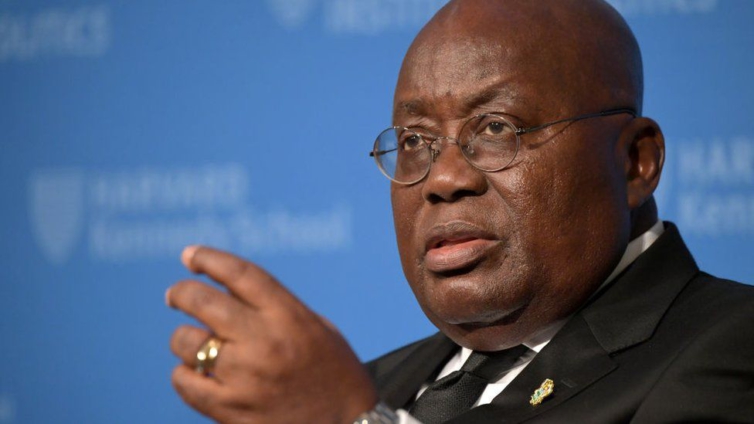
Economist and lecturer at the University of Ghana Business School (UGBS), Professor Godfred Bokpin says President Akufo-Addo should resign since he cannot govern with at most 40 ministers.
He explained stated the International Monetary Fund (IMF) Programme the country has secured is not a definite solution to the economic crisis.
The academic said it has become critical that government puts in place measures to complement those recommended by the IMF.
According to him, government should cut down on the number of ministers and embark on dissolving some agencies that are not needed in such dire times.
He added that some ministries can also be merged together to cut down on government expenditure.
"Why can't we do that? If any president comes and says that he can't do that, he should resign.
"We are not looking for perfect people to govern this country because we can't get that here. If the president cannot govern this country with less than 40 ministers, he should step down.
"We said that government with this number of people because we don't have the budget to sustain all of that. Collapse that, sell the V-8s," he said.
Professor Bokpin was speaking at the Graphic Business/Stanbic Bank Business Meeting. The theme was "The Current Economic Situation and You."
The economist also explained that the IMF is not an entity that embarks on recovering economies by itself.
According to him, the international body does not have a single case study of a country that it has transformed economically.
He explained that Ghana use to shine under the body but the country presently shows otherwise.
"This is how the IMF works. If any of us is thinking that the IMF certainly will come and transform our economy, IMF doesn't do that.
In fact, IMF doesn't have a single case study of a country they have transformed economically. In the time past, Ghana use to be a shining example of IMF interventions but this is where we are now.
The lecturer, therefore, indicated that the country needs to decide on specific interventions or strategies to achieve the "broad fiscal policy framework" prescribed by the IMF.
Latest Stories
-
Mason jailed 35 years for defiling two daughters
17 minutes -
Ayitey Powers remanded over alleged death threat to NSA boss
27 minutes -
Court orders the state to file disclosures in Wontumi bank fraud case
36 minutes -
Ghana among 8 countries selected to pilot WHO tool for stronger clinical trial systems
37 minutes -
Selma Yudha joins race for 60th NUGS President with promise of student-focused leadership
44 minutes -
NSMQ 2026: Botwe denies Wesley Girls’ seeded spot, secures quarter-final spot after fierce battle
49 minutes -
Zoomlion begins disinfection and disinfestation exercise across Upper East Region
57 minutes -
Ghana AIDS Commission strengthens community-level HIV data collection to track 2030 target
57 minutes -
Parliament approves three new Supreme Court Justices
1 hour -
Zoomlion intensifies disinfection, disinfestation exercise across Ahafo Region
1 hour -
GHASALC income rises 89% to GH¢1.84m as sector prepares for 2027 reforms
2 hours -
‘Africa is being short-changed because we fail to negotiate well’ – Col Festus Aboagye
2 hours -
NSMQ 2026: PRESEC Legon keeps 9th title dream alive as Mfantsipim looms in quarter-finals
2 hours -
Zoomlion begins fumigation exercise across Eastern Region after floods
2 hours -
Police suspend concrete mixer truck operations in Accra and Tema for 3 days
2 hours