

Audio By Carbonatix
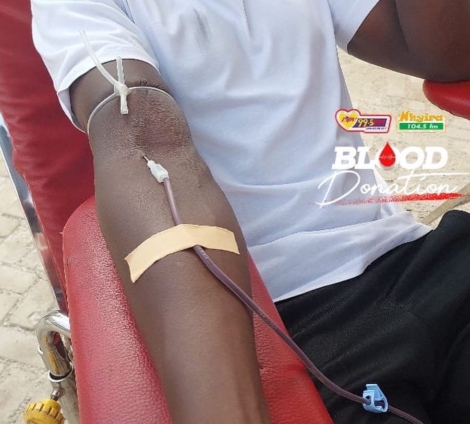
A Medical Laboratory Scientist in Charge of the Blood Bank at the International Maritime Hospital (IMaH) in Tema, has urged Ghanaians to be honest when answering questions before they donate blood.
Ms. Doris Kusima Baiden explained that potential donors of blood were expected to answer a confidential questionnaire about their medical history before blood donation.
This is to give the health attendant a good idea of your general health and blood condition and foster a better service for donors and recipients.
Ms. Baiden was addressing issues related to blood donation at the weekly “Your Health! Our Collective Responsibility!" initiative by the Ghana News Agency aimed at promoting health-related communication and providing a platform for health information dissemination to influence personal health choices through improved health literacy
Ms. Baiden, supported by Mr. Robert Tetteh Djimajor, also a IMaH Medical Laboratory Scientist, explained that, as a routine before blood donation “we first take personal details like your name, age, date of birth, address, and other contacts. We then further proceed to ask confidential health questions.”
Ms. Baiden emphasised that donors were expected to come clean about medications taken in recent times, current health status, specific sexual activities, and other lifestyles.
“These questions are very confidential and help safeguard your own health and the health of the person receiving the blood. We only want to ensure that one is fully fit physically, mentally, and emotionally before donating blood,” she said.
She said that it is very important to be truthful because infections like HIV, Hepatitis B and C, and Syphilis could be transmitted by transfusion to a patient receiving blood.
She revealed that donating blood did not only benefit the receiver, but it also gave donors the chance to be offered a brief medical examination that included checking the temperature and pulse, blood pressure, ensuring minimum weight, and haemoglobin level.
“As a blood bank, it is our responsibility to ensure that all the blood coming in is safe for use and does not contribute to the loss of lives in the hospital. Saving lives is a collective responsibility, and all must endeavour to rightly go through the safe and secured procedures to donate blood,” she said.
Latest Stories
-
Ghana needs a law to sustain constitutional reforms – CDD-Ghana
3 hours -
COVID fumigation audit: Auditor-General has a lot of questions to answer – Akwatia MP
3 hours -
Stranded Ghanaian medical graduates in Cuba appeal to Mahama for immediate return
3 hours -
GNFS contains fire outbreak at Teshie Lekma Road near Lekma Hospital
9 hours -
Samia Nkrumah rejects the narrative that Ghanaians were happy after Nkrumah’s overthrow
10 hours -
A Mother’s pain: Tribute by Ivan Baidoo’s mother
10 hours -
‘Forgive us for staying away’ — Samia Nkrumah leads family back to Nkroful, pledges to preserve Nkrumah’s legacy
11 hours -
Ernest Nuamah scores twice as Lyon beat Rennes
11 hours -
‘My dear Ivan’ – A father’s tribute to a son tragically killed
11 hours -
GNPC Explorco advances Voltaian Basin drilling preparations with 13.5km access road
11 hours -
Cabinet approves facility manager for Borteyman Sports Complex – Kofi Adams
12 hours -
Sanitation is improving; critics may be ‘living in another world’ – Salaga South MP replies Bekwai MP
12 hours -
Government must do more to tackle sanitation crisis – Bekwai MP
12 hours -
World Cleanup Day: GFF begins sanitation education in local communities
12 hours -
EU Ambassador, IGP discuss stronger cooperation on policing and security
12 hours