

Audio By Carbonatix
Selected petroleum-funded projects in the Northern and Savannah Regions are being monitored in a bid to mobilise citizens to demand accountability for the use of oil funds.
Findings of the monitoring indicated that the existence of most petroleum-funded infrastructure projects in the regions were unknown to Metropolitan, Municipal and District Assemblies (MMDAs).
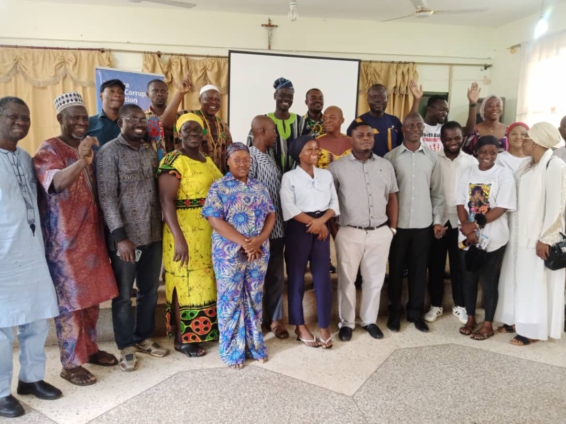
Masud Aziz Rauf, the Focal Person of Local Accountability Networks (LANets), Tamale, who presented the findings of the monitoring at a dissemination meeting in Tamale, said the monitoring team found that MMDAs were unaware of projects at various stages in the districts and so referred to them as parachute projects.
He noted that most of the monitored projects were completed but not handed over for use, adding some completed ones had even deteriorated, saying this was as result of lack of collaboration with District Assemblies in initiating projects.
Other findings of the monitoring showed that out of the 16 documented projects to be monitored in the two regions, one did not exist, while only one contractor was located.
The monitoring was undertaken by the LANets, Tamale and led by RUWA Ghana.
It formed part of a one-year project of the Ghana Anti-Corruption Coalition (GACC) dubbed: “From Disclosure to Impact - Mobilising Local Civil Society to Verify Published Extractives Data and Advocate for Equitable, Accountable Spend of Funds,” and funded by the African Centre for Energy Policy (ACEP).
Mr Bright Sowu, the Head of Programmes at the GACC, said the activity was a preliminary monitoring exercise to ascertain whether or not documented projects actually existed.
He said there would be follow-ups to interrogate the amount involved in the projects, given time, as well as checks on whether amounts allocated commensurated the work done on the projects.
He said there was the need to investigate to ensure that projects were completed and handed over, adding that projects, when completed and not handed over for use, were technically uncompleted.
Mr Samuel Harrison-Cudjoe, the Programmes Officer at GACC, said the project formed part of the Coalition's social accountability interventions that had built the capacity of local networks to ensure accountability and compliance with oil and gas related revenue.
Latest Stories
-
John Boadu can appeal across Ghana’s social groups – Prof Mike Oquaye
5 minutes -
‘Electing Kojo Bamba is backward politics’ – Mustapha Gbande
19 minutes -
Government must order payment of promoted teachers’ salaries – GNAT
28 minutes -
Meet Sethina Edem Sunu, the healthcare professional eyeing the NDC UK & Ireland deputy organiser role
32 minutes -
The myth of ‘sophisticated customer experience’ in the digital age
36 minutes -
What happened to lands reserved for sanitary sites? -WasteCare CEO calls for audit
37 minutes -
Manasseh Writes: The shift in the NPP
53 minutes -
The price of a seat: Financial barriers and the structural quality of Ghana’s Parliament
58 minutes -
Government targets October 16 for first tranche of teacher arrears – Haruna Iddrisu
1 hour -
Daily Insight for CEOs: The CEO’s role in driving innovation
1 hour -
Audit existing sanitary sites to address waste management land shortages – WasteCare CEO urges assemblies
1 hour -
Two-bin household waste system could support waste-to-energy in Ghana – Waste Care Associates CEO
1 hour -
Dealing with political and social media insults
1 hour -
Essi Donkor urges stronger support for girls’ education, announces GH¢2,000 BECE reward
1 hour -
Ghana still needs landfills but Accra should prioritise waste-to-energy – Waste Care Associates CEO
1 hour