

Audio By Carbonatix
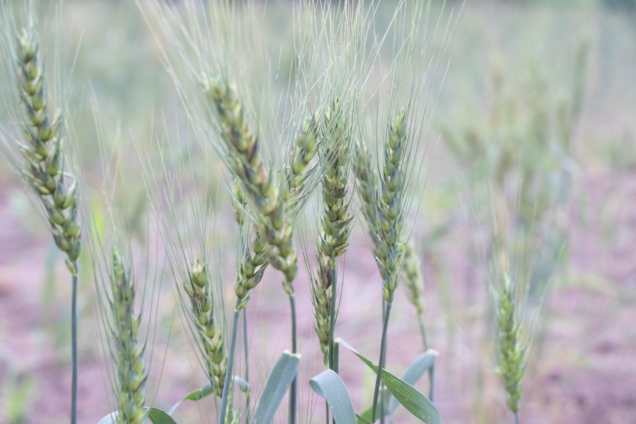
A team of scientists from Ghana’s Crops Research Institute (CRI) of the Council for Scientific and Industrial Research (CSIR), has initiated wheat research towards its introduction in the country.
Bread wheat (Triticum aestetivum) is one of the world's most important cereals of the grass family with an estimated economic value of $40 billion per annum in trade.
Ghana’s estimated wheat consumption per capita is 27Kg per annum, largely used for bread, animal/poultry feed and food.
According to the Observatory of Economic Complexity (OEC) report, Ghana imports wheat primarily from Canada ($147 million), Russia ($58.2 million), Lithuania ($14.6 million), France ($10.5 million), and Ukraine ($10.1 million) every year.
The wheat import market continues to grow rapidly for Ghana with a population growth of over 30 million people coupled with fast urbanization.
Unfortunately, the Russia-Ukraine war and the cessation of the black sea grain deal, have negatively hindered wheat grain exports from these parts of the world.
Among other things, Climate change, however, presents opportunities for new crops to adapt to new environments.
The CSIR-CRI has, therefore, commenced wheat adaptive research studies in the Forest, Transition and Guinea Savannah agro-ecological zones of Ghana with funding from India partners, ARIMA-FARMS.
The researchers are led by Dr. Felix Frimpong and Dr. Kennedy Agyeman, under the directorship of Prof. Moses Brandford Mochiah and the deputy director, Dr. Maxwell Darko Asante.
“The relevance of the wheat research in Ghana is to be able to grow and produce our own wheat flour for bread and other baked products and poultry feed by Ghanaian farmers without solely depending on foreign importation,” said Dr. Frimpong.
The team hopes to evaluate the performance of wheat varieties from India across Ghana towards varietal release and registration.
They called for immediate funding and resource support from well-meaning Ghanaians, private companies, international donors and banks, science-based institutions and embassies of various countries as well as the government of Ghana to aid the expansion of the initiative and breed for more varieties.
Latest Stories
-
Promotion pay row: Gov’t gives teachers September to complete salary adjustments
5 seconds -
Financial irregularities plummet by 62.9% as state tightens fiscal controls
46 seconds -
DVLA to expand mobile services to underserved communities in Ghana’s Eastern Corridor of the Northern Region
17 minutes -
GUTA urges GPHA to act swiftly to end Tema Port congestion to avert rising business costs
17 minutes -
Port congestion could undermine 24-hour economy policy – GUTA
17 minutes -
NSA opens three-day window to resolve national service biodata mismatches
27 minutes -
Abu Jinapor highlights increased gold exports after Domestic Gold Purchase Programme
31 minutes -
NPP UK branch calls for independent audit into gold purchasing operations and parliamentary probe
1 hour -
Zanetor Agyeman-Rawlings pledges decisive action on climate change, galamsey and environmental degradation
1 hour -
Bawumia was brainchild behind Domestic Gold Purchase Programme – Samuel Jinapor
1 hour -
Fuel prices set to go up from September 1, Petrol to sell at GHC 16.69 and Diesel, GHC 17.90 – COMAC
1 hour -
Our World Our People withdrawn due to curriculum duplication, not politics – Adutwum’s spokesperson
1 hour -
GANRAP is essentially a rebranding of Domestic Gold Purchase Programme – Abu Jinapor
1 hour -
I am tired of being in opposition, my goal is to win in 2028 – Boakye Agyarko
2 hours -
Ghana’s road maintenance funding gap deepens as only 37% of needs met – World Bank
2 hours