

Audio By Carbonatix
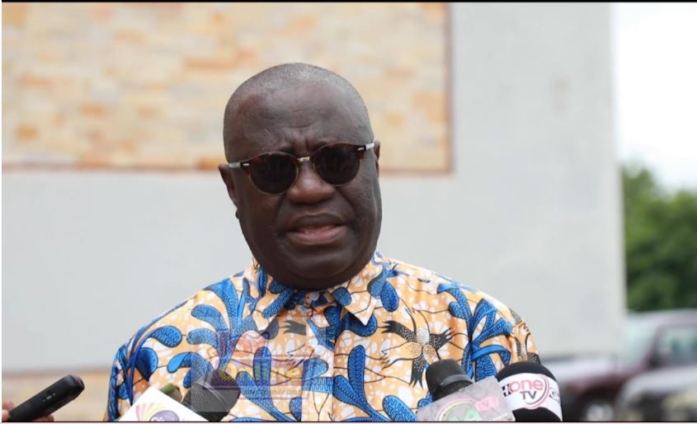
The Director of the Faculty of Academic Affairs and Research at the Kofi Annan International Peacekeeping Training Centre (KAIPTC) says the ECOWAS standby force was instituted to respond to civil wars and not to be engaged in eras of constitutional changes within its member states as it seeks to do presently in the wake of the coup in Niger.
Professor Kwesi Aning says there is no conflict or civil war in Niger, therefore the bloc should rather consider using "a graduated set of responses" to resolve the situation.
"The standby force idea was also to respond first and foremost to civil wars and not to constitutional changes or internal political misunderstandings where there is massive bye-in as to what is happening. I mean there's no conflict in Niger per se.
"There rather ought to be a graduated set of responses as an internal crisis escalates," he said on JoyNews' Newsfile on Saturday.
The expert explained that the bloc does not seem to have exhausted all options in its laid down procedures. The West African bloc has jumped steps, according to Prof. Aning. "What we've seen is an automated response from ECOWAS, from zero to hundred,"
Military option should be the last resort, he stressed.
ECOWAS has reportedly given the green light to its standby force to prepare for what it calls an intervention in Niger. According to reports, heads of forces of member states are convening in Accra to hatch an intervention plan.
This follows a one-week ultimatum given to the military junta in Niger to return the country to a constitutional order following its coup.
On the back of this, Prof. Aning explained that the bloc has even defaulted when it comes to its processes in moblising forces for interventions.
"If you look at the mechanism Article 28, 1, it specifies the processes for force generation. That has not been followed. Quite a number of these decision-making processes and procedures have been hopped over and then we have taken the decision of last resort," he explained.
He indicated that international organisations function best when there is compliance with what they have voluntarily signed on to and when there is a sense of "bindingness" relating to the values, principles and decision-making processes.
Latest Stories
-
Inter Milan mount stunning comeback to beat Napoli
4 minutes -
Modric plans to play for Croatia past 41st birthday
14 minutes -
Bayern fail to score for first time in 59 games
18 minutes -
Bawumia preparing new cocoa policy package for farmers – Annoh-Dompreh
22 minutes -
Wa-Tumu-Bolga road upgrade will unlock agriculture, trade – Agbodza
24 minutes -
Ghana Maritime Authority readies oil-spill response vessel for deployment
26 minutes -
Ayariga turns to drones, AI to tackle Agbogbloshie waste mountain
35 minutes -
Agbogbloshie waste heap must go – Mahama Ayariga declares
46 minutes -
Government to upgrade all rural telephony sites to 4G – Communications Minister
46 minutes -
Rural calls, data to become cheaper by Q1 2027 – Sam George
51 minutes -
National Chief Imam remains Ghana’s strongest symbol of interfaith harmony – Mahama Ayariga
1 hour -
Nhyiaesohene pledges support to ECG to curb encroachment
1 hour -
Somanya residents demand asphalt overlay to protect road investment
1 hour -
Kumawu MP leads stakeholders meeting on human rights, child labour
1 hour -
Breakfast: To skip or not to skip? An evidence-based perspective on weight management and overall health
2 hours