

Audio By Carbonatix
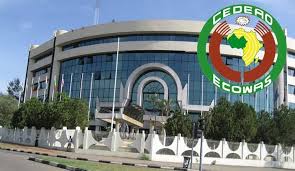
The Economic Community of West African States (ECOWAS) has injected immediate, substantial financial aid into the region's escalating fight against violent extremism, banditry, and kidnappings.
At its 68th Ordinary Session of the Authority of Heads of State and Government in Abuja, the regional bloc approved the disbursement of a total of $14.25 million from its Regional Security Fund to five member nations on the frontline of the instability.
The funds, amounting to $2.85 million each, are earmarked for Benin, Côte d’Ivoire, Ghana, Nigeria, and Togo—countries increasingly targeted by terrorists spilling over from the volatile Sahel region.
This decisive action underscores a renewed commitment by ECOWAS to shift from reactive diplomacy to a proactive security stance.
The decision comes amid a sharp deterioration in regional security, evidenced by the rising frequency of terrorist attacks near the borders of coastal states like Benin and Togo, and the persistent internal threats of banditry and mass abductions in Nigeria.
The leaders strongly condemned the recent surge in attacks, with particular emphasis on the disturbing trend of abduction of schoolchildren in northern Nigeria, a crime that undermines human security and education. They specifically expressed solidarity with the Nigerian people and commended the host, President Bola Ahmed Tinubu, for his government’s prompt and decisive actions.
The Authority commended President Bola Ahmed Tinubu for swift actions taken by the Nigerian government to secure the release of victims and to intensify measures aimed at curbing insecurity.
Beyond the emergency financial lifeline, the ECOWAS Authority issued a strong directive to the ECOWAS Commission to fast-track the full operationalisation of the Regional Counterterrorism Brigade.
This long-planned rapid deployment force is seen as the military cornerstone needed to execute a collective, kinetic response to regional threats.
To this end, the Commission was ordered to convene urgent meetings of two critical bodies: the Committee of Chiefs of Intelligence Services and the Committee of Chiefs of Defence Staff.
These meetings are essential steps to finalise the logistical and command structures necessary for the force's activation. ECOWAS is aiming for a forceful, united front to combat terror, which some estimates suggest could require an annual operational budget of up to $2.5 billion for a full-scale deployment force.
The ECOWAS leaders reaffirmed their commitment to eradicating terrorism and recognised that this complex, transnational challenge requires global support.
They called upon the international community, including the African Union (AU) and the United Nations Security Council (UNSC), to urgently respond to the needs of affected countries in a coordinated manner.
The plea for coordinated external assistance highlights the immense financial and logistical burden the security crises place on member states, whose internal resources are often stretched thin.
Furthermore, leaders urged member states to maintain diplomatic and security engagement with the military-led Sahelian nations of Burkina Faso, Mali, and Niger—the epicentre of the terrorism crisis—to strengthen cooperation and intelligence sharing, which is crucial for border security.
The emergency funding, sourced from the Community Levy-backed Regional Security Fund, is conditioned on a review of the approved Plan of Action, signalling a new era of stringent accountability for security expenditure.
The full implementation of these decisions signals ECOWAS’ resolve to protect lives, restore stability, and strengthen collective security across West Africa.
Latest Stories
-
US seeks changes to rejected $109m health compact with Ghana – Mahama
26 minutes -
Nine dead in mass shooting at Pennsylvania home
44 minutes -
‘Time for Ukraine to get new president,’ says Trump after Zelensky condemns diesel deal
47 minutes -
Hincapie injury adds to Arsenal issues after Guimaraes rescue act
55 minutes -
Henderson scores twice as Chelsea thumb Bournemouth
1 hour -
Photos: Mentapulse Africa convenes health and labour summit to address talent retention
1 hour -
Mahama inspects Nkokɔ Nketenkete plant, eyes Bechem as chicken capital
1 hour -
Ghana not seeking full BRICS membership, applying as Partner Country – Ablakwa
1 hour -
Woman injures three people in third Poland school knife attack in a week
1 hour -
Ghana should join BRICS as partner, not member – NPP Bono East Regional Secretary
1 hour -
Ghana High Commission warns nationals in South Africa over protests in Johannesburg, Durban
1 hour -
Mahama praises Roads Minister for keeping Big Push contractors on their toes
2 hours -
World Cup Visa Scandal: ‘My client has not collected money for visas’ – Ampofo Ankrah’s lawyer
2 hours -
US immigration officials defend ICE agents who shot man in same car as child
2 hours -
Commentator Katie Zacharia picked as new White House press secretary
2 hours