

Audio By Carbonatix
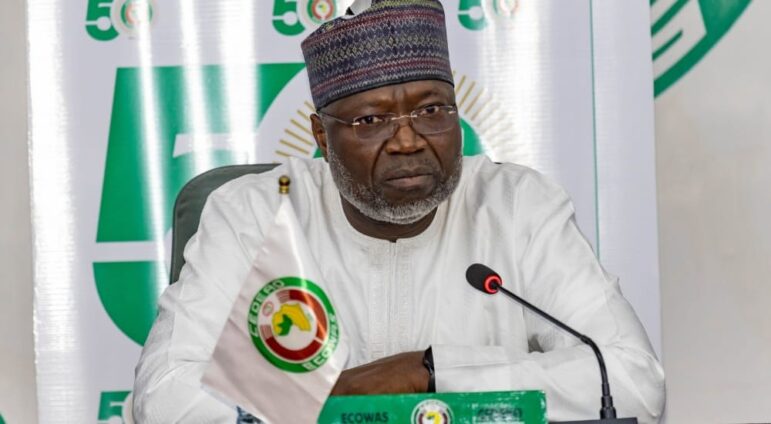
The President of the ECOWAS Commission, Dr. Omar Alieu Touray, has warned that West Africa's continued dependence on imported rice threatens the region's food sovereignty, urging governments and investors to accelerate efforts towards rice self-sufficiency.
Speaking at the West Africa Rice Investment Roundtable in Accra, Dr. Touray said the region's growing appetite for rice continues to exceed local production despite years of investment and policy reforms.
He noted that while rice production in West Africa increased by 44 percent between 2008 and 2024, the region still relies heavily on imports to feed its population.
"Although regional output increased significantly by 44 percent between 2008 and 2024, demand still outstrips supply, forcing West Africa to rely heavily on rice imports," he said.
According to Dr. Touray, rice has moved beyond being just another agricultural commodity and has become a strategic crop central to food security and economic resilience across the region.
"Rice is a vital socio-economic crop in West Africa, having evolved from a marginal commodity into a strategic product critical to food security and rural livelihoods," he stated.
The ECOWAS Commission President described the region's rice deficit as a major vulnerability but also an opportunity to create jobs, boost local industries and strengthen regional trade.
"This challenge presents a strategic opportunity—an opportunity to increase domestic production, strengthen regional value chains, attract investment, and accelerate agrifood systems transformation across West Africa," he said.
Dr. Touray disclosed that regional production currently satisfies only 61 percent of demand, leaving millions of tonnes to be sourced from outside the region annually.
To reverse the trend, ECOWAS has adopted a Regional Rice Roadmap (2025–2035) aimed at achieving greater self-sufficiency through coordinated investments, stronger value chains and improved competitiveness.
He stressed that the time had come to move from planning to implementation.
"This gathering marks the next critical phase of this journey moving beyond strategy and planning towards investment mobilization, stronger partnerships and concrete actions that will position West Africa as a competitive, resilient and self-sufficient rice-producing region," he said.
Dr. Touray further called on financial institutions, development partners and private investors to support bankable projects identified under national rice investment plans developed across ECOWAS member states.
"The success of this Roundtable will ultimately be measured not by the quality of our discussions, but by the progress we deliver for our farmers, our businesses and our communities," he added.
The two-day roundtable brings together governments, investors, development partners and private sector players to mobilize financing and partnerships for the transformation of the rice sector across West Africa.
Latest Stories
-
Mahama urges African governments to treat healthcare as an investment, not budget cost
19 minutes -
Bawumia congratulates John Boadu and new NPP executives, pledges support ahead of 2028
21 minutes -
‘No talent should be left out’ – Bawumia pledges inclusive NPP campaign for 2028
26 minutes -
Prof. Mike Oquaye recounts how he blocked Special Prosecutor’s attempt to arrest Bawku Central MP
42 minutes -
Make health sovereignty a priority for Africa – Mahama
54 minutes -
Dorimon Naa, Wa West DCE lead massive clean-up exercise; threaten sanctions against recalcitrant residents
1 hour -
Photos From Adom FM Y2K Jam
1 hour -
Praye Tiatia steals the show at Adom FM Y2K Jam [Watch]
1 hour -
Boakye Agyarko congratulates John Boadu, pledges support for NPP leadership
2 hours -
Antwi HiMight thrills fans with Antwi ne Antwi hits at Adom FM’s Y2K Jam [Video]
2 hours -
Amb. Edward Boateng congratulates Boadu, Kodua on election wins
2 hours -
John Boadu pledges to rebuild NPP from grassroots and restore ‘winning machinery’
2 hours -
Ashaiman Assembly deploys monitoring system to curb dumping in storm drain
2 hours -
John Boadu must rebuild, unite NPP for 2028 – Edward Boateng
2 hours -
Executive intimidation of opposition undermines separation of powers – Prof Oquaye
3 hours