

Audio By Carbonatix
Private legal practitioner and activist Oliver Barker-Vormawor has offered a detailed reflection on the intersection of law, politics and public perception following the dismissal of all seven claims filed by former Chief Justice Gertrude Torkornoo against the Republic of Ghana at the ECOWAS Community Court of Justice.
The ruling, confirmed by Deputy Attorney-General and Minister for Justice Justice Srem-Sai, brings to a close proceedings at the regional court level concerning the former Chief Justice’s challenge to her suspension and removal from office.
She had argued that her removal violated her rights under the African Charter on Human and Peoples’ Rights.
The case had already gone through several procedural stages, including preliminary objections and applications relating to admissibility and jurisdiction at the ECOWAS Court of Justice.
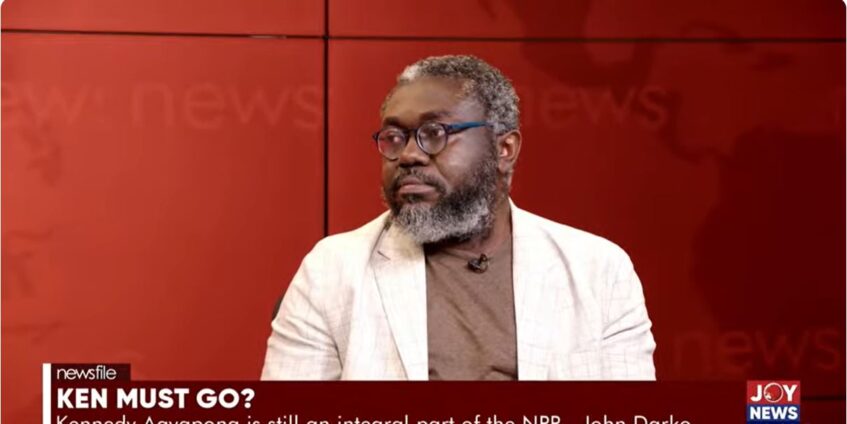
Speaking on JoyNews' Newsfile on Saturday, June 27, Mr Barker-Vormawor said the case illustrates how constitutional and human rights disputes often evolve on two simultaneous tracks — one legal and the other political.
He argued that while courts focus on establishing facts and applying legal principles, public discourse around such high-profile cases is inevitably shaped by political interpretation and narrative framing.
“In matters like this, law and politics run in parallel channels,” he said, noting that even where judicial processes are carefully structured, public opinion tends to develop independently and often politically.
Mr Barker-Vormawor further suggested that the way the former Chief Justice handled public communication early in the dispute had a significant impact on how the case was later perceived.
He described her press conference during the early stages of the controversy as a decisive moment that moved the issue beyond purely legal argumentation into the public and political domain.
In his view, that intervention helped shape enduring questions about the fairness of the process that led to her removal, regardless of subsequent legal outcomes.
“I think one of the masterclass moments was that press conference,” he said, adding that it “removed a question from the arena of pure law and politicised it in a way that continues to influence perceptions.”
According to him, such communication strategies are available to all litigants in high-profile disputes and can play a significant role in shaping public understanding of legal proceedings, even before courts reach final determinations.
Mr Barker-Vormawor also reflected on the legal strategy pursued before the ECOWAS Court, suggesting that how claims are framed can have a decisive impact on their success.
He argued that a more narrowly defined claim—particularly one focused on access to information—might have yielded a different procedural outcome.
In his analysis, the court appeared to acknowledge that the applicant had a right to certain information relating to the proceedings.
However, he noted that the court also found procedural gaps, particularly the failure to formally request full documentation before instituting the case.
As a result, he suggested that the claims were, in part, considered premature.
“The court essentially agreed that she is entitled to the information,” he said.
Latest Stories
-
BoG cautions public against 20 unlicensed mobile loan apps
4 minutes -
Mahama urges tougher enforcement of building regulations over recent collapses
9 minutes -
FWSC denies reports of salary deductions for striking teachers
13 minutes -
Rooted like a tree, responsive like a river: Dr Amin Adam calls for new model of Imamship to meet modern realities
21 minutes -
La Traditional Council secures suspension of SSNIT’s La Pleasure Beach redevelopment plans
25 minutes -
Joy FM listeners support mother seeking treatment for 3-year-old daughter after alleged sexual abuse
30 minutes -
German Unity Day celebrated with music, art and Ghana-Germany friendship in Accra
32 minutes -
MEHSOG and GFD build capacity of Ashanti Region journalists on inclusive disability reporting
34 minutes -
A woman should not have to choose between being fed and being safe
38 minutes -
“Wontumi doesn’t like where he is”– Palgrave Boakye
47 minutes -
The Labadi shoreline demolitions: Who owns the beach?
57 minutes -
Cedi will continue to be stable – Deputy Finance Minister
58 minutes -
Minority urges full probe into World Cup visa allegations after Ampofo Ankrah’s removal
59 minutes -
Asiedu Nketiah backs greater church role in running mission schools
1 hour -
Galamsey activities redirect Mankran Stream, destroy farms, and threaten flooding in Okroase
1 hour