

Audio By Carbonatix
For the first time, hundreds of scientists from around the world have united behind a common message that protecting wild animals should be recognised as a key part of tackling climate change.
A group of 287 experts from six continents has endorsed the Scientific Consensus on Wildlife and Climate, calling on governments to explicitly incorporate wildlife and their ecological roles into climate policies and frameworks.
The consensus was announced on Thursday during a press conference at the SB64 – the 64th Sessions of the UNFCCC Subsidiary Bodies.
The initiative marks what organisers describe as the first time scientists from different disciplines have collaborated to agree on wording that underpins the science linking wildlife, ecosystem functioning and climate action.
The announcement comes as African governments advance a Wildlife for Climate agenda through a proposed declaration that seeks to strengthen recognition of wildlife protection as part of climate action.
According to the consensus, wild animals living in their natural environments can act as "climate allies" through behaviours that help maintain healthy ecosystems.
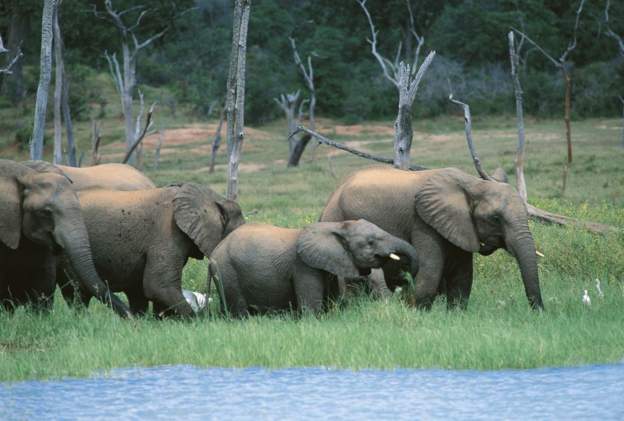
Examples cited include fish transporting carbon to the deep sea, forest elephants dispersing the seeds of carbon-dense trees, and grazing bison encouraging plant growth and nutrient recycling.
The scientific case for wildlife's contribution to climate mitigation is growing. A 2023 paper published in Nature Climate Change and led by Yale University estimated that restoring wild animal populations and their ecological functions could increase carbon dioxide uptake by an additional 6.41 gigatons annually.
According to the statement, this would help address the gap between existing nature-based climate solutions and the level of carbon removal scientists say is needed to keep global warming below 1.5C. Despite this evidence, wildlife has remained largely absent from climate policy discussions.
The statement notes that while the role of animals in climate action has been recognized in processes under the Convention on Biological Diversity, the Convention on the Conservation of Migratory Species of Wild Animals and the International Union for Conservation of Nature, greater recognition within the UN climate process remains necessary.
The consensus was developed through what organisers describe as a "structured, transparent drafting process" involving academics from around the world.
Participants collectively agreed that "animals can positively influence climate-related ecological processes through their natural behaviour," that these processes play an important role in "carbon storage and ecosystem regeneration and stability," and that it is often "scientifically incomplete to assess nature-based climate solutions without considering how wild animals help ecosystems function."
The document concludes with a call for governments to ensure that wild animals and their ecological functions are explicitly considered in climate policies and frameworks.
Experts say doing so would strengthen efforts to address both climate change and biodiversity loss.
Climate Policy Specialist at the World Federation for Animals, Ed Goodall, said the initiative reflects growing agreement across scientific disciplines.
"The Scientific Consensus on Wildlife and Climate is fundamentally built on common ground," he said.
"The process brought together a broad spectrum of scientists and researchers and reflects clear agreement that wild animals are active participants in ecosystem processes that enhance resilience, carbon and nutrient cycling and other climate-relevant functions."
He added that, "Whilst the science will continue to develop, there is strong agreement from over 280 academics already that animal-mediated processes, from seed dispersal and pollination to grazing and ecosystem engineering, must be better recognized in climate and biodiversity policy."
For conservation groups, the implications extend beyond biodiversity protection. Senior Director of Policy at the International Fund for Animal Welfare, Matt Collis, described wildlife as an overlooked force in climate action.
"Wild animals are some of our greatest allies in protecting the planet from climate catastrophe, yet their role has been overlooked for far too long," he said.
"From elephants shaping forests to marine species helping store carbon in the ocean, animals keep ecosystems healthy, resilient, and functioning."
He also stated that, "This Scientific Consensus makes clear that climate policy can no longer ignore wildlife, not only for the sake of biodiversity, but for the future stability of our planet."
Among the scientists involved in drafting the consensus was Jens-Christian Svenning of Aarhus University in Denmark.
"Wild animals play important and often underappreciated roles in the earth system — influencing carbon cycling, fire regimes, and the capacity of ecosystems to adapt to climate change," he said.
"The scientific evidence for these effects has grown substantially in recent years."
According to him, recognizing this in climate policy is a critical step. “And I see this consensus statement as an important contribution to that process," he indicated.
Alongside the launch of the consensus, organizers unveiled a dedicated Wildlife and Climate website designed to showcase scientific evidence on how wild animals contribute to climate resilience and to support policy development.
For supporters of the initiative, wildlife conservation is not only a biodiversity issue but increasingly part of the global climate conversation. The newly released consensus seeks to ensure that conversation is reflected in future climate policy.
Latest Stories
-
The job interview question you don’t have to answer
1 hour -
Trump unveils ‘Super Intelligence Force’ to oversee AI policy
1 hour -
Actress Chioma Chukwuka announces death of father in emotion-laden post
4 hours -
[Video]‘I have asked God to take me when it is time’ – Pete Edochie on health struggles
4 hours -
Manager remanded over $1m auto fraud
4 hours -
Mr President, Ghana was mentioned at the UN; why aren’t we talking about it?
4 hours -
US Marine arrested over murder of woman in Okinawa, Japan
4 hours -
Accra to convene Africa’s regulators and markets on tokenisation at AVAS 2026
4 hours -
Indian police accused of sexually harassing journalists at protest
5 hours -
Jeffrey Archer returns to his former school library
5 hours -
France to close up to 500 schools on Monday over student protests
5 hours -
The Paradox of Plenty — When every smartphone becomes a newsroom
5 hours -
Australia investigating Flydubai co-pilot’s links to country
5 hours -
GTA sensitises taxi drivers in ‘Know Ghana’ tourism campaign
6 hours -
Archbishop Agyinasare calls for responsible speech amid growing social media abuse
6 hours