

Audio By Carbonatix
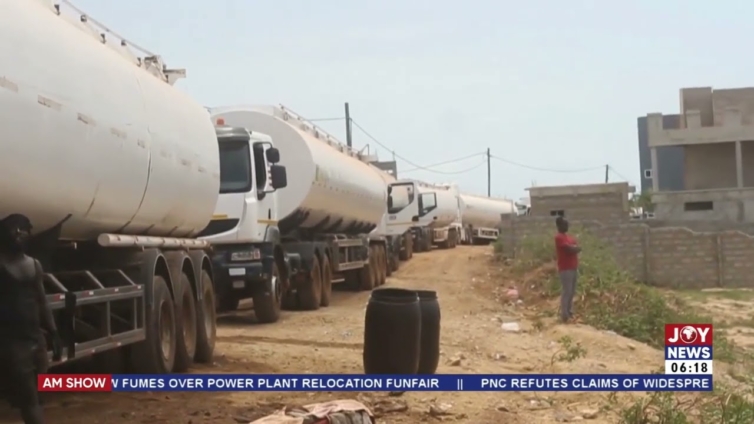
A group of Bulk Import, Distribution and Export Companies (BIDECs) is reportedly lobbying the National Petroleum Authority (NPA) to approve the construction and operation of privately owned petroleum storage depots in regional capitals across Ghana.
Information gathered by Radiant Media and Intelligence Hub suggests the companies are seeking to expand their operations beyond the Greater Accra market, where competition among privately owned petroleum terminal operators has intensified in recent years.
The proposed expansion has, however, triggered concerns about the potential impact on the utilisation of petroleum storage facilities operated by BOST Energies, the state-owned petroleum storage company.
Critics of the proposal fear that diverting petroleum product volumes to privately owned regional depots could result in the underutilisation of existing public infrastructure and weaken BOST Energies’ role in Ghana’s downstream petroleum distribution system.
They have also raised concerns about the implications for Ghana’s strategic petroleum reserves and broader energy security, arguing that increased fragmentation of storage infrastructure could make the coordination of national reserves and emergency fuel supplies more complex.
The BIDECs are reportedly presenting the proposed regional facilities as a means of improving efficiency and deepening private-sector participation in the downstream petroleum industry.
They argue that locating storage facilities closer to major consumption centres could reduce transportation distances and trucking costs, improve product availability and enhance the country’s ability to respond to supply disruptions.
The companies have also reportedly expressed concerns about the cost of storage and operational arrangements within the existing BOST network, arguing that inefficiencies could contribute to increased costs across the petroleum supply chain and, ultimately, fuel prices.
Opponents, however, maintain that any policy that significantly diminishes BOST’s role could have consequences for national energy security.
BOST remains an important component of Ghana’s petroleum storage and strategic reserve system, making its commercial and operational sustainability a key consideration in any decision to expand private storage capacity.
There are further concerns that allowing multiple private operators to establish facilities in regional markets could create opportunities for market concentration or coordinated pricing if adequate regulatory safeguards are not put in place.
The NPA is therefore expected to weigh the potential benefits of increased private investment against the need to preserve BOST’s strategic role and ensure adequate oversight of Ghana’s petroleum storage infrastructure.
The debate comes at a time when state-owned petroleum institutions, including the Tema Oil Refinery (TOR), continue to face concerns over their financial and operational performance.
There have also been allegations that some approaches previously pursued within the BIDEC community contributed to challenges faced by TOR. Those claims remain allegations and would require independent verification.
The proposal for regional depots is reportedly still at the policy discussion stage, and there is no indication that the NPA has taken a final regulatory decision.
Any approval could have significant implications for BOST’s commercial viability, petroleum storage costs, fuel distribution and Ghana’s strategic reserve arrangements.
The emerging debate, therefore, centres on whether Ghana should continue to consolidate its petroleum storage and strategic reserve infrastructure around state-owned facilities or allow greater private-sector participation through a network of regional depots.
Latest Stories
-
New economy will boost local production and create jobs – Finance Minister
2 minutes -
Real-Time VAT on cross-border digital services – not a new tax and does not violate double taxation principle
52 minutes -
Digitalisation, AI key to Ghana’s tourism transformation – GHATOF
1 hour -
Stronger GTA-private sector partnership needed to grow tourism – GHATOF
1 hour -
Amazon eyes Ghana for broadband expansion after talks with Mahama
2 hours -
National Investment Quiz 2026: Six schools qualify for quarter-finals
2 hours -
‘Do not let Russia pay for its madness with lives of your people’ – Zelensky to Ghana, 46 other countries
3 hours -
6,079 promotion cases fully processed and paid – CAGD says amid nationwide teachers’ strike
3 hours -
Teacher unions to meet government Monday over nationwide strike
3 hours -
Photo story: Republic Bank-JoyNews Habitat Fair clinic wraps up after three days of housing solutions, expert engagement
3 hours -
National Peace Council urges investment in youth to sustain Ghana’s peace
4 hours -
Afenyo-Markin urges youth to speak up against injustice
4 hours -
CAF annuls Edo Queens victory, orders WAFU B final to resume from extra time
4 hours -
Interior Minister urges traditional authorities to enforce anti-bushfire bye-laws
4 hours -
3rd Republic Bank-JoyNews Habitat Fair Clinic ends on a high note after three days of strong patronage
4 hours