

Audio By Carbonatix
An industrialist, Dr. William Mensah-Ansah, has condemned the undue political interference in the affairs of the Tema Oil Refinery (TOR), which has weakened its operational capacity.
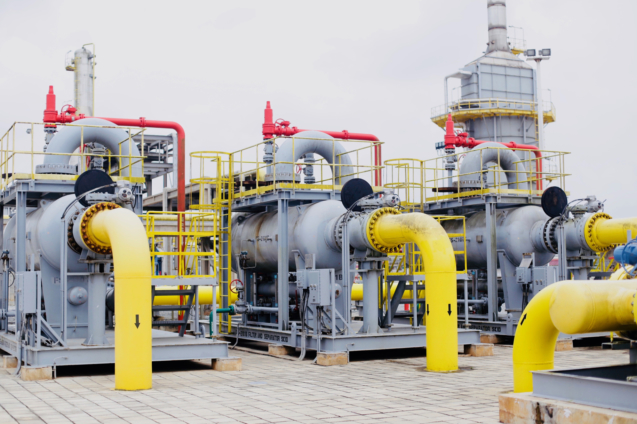
He said TOR had not been able to put into productive use the reconstructed crude oil furnace, which exploded in January 2017, forcing it to reduce its production.
TOR, which is the only refinery in Ghana with a capacity of 45,000 barrels per stream day, was currently producing below capacity.
Dr. Mensah-Ansah, in an interview with the Ghana News Agency, on recent developments at TOR, noted that the frequent change of leadership was the main problem.
He said between 2009 and 2016, the refinery was managed by four chief executive officers but had between 2017 and 2023 gone through the hands of five MDs while the sixth MD had just assumed office.
Dr. Mensah-Ansah noted that "as a result of the constant change of leadership, new managements are not able to roll out their strategic plans before they are kicked out or forced to resign."
He explained that with two plants made up of the Crude Distillation Unit (CDU) and the Residual Fluid Catalytic Cracker (RFCC), and with the installation of the furnace to give the plants a faster turnaround time to produce at full capacity, the refinery should not be struggling.
He said TOR had the capacity to produce over 45,000 barrels per stream day for the CDU, while the RFCC also had the capacity to do 14,000 barrels.
"TOR remains a national strategic installation that must be protected from political manipulations.”
He said the core business of the refinery is to refine crude oil, which it either acquired or acquired from third parties to be able to serve the Ghanaian market, the sub-region, and beyond by marketing the finished products to Bulk Distribution Companies and Oil Marketing Companies.
Dr. Mensah-Ansah said the refinery had an efficient work interlink system from the commerce department to the production department, storage, and CDU for distillation of heavy residue, gasoil, heavy and light naphtha, aviation turbine kerosene, and domestic kerosene.
He added that even the by-product from CDU, which was the heavy residue, was taken to the catalytic cracker for further refining into the two major products, LPG and gasoline (super).
Dr. Mensah-Ansah appealed to the government to roll out a plan to revamp the refinery to become vibrant again.
Latest Stories
-
Government has improved sanitation in one-and-a-half years — Salaga South MP
2 hours -
Nkwanta North Assembly to appear before Parliament over DACF sanitation spending
2 hours -
Mourinho prints out ‘red card’ incidents after Real lose derby
3 hours -
Atletico beat 10-man Real in feisty Madrid derby
3 hours -
Twelve Tribes of Israel Ghana to mark 40 years with anniversary celebration
3 hours -
GPL 2026/27: Hearts held by Bechem as Kotoko, Samartex share spoils
4 hours -
My Story (Kwaku Antwi-Boasiako)
4 hours -
We expect growth rate to re-accelerate in second-half of 2026 – IC Insights
4 hours -
The ungodliness and unrighteousness underlying the National Cathedral mess!
4 hours -
T-bills auction: Government fails to achieve target; yield on 91-day-bill remains unchanged
4 hours -
It’s Ghana’s shame to denigrate Nkrumah when the whole world honours him as African of the Century – Asiedu Nketiah
4 hours -
No other nationalist can compare to Nkrumah – Asiedu Nketiah
5 hours -
Collateral Registry: Foreign banks accounted for GH¢19.9bn of secured credit in quarter 2, 2026
5 hours -
This government should expect scrutiny – Asiedu Nketiah
5 hours -
Two-year-old girl dies in domestic fire at Cantonments
6 hours