

Audio By Carbonatix
The Ghana Federation of Labour (GFL) is asking government not to abolish the emoluments of Article 71 Office Holders but rather enlarge its scope to cover both public and civil servants to resolve the distortions in the government pay roll system.
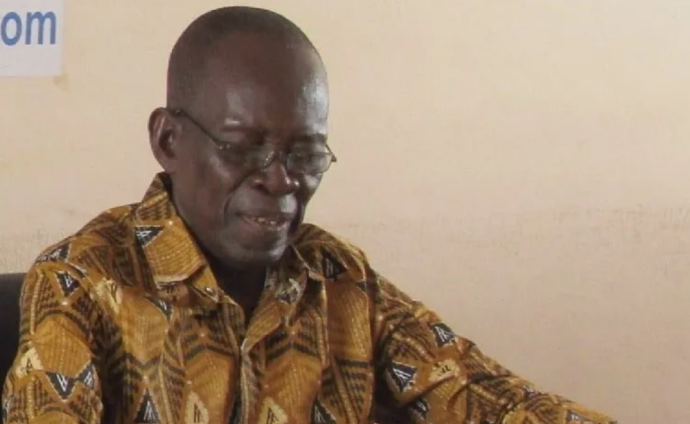
Mr. Abraham Koomson, General Secretary of the Federation, noted that “we should change the narratives about the abolition of Article 71 Office Holders; such a call is retrogressive; let us enroll all public and civil servants in the scheme to enjoy the same benefits”.
Mr. Koomson, who has been on the labour front for over 40 years, noted in an interview with the Ghana News Agency in Tema that “what is good for the goose must equally be good for the gander”.
He said the single spine salary structure had outlived its usefulness for which it was established, while the Fair Wages Secretariat struggled to consolidate alignment and uniformity within the public sector.
Even though he acknowledged calls for it to be expunged, he added, “GFL, upon further analysis of the situation and the poor, distorted salary structure of both public and civil servants, believes that all government workers must be on the same salary structure, that is, Article 71 Office Holders”.
Article 71 office holders include the President, the Vice President, the Speaker of Parliament, the Chief Justice, and the Justices of the Supreme Court.
The rest are Members of Parliament (MPs), Ministers of State, political appointees, and public servants with salaries charged to the Consolidated Fund but enjoying special constitutional privileges.
Articles 71(1) and (2) of the 1992 Constitution stipulates that the determination of the salaries and allowances of the Executive, the Legislature, and the Judiciary paid from the Consolidated Fund would be determined by the President on the recommendations of a committee of not more than five persons appointed by him and acting upon the advice of the Council of State.
In determining the salaries of the President, his ministers, and political appointees, as well as the members of the Council of State, the Constitution states that Parliament will determine that based on the advice of the same committee.
The public services of Ghana include the Civil Service, the Judicial Service, the Audit Service, the Education Service, the Prisons Service, the Parliamentary Service, the Health Service, the Statistical Service, the National Fire Service, the Ghana Revenue Authority, the Police Service, the Immigration Service, and the Legal Service.
Others include public corporations other than those set up as commercial ventures; public services established by the Constitution; and such other public services as Parliament may by law prescribe.
Some labour unions and civil society organizations are agitating for the abolition of the emolument of Article 71 Office Holders.
Latest Stories
-
Power restoration fault suspected in Kumasi Central Market fire
1 hour -
The 7-foot giant of Ngleshie Amanfro: Seven-foot Ghanaian Ephraim Saawa dreams of joining the national basketball team
2 hours -
Government promises support for Kumasi Central Market fire victims
2 hours -
Vibes The Movie: Big Ghun’s Ghanaian film earns five nominations at 2026 REFFA
3 hours -
MamaCare CEO warns unresolved conflicts among health workers could undermine maternal and neonatal care
3 hours -
Health professionals urged to translate medical knowledge into practice to save mothers
3 hours -
Conflicts among care providers linked to maternal, neonatal deaths – Expert
5 hours -
GIS marks 10th TIME conference, champions improved teaching practices
5 hours -
BRICS Or Balance? What Ghana’s bid really means
5 hours -
GPRTU wants full TRAFFITECH-GH implementation to start in 2027
6 hours -
Mahama announces plans to import electric wheelchairs for PWDs
6 hours -
KGL U17 Colts 2026: Western beat Prempeh Elite Academy to set up final final with Greater Accra Region
6 hours -
Late Solanke strike salvages 10-man Spurs draw at Man United
6 hours -
Gender Ministry to monitor welfare of Nana Akua Addo’s children amid domestic violence case
6 hours -
Benedict Okyere Yeboah: Ghana’s football problem goes beyond sacking a coach
6 hours