

Audio By Carbonatix
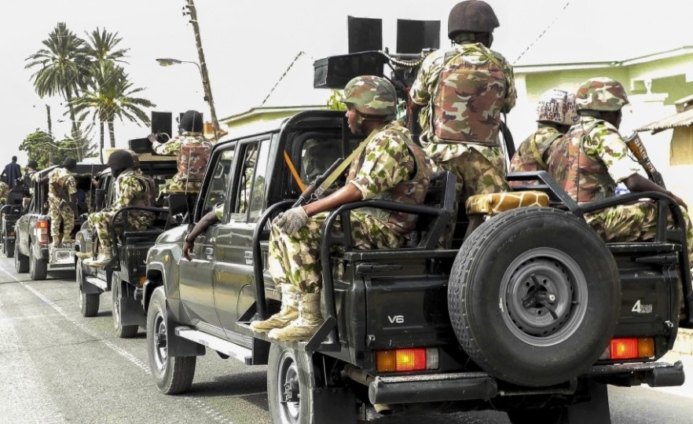
Militants linked to al Qaeda and Islamic State are rapidly increasing their attacks on the borderlands between Niger, Benin and Nigeria, turning remote transit corridors into active conflict zones, according to a crisis monitoring group.
Violent incidents involving Islamist groups in the tri‑border area rose 90% between 2024 and 2025 and deaths more than doubled to over 1,000 as attacks intensified, the Armed Conflict Location & Event Data (ACLED) project said in a report published on Thursday.
The findings underscore the accelerating spread of jihadist groups in West Africa, where governments and foreign militaries have struggled for more than a decade to contain their advance.
The report said fighters aligned with al Qaeda and Islamic State have deepened their presence in Benin’s Alibori and Borgou departments, Niger’s Dosso region, and Nigeria’s Sokoto, Kebbi, Niger and Kwara states. Their operations now reflect "continued spread, growing lethality, and rising risks to civilians," it added.
The Nigerian military and Niger and Benin governments did not respond to requests for comment.
MILITANTS EXPAND IN NORTHWEST NIGERIA
Nigeria has battled Islamist insurgents for over 15 years - mainly Boko Haram and Islamic State West Africa Province (ISWAP)in the northeast. But al Qaeda‑ and Islamic State‑affiliated cells have become more active in the northwest, where vast forests and weak state presence have created favourable terrain.
West Africa hosts a patchwork of jihadist factions, many operating under the umbrellas of al Qaeda‑linked Jama'at Nusrat al‑Islam wal‑Muslimin (JNIM) or Islamic State in the Sahel Province (ISSP).
Their expansion has fuelled political instability across the region. Militaries in Mali, Burkina Faso and Niger have seized power since 2020, citing the failure of elected governments to stem the violence. Soldiers behind a failed coup attempt in Benin in December also blamed insecurity.
The U.S. carried out air strikes in northwestern Nigeria in December and has begun deploying a small number of troops to train Nigerian forces confronting militants.
Regional coordination has weakened in recent years as Niger, Burkina Faso and Mali—now governed by military juntas—have withdrawn from regional blocs, hampering joint security operations.
ACLED said jihadist groups have stepped up communication about their activities in the tri‑border zone, which could signal competition between rival factions. Such "outbidding," the report said, is likely to drive further escalation.
Sparse governance and porous borders have long made frontier regions across the Sahel and coastal West Africa targets for Islamist groups seeking to evade security forces, resupply fighters and establish control over communities.
Latest Stories
-
Total expenditure as of July 2026 amounted to GH¢147.07bn, 16% below target – BoG
2 hours -
Total revenue & grants stood at GH¢144.5bn in July 2026, slightly below target – BoG
2 hours -
Ghana Sports Fund urges sports federations to submit credible proposals and measurable targets
2 hours -
Sally Rooney books withdrawn in UK over Palestine Action support
2 hours -
Musk says US government may be behind slowdown of Ukraine drone speeds
2 hours -
Picking Chief Justices nearing retirement could give Mahama immense power – Bentil
2 hours -
Netflix to shed 1,000 jobs in steepest cuts since 2022
3 hours -
Burnham had two hospitality dinners with Man City chairman, deleted records show
3 hours -
Semenyo ‘froze’ after alleged racist abuse, court told
3 hours -
‘Shameless’ – Mourinho critical of Vinicius Jr ban timing
3 hours -
Loyalty can outweigh competence in Chief Justice selection – Bentil
3 hours -
Man City suffer as PSG masterclass sets up Champions League win
4 hours -
Customer Service Africa CEO urges business leaders to observe staff and customer interactions
4 hours -
On night of mayhem for Liverpool, Barcola arrives in style
4 hours -
Muzic Mensah finds healing and renewed love in new single ‘WayƐ Late’
4 hours