

Audio By Carbonatix
The Medical and Dental Council (MDC) has expressed deep worry over a staggering surge in medical negligence, malpractice, and professional misconduct complaints filed against healthcare practitioners across the country.
The regulatory body warned that a massive backlog of disciplinary cases currently under investigation points to a rapid decline in professional ethics, institutional accountability, and patient-centred care within Ghana's health facilities.
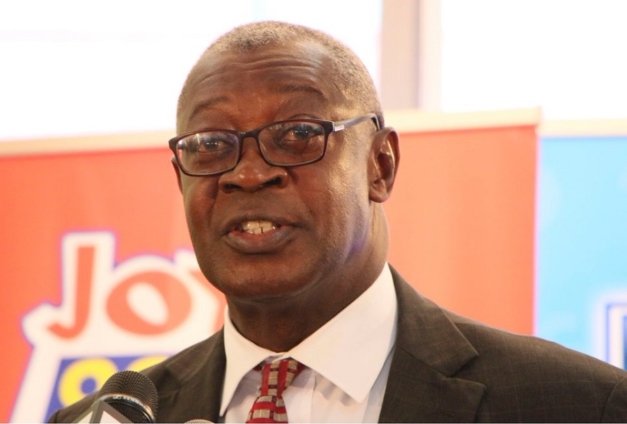
The Chairman of the Medical and Dental Council, Professor Agyeman Badu Akosa, dropped the bombshell at the opening ceremony of the 14th Annual General and Scientific Meeting of the Ghana Association of Radiologists (GAR) in Accra on Thursday.
Confronting the assembly of medical professionals, Prof. Akosa stated frankly:
“The number of people who are sending cases to the Medical and Dental Council, it is worrying. It is worrying. We have so many cases backlogged that we’re having to investigate.”
Bold Patients, Invisible Doctors
Prof. Akosa revealed that the traditional culture of silence surrounding medical errors in Ghana is quickly dissolving. He noted that the public is no longer passive regarding poor hospital treatment.
“…these days, some of them [patients] are getting bolder and are then reporting the kind of experiences that they receive from our colleagues to the Medical and Dental Council. The Medical and Dental Council has no choice but to independently and comprehensively investigate and pronounce,” he stated.
To counter this, the MDC boss delivered an uncompromising directive to health workers, ordering them to visibly identify themselves by wearing name tags while on duty.
He also urged practitioners to maintain precise documentation, warning that incomplete medical records routinely compromise investigations into patient deaths.
“And when something happens, it’s the documentation that speaks. It isn’t what you thought. It isn’t what you said… It is the documentation,” he stressed.
Confronting the "Beasts" of Healthcare
The former Director-General of the Ghana Health Service did not spare senior medical figures, exposing an unsettling trend of absenteeism among top-tier medical specialists at public hospitals.
“One of the information that is filtering to us is that many of you consultants do not work after 2 p.m. Some people even after 12 p.m. It’s coming up, and we must confront all these beasts bedevilling healthcare delivery,” Prof. Akosa charged.
He further cautioned doctors against using nationwide logistical challenges—such as the perennial lack of hospital beds—as an excuse to abandon emergency patients. He insisted that clinicians possess the primary life-saving skills to stabilise casualties regardless of equipment shortages.
“You have knowledge and skill, use it and don’t hide under systems failure. If you can intervene, somebody’s had an injury, if you can patch the wound and set up an IV, do you need bed? Do you need systems to be able to do that?” he asked.
The Galamsey-Kidney Connection
Shifting the focus to clinical infrastructure, the President of the Ghana Association of Radiologists, Dr Francis Ofei, made an urgent appeal for increased state investment in modern diagnostic equipment, including Computed Tomography (CT) and Magnetic Resonance Imaging (MRI) scanners, to tackle chronic illnesses.
Dr Ofei revealed a terrifying escalation in chronic kidney disease across Ghanaian communities, directly linking the health crisis to environmental degradation caused by illegal mining (galamsey). He explained that heavy industrial chemicals, such as mercury and cyanide, are poisoning major river bodies and destroying the renal health of rural populations.
He lamented that the state’s current response is fragmented, with different medical departments operating in isolation rather than sharing diagnostic insights.
“We have realised that most of the time, healthcare delivery is done in silos. The clinician is doing their own thing, the radiologist is also doing their own thing. It is time for us to resort to what we call a multidisciplinary approach when it comes to healthcare,” Dr Ofei stated.
Advanced-Stage Referrals
Backing the call for structural change, renowned nephrologist Dr Charlotte Osafo reported that chronic kidney disease continues to rise rapidly across sub-Saharan Africa.
She disclosed that a frustrating majority of Ghanaian kidney patients are referred to specialists at late, advanced stages due to delayed initial diagnoses and an acute lack of accessible imaging services in peripheral hospitals. Dr Osafo called for the immediate creation of Ghana-specific imaging protocols for genitourinary disorders to standardise local treatment.
The scientific conference, which continues through the weekend, is being held under the theme: “From Kidneys to Urethra: Imaging the Genitourinary System in the Era of Multidisciplinary Care.”
Latest Stories
-
Obuasi SHTS case: Eduwatch calls for sex offenders’ register and mandatory background checks for teachers
2 minutes -
GloMeF CEO urges intensified public education on new road traffic regulations
13 minutes -
‘Any tax on ChatGPT is an attack on education and innovation’- Akim Swedru, MP
17 minutes -
Obuasi SHTS sexual abuse scandal exposes systemic failure in child protection – Moving Masculinity
17 minutes -
Hubtel CEO calls for national data-sharing framework to boost AI development
20 minutes -
Twelve Golden Rules of real estate development in Ghana, Africa
24 minutes -
Five new telephony cell sites in Ashanti Region to be activated in October 2026 – Sam George
25 minutes -
Mahama cuts sod for Afienya Industrial Park, targets 120 enterprises
30 minutes -
Rush for fuel from accident tankers is stealing, punishable by law – NPA boss, Edudzi Tamakloe
35 minutes -
GhIG pushes for legislation to regulate geoscientists’ activities
41 minutes -
Mfantsipim @150: Ace Anan Ankomah leads project to preserve school’s musical heritage
45 minutes -
Gov’t launches rCOMSDEP in Ahanta West, Mpohor Fiase to promote responsible community mining
47 minutes -
AI is forcing professionals to rethink how they deliver value – Hubtel CEO
50 minutes -
Daily Insight for CEOs: Strengthening the CEO’s Leadership Legacy
51 minutes -
Jimmy Aglah’s ‘When the River Testified’ approved by NaCCA as Supplementary Reader
60 minutes