

Audio By Carbonatix
More than 90 percent of Ghana’s tracked family-planning expenditure in 2024 was financed by development partners, according to information presented during a recent SEND Ghana civil society training on family-planning budget tracking. The Government of Ghana accounted for approximately 9.48 percent.
Those percentages may look like figures meant for economists, health officials and people who spend their days studying government budgets. But behind them is a much more personal question: What happens to Ghanaian families when the people paying for most of our family-planning interventions can no longer do so?
Imagine a young woman walking into a health facility after carefully deciding that she is not ready for another child. She has considered the cost of food, rent, school fees and the needs of the children she already has. She has made the responsible decision we constantly tell women and families to make, but the commodity she needs is unavailable.
Somewhere else, a teenage girl is sitting in a classroom hearing warnings about pregnancy but has never had an honest, age-appropriate conversation about her body, abstinence, contraception, consent or how to respond when someone pressures her into sex. A boy sitting two desks away may know even less, because reproductive-health conversations too often assume pregnancy prevention is something girls need to understand.
Now imagine the nurse. She may have the knowledge, training and willingness to help, but she cannot dispense what is not available. Imagine the teacher who knows students are asking questions but has neither adequate training nor appropriate materials to answer them. Imagine the parent who wants to guide a child but grew up in a home where sex was never discussed. These are not separate failures. They are parts of the same system, and that system ultimately depends upon what Ghana chooses to plan for and finance.
This is why I believe we have been looking at family planning through too narrow a lens. We commonly place it inside a health conversation, and even there it can become a conversation primarily about women. Yet the consequences of family-planning decisions reach far beyond the health facility and into our homes, schools, workplaces and economy.
Family planning is not only a health issue. It is an economic issue.
The economic argument begins inside the household. When families are able to make informed decisions about whether and when to have children, those decisions affect how limited household resources are distributed among food, housing, education, health care and savings. At the national level, the same choices intersect with maternal health expenditure, school retention, women's participation in the labor force and the development of human capital.
The connection between family planning and national development is also reflected in Ghana's own family-planning agenda, which increasingly recognizes that reproductive health affects not only individual well-being but the country's broader social and economic development.
That is why I paid particular attention when Finance Minister Dr. Cassiel Ato Forson recently invited stakeholders to contribute to discussions surrounding Ghana's economic direction and the preparation of the 2027 Budget. He spoke about domestic revenue mobilization and moving Ghana from stabilization toward economic transformation.
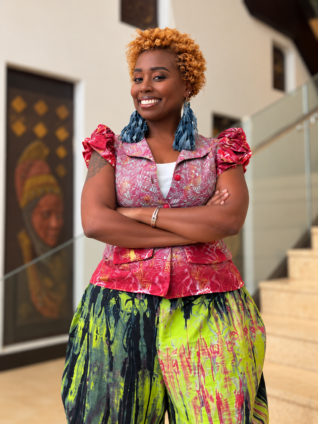
As the Founder of Eclectic Love, but also as a woman, mentor, leader and what I describe as a mother of nations, I want to respond to that invitation with a request that I believe deserves serious consideration: let us intentionally finance family planning from our own national resources and make that financing visible in our budgets.
A choice must exist beyond a slogan
The timing of this conversation is particularly important because Ghana Health Service is marking National Family Planning Week 2026 under the theme “A Choice for All: Agency, Intention, and Access,” with the motto “It’s Your Life. It’s Your Future.” The words are powerful because they place dignity and decision-making at the center of family planning. But they should also cause us to examine whether our financing structures make those words possible.
Agency requires more than telling a person that she has a choice. She needs accurate information, a health system capable of serving her, trained providers and access to the commodities necessary to act on that choice. Intention is meaningful only when people can translate their decisions into action. Access cannot be guaranteed by a slogan if the services and commodities required to provide it remain heavily dependent upon external financing.
That is the uncomfortable contradiction I believe Ghana must confront. We tell young people that their futures belong to them while some of the tools they need to make informed decisions about those futures are not adequately secured through our own domestic financing. We encourage families to plan, yet much of the financing supporting family planning has historically come from outside Ghana. We speak about national ownership and reducing donor dependence, but ownership must eventually be visible in the choices we make with our own money.
Ghana has recently demonstrated that increased domestic commitment is possible. In May 2026, Ghana committed US$1.4 million toward contraceptive supplies, including condoms, implants and injectables. UNFPA reported that this exceeded Ghana's commitment under the UNFPA Supplies Partnership Compact by more than 300 percent. That deserves recognition. But it should be the beginning of a transition toward predictable domestic financing rather than an isolated achievement.
When a statistic becomes somebody's daughter
The urgency becomes clearer when we move away from national percentages and look at the young people represented by our statistics. Ghana's 2022 Demographic and Health Survey found that about 15 percent of females aged 15–19 had ever experienced pregnancy, with a higher proportion among rural adolescents. In the Volta Region, a 2026 peer-reviewed study analyzing DHIMS-II data found that health facilities reported 29,487 adolescent pregnancies between 2019 and 2023.
Of these, 28,511 involved adolescents aged 15–19, while 976 involved girls aged 10–14. Because these are health-facility records, they should be understood as reported cases rather than a complete count of every adolescent pregnancy that occurred in the region.
It is easy to read a number like 29,487 and continue with our day. It is harder when we force ourselves to imagine the individual lives contained inside it. One of those girls could be the child who walks past your house every morning in her school uniform. She could be your niece, your student, the daughter of the woman who sells vegetables to you at the market, or your own daughter.
Pregnancy may have resulted from a consensual relationship, but in other circumstances there may have been pressure, exploitation or violence. She may have understood contraception or may have known almost nothing about it. The circumstances will not be identical, which is precisely why our response cannot be simplistic.
The presence of very young girls in pregnancy statistics should especially force us to think beyond contraception. It raises questions about child protection, sexual violence, coercion, reporting mechanisms and whether children know where to seek help. A serious family-planning and adolescent-health strategy therefore has to connect health services with education, social welfare, gender-based violence prevention and protection systems. It cannot be placed in one institutional box and considered somebody else's responsibility.
This is also why boys cannot remain on the edge of the conversation. We cannot repeatedly educate girls about avoiding pregnancy while allowing boys to grow into young men without equally serious conversations about abstinence, consent, contraception, responsibility and healthy relationships. Pregnancy may happen in a girl's body, but pregnancy prevention is not a female responsibility alone. A boy who understands consent, respects boundaries, knows the consequences of his decisions and accepts responsibility for reproductive health is also part of the solution.
Our teachers need support as well. If schools are going to help young people navigate these issues, educators need age-appropriate materials and training that allow them to communicate facts responsibly. Parents and caregivers need support to have conversations at home. Abstinence should be part of that education, but so should accurate information about reproductive health, consent, contraception and consequences. Giving a young person information does not instruct them to have sex. It equips them to understand decisions they may encounter whether adults are comfortable discussing those decisions or not.
What does this have to do with the national budget? Quite a lot, because a budget is more than a spreadsheet containing income and expenditure. It is one of the clearest expressions of what a country has decided is important enough to finance. Policies can contain ambitious promises, speeches can express concern, and campaigns can raise awareness, but implementation eventually encounters the same practical question: where is the money?
I am therefore asking the Government of Ghana to examine how family planning and adolescent sexual and reproductive health can be made clearly identifiable within the budgets and activities of the institutions that share responsibility for these outcomes. Health has an obvious role, but this cannot end with the Ministry of Health. The Ministry responsible for gender, children and social protection, the education sector, youth institutions and local government all touch different parts of the problem. Their responsibilities will not necessarily be identical, nor should every institution duplicate health-service functions, but their plans should connect.
The same principle should extend to our Metropolitan, Municipal and District Assemblies. A national commitment means very little to a teenager in a community if it never translates into education, outreach, protection or accessible services where that young person lives. MMDAs should therefore be encouraged to identify relevant family-planning, adolescent-health and teenage-pregnancy-prevention activities in their annual planning and budgeting processes. Citizens should be able to determine what was planned, what was allocated, what was actually released and what eventually reached communities.
This is where the conversation becomes one of accountability as much as financing. The SEND Ghana training reinforced for me that announcing an allocation is not the end of the story. Citizens should eventually be able to determine whether allocated resources were released, whether commodities reached facilities, whether planned activities occurred and, ultimately, whether those investments made a measurable difference in people's lives.
What if Ghana financed more of this ourselves?
This is where I want us to think beyond the usual solutions.
Ghana says, correctly, that we want to reduce donor dependence. But reducing donor dependence requires more than finding another donor. It requires asking what resources already exist within our country and what portion of our national wealth we are prepared to invest in our people.
We are a country endowed with gold, petroleum and other natural resources. Those resources already operate within statutory revenue and allocation frameworks, so I am not suggesting that money currently earmarked by law should simply be redirected. I am proposing something more deliberate: Ghana should examine whether an appropriate share of future natural-resource revenues or other domestic revenues can, through the proper legal and budgetary processes, support a protected financing mechanism for family planning, adolescent health and related prevention interventions.
Consider what that would represent. Minerals are finite. Petroleum is finite. The revenues generated from them will rise and fall. But investing part of the wealth created from natural resources into human beings converts something temporary beneath our soil into something lasting within our society.
We should also examine whether improved collection of existing revenues can create additional fiscal space rather than immediately assuming that citizens need another tax. Local authorities already have mechanisms for generating revenue locally. Before creating new financial burdens for citizens, we should ask whether existing revenue sources are being collected efficiently and whether increased local revenue could, where legally permissible, create fiscal space for preventive social interventions.
The private sector and Ghanaian diaspora should have a place in this conversation as well, but they should complement rather than replace government responsibility. Mining companies, petroleum companies, telecommunications firms, banks, foundations and other businesses could support clearly defined interventions through transparent corporate and philanthropic mechanisms. Development partners can continue to contribute technical expertise and financing. What must change is the assumption that Ghana's reproductive-health system can remain structurally dependent upon external generosity.
Any special financing mechanism would need strong safeguards. Allocations, releases and expenditure should be publicly reported. Procurement and commodity distribution should be traceable. MMDAs receiving support should report against agreed indicators. Parliament, civil society, journalists and citizens should have access to enough information to ask informed questions. Monitoring and evaluation should not be added after the money has been spent; it should be designed into the financing structure from the beginning.
The responsibility does not belong only to government
It would be easy to place everything at the feet of the President, Finance Minister, Speaker of Parliament, Members of Parliament and local authorities. They carry substantial responsibility because they influence legislation, budgets, oversight and implementation. But the rest of us cannot read about thousands of adolescent pregnancies, complain about the government and then return to silence in our homes and communities.
If you are a parent, ask yourself whether your child can talk to you about sex without fearing humiliation. If you are a teacher, consider whether the young people in your classroom have somewhere trustworthy to take questions they are afraid to ask publicly. If you are a traditional or religious leader, think about whether the way these issues are discussed in your community creates understanding or simply shame. If you are part of a CSO, ask whether your advocacy continues after the workshop and whether you follow the budgets you demand. If you are a journalist, follow the money after the announcement. If you are an MP or Assembly member, ask what is actually allocated to these issues in the budgets you scrutinize. And if you are a young person, your perspective belongs in this conversation too.
Perhaps most importantly, we need to stop treating the pregnant teenager as the beginning of the story. By the time her pregnancy becomes visible to the community, many opportunities for prevention may already have passed. The story may have begun years earlier with inadequate education, a household unable to discuss sexual health, an absent protection system, economic vulnerability, misinformation, a commodity stock-out, coercion that went unnoticed, or a boy who was never taught that reproductive responsibility belonged to him too.
That is what prevention asks us to see: the part of the story that happens before everyone notices.
National Family Planning Week asks us to consider “A Choice for All: Agency, Intention, and Access.” Its motto tells Ghanaians, “It's Your Life. It's Your Future.” I believe those words can be more than a campaign message, but only if we are prepared to build the systems that make them true.
When a woman makes an informed decision about whether and when to have another child, the commodity she needs should be available. When a teenager needs accurate information, that information should not depend upon whether an NGO happens to be running a project in the community that month. When a health facility identifies a need, the response should not begin with waiting to see which donor may fund it. When a district says teenage pregnancy is a priority, citizens should be able to find that priority somewhere in its plans and budget.
The question before us, then, is larger than whether Ghana supports family planning. On paper and in public statements, we already do. The more revealing question is how much responsibility we are prepared to assume for sustaining it ourselves.
We know what it costs when we invest. Perhaps we also need to become much better at calculating what it costs when we do not.
And as we make those choices, I am reminded of the words of Ghana's former United Nations Secretary-General Kofi Annan, “Gender equality is more than a goal in itself. It is a precondition for meeting the challenge of reducing poverty, promoting sustainable development and building good governance”.
That is the Ghana I want us to finance: a country in which a young person's future is not determined by whether a donor's funding cycle continued, a commodity happened to be on a shelf, or an adult was brave enough to have a difficult conversation.
If we believe it is their life and their future, then our budgets should show that we mean it.
Latest Stories
-
“Every genre we create doesn’t have to be ‘Afro’ something” – M.anifest
1 second -
GMTF marks first anniversary with lifesaving equipment for 9 more hospitals
18 minutes -
NAIMOS seizes 10 excavators in raid on illegal mining sites blocking River Pra’s flow
20 minutes -
Pump prices may stay unchanged as government holds TOR, Sentuo prices
34 minutes -
Akra Reads! 2026: Ladé Wosornu poetry contest expands to JHS
39 minutes -
K9 dog sniffs out 72lbs of prohibited Ghanaian food items at JFK
46 minutes -
If family planning is our choice, why isn’t it in our budget?
52 minutes -
Mahama, Lordina to attend World Assemblies of God Congress opening in Accra
56 minutes -
‘The power play is disgusting’ – Atta Akyea questions Baffour Awuah’s detention by EOCO
1 hour -
Ghana to review all public-sector AI acquisitions under new directive
1 hour -
NPP ready for national elections; 7,121 delegates to vote
1 hour -
‘I didn’t expect this under Mahama’ – Annoh-Dompreh on Baffour Awuah’s detention at EOCO
1 hour -
GRA welcomes Tribunal decision upholding US$393 million tax assessment
1 hour -
COMAC says Uniform Fuel Pricing Fund should not be confused with fuel subsidy
1 hour -
Mercy Ships targets over 2,000 surgeries, 3,500 dental treatments during Ghana mission
2 hours