

Audio By Carbonatix
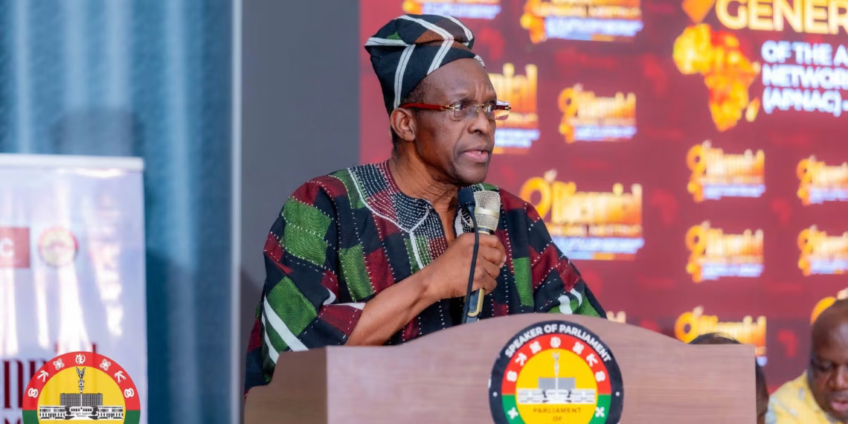
The Speaker of Parliament, Rt. Hon. Alban Sumana Kingsford Bagbin, has cleared the air regarding the limits of parliamentary immunity, stating categorically that national security agencies are under no legal obligation to seek his prior permission before arresting or inviting a Member of Parliament for criminal questioning.
Addressing lawmakers during a plenary sitting of the Second Meeting of the Second Session of Parliament on Thursday, 21 May 2026, the Speaker strongly dismantled a growing, widespread misconception that the head of the legislature must grant a clearance certificate before a Member of Parliament can face law enforcement actions.
Mr Bagbin explained that the relationship between the police, state intelligence agencies, and the legislature is governed by transparent constitutional protocols rooted in notification, not permission.
The Speaker clarified that his office’s real role is strictly to be formally and immediately notified of any criminal processing involving an MP. This official communication must detail the structural circumstances and specific criminal allegations that informed the state's intervention.
Once that notification is received, it allows the leadership of the house to properly assess whether parliamentary privilege or specific constitutional immunity applies to the specific situation—such as whether the lawmaker was intercepted while en route to or returning from official parliamentary duties.
The Speaker’s high-profile clarification comes at a time when public and media discussions have intensified regarding how much protection the 1992 Constitution gives to sitting legislators faced with criminal investigations.
Putting the legal argument to rest on the floor of the house, Rt. Hon. Alban Bagbin stated unequivocally:
“It’s not for the security agents to seek my permission before arresting or inviting a member of parliament for questioning. It’s not. It’s for them to inform me and include the circumstances or the allegations that have created the suspicion.”
By setting this clear boundary, the Speaker reminded both state prosecutors and members of the house that the rule of law applies to all citizens equally.
Parliamentary immunity, he indicated, was never designed to turn legislators into a class of untouchables or to create an obstacle course for the police administration when dealing with reasonable suspicion of crime.
The declaration is expected to streamline current and future law enforcement operations involving politically exposed persons, ensuring that while the dignity and independence of Parliament are maintained through formal institutional communication, the course of criminal justice is not delayed by administrative bottlenecks.
Latest Stories
-
Ghana’s tuna industry in crisis as 20 hook-and-line vessels collapse
36 minutes -
South Tongu MP launches apprenticeship programme for 159 young people
49 minutes -
The Pusiga connection behind Gertrude Atongi’s work in New York
1 hour -
Teachers took promotion exams in December to beat government clearance deadline – GNAT
1 hour -
NPA launches 2026 staff welfare week with focus on teamwork and employee wellbeing
1 hour -
Ghana, Saint Kitts and Nevis sign labour deal to strengthen protections for Ghanaian nurses
1 hour -
Delayed promotions put teachers’ retirement benefits at risk – GNAT
1 hour -
No ‘Bawumia candidates’ in NPP executive elections – Anthony Karbo
2 hours -
Over 3,000 displaced as flooding overwhelms Hohoe communities
2 hours -
Sunyani East NPP executives begin reconciliation drive ahead of 2028 polls
2 hours -
Agric Minister engages Ga Mantse on agriculture transformation agenda
2 hours -
Aayalolo expansion targets private car users, not trotro operators – Mahama Ayariga
2 hours -
KNUST, GMTF explore AI partnership to transform healthcare delivery
2 hours -
MTTD records 9,000 preventable crashes, over 900 deaths in eight months
2 hours -
UN Secretary-General expresses optimism about future, pledges support for Mahama, AU
2 hours