

Audio By Carbonatix
Earlier this week, I was at Kantamanto timber market in Accra with my carpenter to get aluminium roofing sheets and some wood for a small job at home. I discovered it to be a sprawling market and a one-stop shop for building materials. Quite impressive, I thought.
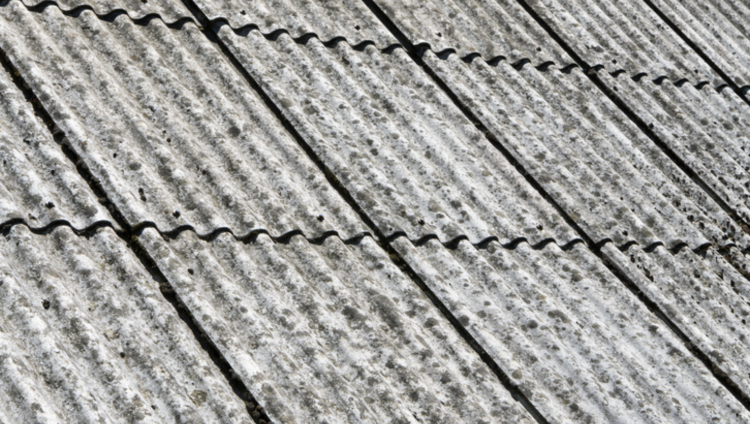
However, something that piqued my curiosity was the display and active selling of asbestos roofing sheets alongside other types of roofing sheets in some of the shops. I engaged one of the shop owners in a conversation on asbestos and whether they know of its health consequences to humans, especially its particles.
This shop owner countered that once they were being produced in the factories, they were only producing on display a variety of roofing sheets to anyone who came in. He said that any product seller was to give the customer a choice giving him or her a line of varieties to select their preference based on their pockets.
Regulation
Though I was not blaming them but only sharing information, I felt a bit disappointed. My disenchantment was not with the sellers but with the kind of regulations we have and which govern manufacturing. It felt like an attitude of anything goes with no reference to their effects. I moved on to search for what I was looking for.
But really, why are we allowing the manufacturing of asbestos roofing sheets and for that matter, any products with asbestos in them, in this day and age?
I wondered if the Science Association and or the responsible regulatory authority for the building industries have any set standards to regulate manufacturing in view of human health and safety, especially with what one has been made to understand is a harmful product if exposed to it over time.
Cancer-causing
I recall that as far back as the early 1980s, the United Kingdom (UK) for example banned the use of asbestos-based materials in their building industry. Their Scientists had connected asbestos or its particles to a form of cancer when breathed in over a period of time.

When the news broke, it became headline news at the time. So keen to protect their citizens, particularly pregnant women and vulnerable children, they went as far as identifying public institutions including schools which had asbestos particles in their buildings to rip them off.
The reason, I remember, was that asbestos, especially the particles, was said to be a cause of cancer for those who continually breathed it in over a long period.
I followed the story at the time with keen interest because asbestos sheets were used a lot in the building industry here in Ghana. Unfortunately, to date, I have not heard any warnings from any quarter.
Years after the UK ban and when I was building my own house, my contractor gave me the option of asbestos roofing sheets for the entire house because it was seemingly cheaper. I shot it down immediately and explained why to him. He was oblivious to the fact even though he had been in the industry for years.
Over three decades later, I had expected that the fact about asbestos would have been a widely known fact. I had expected that our scientists and regulators would have taken steps or advised the authorities on a ban knowing the long-term consequences when someone is exposed to it.
But alas, my experience at the Timber Market this week has proved to me that nobody has initiated any move to curtail the use of this possible health hazard. It would not be far from saying that so far, business in the building industry continues as business as usual.
Imagine a house roofed with asbestos for decades and the occupants living with a possible danger they have no clue about. If all of us knew about the dangers, there would be no market for it in our society.
Education
One is bringing this issue of asbestos up because we all have to be aware of its negative impact. I see the maxim that knowledge is power as very apt here. At this point, one even wonders how many of us are aware of the harmful effects of asbestos particles.
Indeed, no one would want to carry money to buy diseases for themselves and their families. Should our Scientists investigate and the issue be established, an appropriate action, including education, should be widely employed so the manufacturer and indeed the building industry are competently aware.
It could be a serious issue we are just leaving to chance.
Latest Stories
-
Court fines miner for breaking into gold buying shop
6 minutes -
Tarkwa court jails labourer for three years over GH¢123,000 theft
1 hour -
GAEC must retain nuclear scientists for Ghana’s nuclear ambitions – Minister
2 hours -
Man reportedly mistaken for game and shot by hunter dead in forest
2 hours -
19-year-old mason jailed 15 years for defiling seven-year-old pupil
2 hours -
Ghana’s banking sector assets rise 20.47% to GH¢500.2bn – BoG Governor
2 hours -
22 injured as Sprinter bus overturns at Sege after tyre burst
2 hours -
UN housing expert urges Ghana to strengthen Rent Control Department amid housing affordability concerns
2 hours -
Delta-BCI partnership reaches 166,000 people with breast cancer education
2 hours -
Power restoration fault suspected in Kumasi Central Market fire
7 hours -
The 7-foot giant of Ngleshie Amanfro: Seven-foot Ghanaian Ephraim Saawa dreams of joining the national basketball team
8 hours -
Government promises support for Kumasi Central Market fire victims
8 hours -
Vibes The Movie: Big Ghun’s Ghanaian film earns five nominations at 2026 REFFA
8 hours -
‘I’m a fulfilled man’—Justice Korbieh on missing out on Supreme Court despite two nominations
9 hours -
MamaCare CEO warns unresolved conflicts among health workers could undermine maternal and neonatal care
9 hours