

Audio By Carbonatix
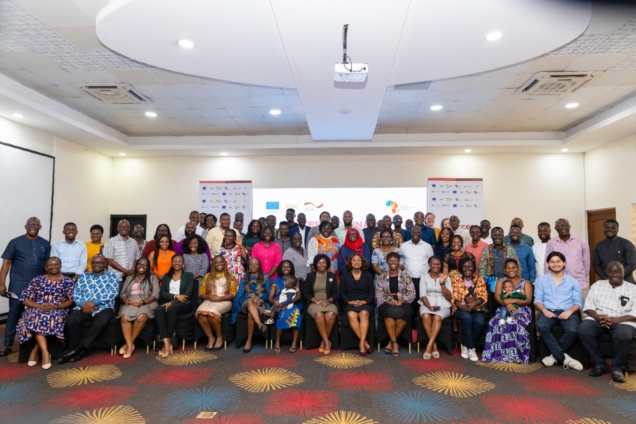
A high-level access to finance policy dialogue has been held in Accra to develop a strategic roadmap on reducing the cost of financing for micro, small, and medium enterprises.
Ghana is one of the top three countries in the world with the most women entrepreneurs (Mastercard Index of Women Entrepreneurs, 2021), yet women entrepreneurs face numerous financing challenges. The dialogue sought to promote discussions on existing access to finance and market gaps for MSMEs and tailor-made solutions.
The Access to Finance Policy Dialogue was on the theme “Reducing the cost of capital in Ghana.” It is organised by the Women Entrepreneurship for Africa (WE4A) programme, an initiative of the German Federal Ministry for Economic Cooperation and Development (BMZ). The project is co-funded by the European Union (EU), the Organisation of African, Caribbean, and Pacific State (OACPS), and implemented by the Deutsche Gesellschaft für Internationale Zusammenarbeit (GIZ) GmbH and the Tony Elumelu Foundation.
According to the World Bank, women entrepreneurs play a critical role in economic development. They boost growth and create jobs, particularly for the poorest 40% of the population. Yet, women entrepreneurs face numerous challenges to financing.
The dialogue hosted several panel discussions on the cost of credit, the factors that drive cost, the availability of credit, and the development of customised financial products tailored specifically for MSMEs.
Small and medium enterprises (SMEs) account for over 90% of firms globally. However, SMEs face greater financing obstacles than larger firms—they enjoy less access to external finance and face higher transactions costs and higher risk premiums (World Bank,2023). Almost 70% of SMEs do not use external financing from financial institutions, and another 15% are underfinanced. The total credit required to finance these SMEs fully is over $2 trillion, equivalent to 14% of the GDP of developing economies.
The Access to Finance Policy Dialogue brought together key policy makers, entrepreneurship support organisations, funders, intermediaries, transaction advisors, and entrepreneurs. Highlights included the introduction of a range of innovative solutions aimed at strengthening the financial stability of MSMEs in Ghana.
The WE4A Programme is a collaborative initiative supported by the European Union, the Organization of African, Caribbean, and Pacific States, and the German Federal Ministry for Economic Cooperation and Development. Its mission is to empower African women entrepreneurs, foster economic growth, and promote gender equality in entrepreneurship through targeted training, financial support, and partnerships with the private sector.
Latest Stories
-
Imagination Africa, Mentors Chess Academy to host second African Genius Chess Championship at Ghud Park
1 hour -
Nana B passport claims a diversionary tactic — Abu Jinapor
2 hours -
Pope Leo diagnosed with cancer as doctors remove lobe of lung, Vatican says
2 hours -
Legal Aid Commission takes free legal services to Techiman main lorry terminal
2 hours -
Nana B denies seeking passport favour, accuses Ablakwa of failing to account for GH¢16.4m
2 hours -
Young girls demand climate action, stronger protection against child marriage
2 hours -
Ex-gang boss sentenced to 40 years for orchestrating Tupac Shakur’s murder
3 hours -
From near-deferral to three awards: UMaT graduate’s academic journey
3 hours -
Atta Akyea denies seeking presidential pardon for Wontumi in galamsey case
3 hours -
Photos: Mahama commissions 85-bed Police Hospital ward, donates two ambulances
3 hours -
GTEC directs Ghana’s public universities to reopen by October 16 and begin lectures on October 19
3 hours -
Star Oil donates GH¢1million towards construction of new CID facility
3 hours -
Court hands Adjetey Sowah, two others lifetime bans after Amputee Football legal dispute
4 hours -
NDC appoints Julius Kwame Anthony as a Deputy Communications Director
4 hours -
Ghana repatriates 120 Nigerians rescued from suspected cybercrime centres
4 hours