

Audio By Carbonatix
The Ghana Export Promotion Authority (GEPA) has reaffirmed its commitment to building robust systems that empower Micro, Small, and Medium Enterprises (MSMEs) to compete effectively in the global market.
Osafohene Dr Afua Asabea Asare, Chief Executive Officer, GEPA through her representative Mr Banda Z.K. Abdallah at a day’s validation workshop at Aflao Border, said the Authority recognised the critical role MSMEs played in Ghana’s economic development and was dedicated to providing them with the necessary support to thrive.
“Cross-border trade is a cornerstone of Ghana’s export development strategy. However, challenges such as limited access to trade information, unclear processes, and infrastructure gaps at border posts continue to impede the efficiency and competitiveness of exporters.”
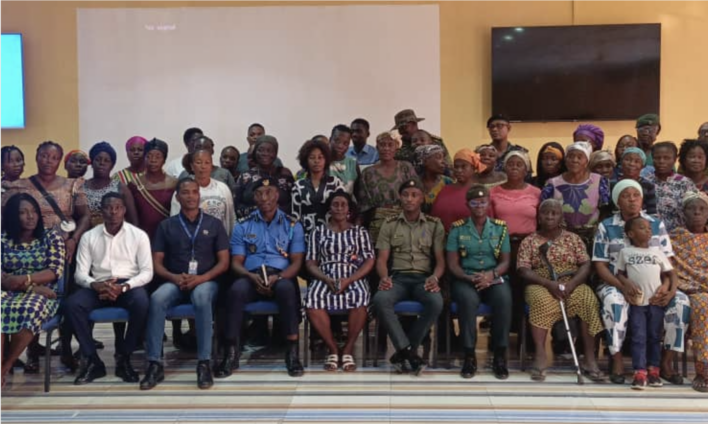
The workshop on Friday was to assess the establishment of information desks at selected borders in Ghana aimed at enhancing cross-border trade under the African Continental Free Trade Area (AfCFTA).
It formed part of a project on the theme: “Building Resilience of Women and Youth-Led MSMEs through AfCFTA for Green and Inclusive Recovery and Growth,” being implemented by GEPA in collaboration with the United Nations Development Programme (UNDP) to empower women and youth-led MSMEs across Ghana.
Osafohene Dr Asare envisaged that the establishment of information desks across key border posts in the country was critical to the success of cross-border trade and AfCFTA, which she described as not just a policy but a “transformative opportunity that we, as Africans, must embrace to foster economic growth, integration, and resilience.”
“These trade information desks will serve as critical hubs to provide timely, accurate, and accessible trade-related information to businesses and traders. They will streamline processes, reduce bottlenecks, and enable smoother operations for exporters, particularly those transitioning to seize opportunities under AfCFTA.”
“As we forge ahead, let us remember that the success of AfCFTA and cross-border trade hinges on partnerships, collaboration, and innovation. Let us commit to building robust systems that empower MSMEs, reduce trade barriers, and unlock prosperity for all,” she added.
Findings and recommendations from all three borders, Elubo, Paga and Aflao, presented by Dr Martin Akogti, Researcher at GEPA, identified challenges faced by small-scale cross-border traders including complicated Customs procedures, high transaction cost, lack of clarity on trade regulations and compliance, poor infrastructure and transport logistics and language barrier.
It found that there existed few information desks/front desks in some of the agencies at the borders providing information on cross-border trade but the “establishment and operationalisation of a one-stop information desk was a key component in creating an efficient, transparent and supportive environment for cross-border trade, benefitting traders, governments and the economy as a whole.”
Stakeholders and participants, deliberating on the presentation made inputs to ensure the successful implementation of trade information desks across the country’s key border posts.
Mr Wonder Akpese of the Food and Drugs Authority, Aflao said it was important to have in addition, a call centre, voice over in different languages sensitising traders on trade regulations, citing the ban on hydroquinone-containing cosmetics saying, “Some of this information may be helpful to the traders.”
Mr Bernard Gyasi Abrokwah of the Small Arms Commission, Aflao advised the cross-border traders not to misuse the opportunity being given to them but to consider the security of the nation by providing information on people who would want to trade in arms and ammunition saying, “most of the arms and light weapons come through the land borders.”
Mr Oscar Akaba-Norvixoxo, National Coordinator of, the National Cross Border Women Traders Association, appreciated the efforts of GEPA and UNDP to build a thriving, resilient, and inclusive trade environment for women and youth and asked that the Association be involved from the planning stage as would help in “understanding the real issues on the ground.”
Mad Dzifa Dufe, a cross-border woman trader, in an interview with Ghana News Agency, described the workshop as engaging and revealing with all key stakeholders, including officers from the Customs Division of Ghana Revenue Authority and Ghana Immigration Service making inputs to facilitate cross-border trade.
“We look forward to actual implementation of these findings and recommendations to boost our trade because as it is now, we face hurdles in our trade almost on a daily basis.”
Latest Stories
-
Imagination Africa, Mentors Chess Academy to host second African Genius Chess Championship at Ghud Park
32 minutes -
Nana B passport claims a diversionary tactic — Abu Jinapor
1 hour -
Pope Leo diagnosed with cancer as doctors remove lobe of lung, Vatican says
1 hour -
Legal Aid Commission takes free legal services to Techiman main lorry terminal
2 hours -
Nana B denies seeking passport favour, accuses Ablakwa of failing to account for GH¢16.4m
2 hours -
Young girls demand climate action, stronger protection against child marriage
2 hours -
Ex-gang boss sentenced to 40 years for orchestrating Tupac Shakur’s murder
2 hours -
From near-deferral to three awards: UMaT graduate’s academic journey
2 hours -
Atta Akyea denies seeking presidential pardon for Wontumi in galamsey case
2 hours -
Photos: Mahama commissions 85-bed Police Hospital ward, donates two ambulances
3 hours -
GTEC directs Ghana’s public universities to reopen by October 16 and begin lectures on October 19
3 hours -
Star Oil donates GH¢1million towards construction of new CID facility
3 hours -
Court hands Adjetey Sowah, two others lifetime bans after Amputee Football legal dispute
3 hours -
NDC appoints Julius Kwame Anthony as a Deputy Communications Director
3 hours -
Ghana repatriates 120 Nigerians rescued from suspected cybercrime centres
3 hours