

Audio By Carbonatix
Chief Research Scientist at the School of Nuclear and Allied Sciences, Abraham Adu-Gyamfi, has emphasised the crucial need for farmers and food exporters to adopt food irradiation as a means of preserving and extending the shelf life of food crops.
A recent study conducted by the Denmark Embassy in Ghana revealed alarming statistics: approximately 50% of crops harvested in Ghana go to waste, resulting in a staggering loss of over $16 million due to post-harvest losses of selected food crops. This revelation underscores the urgency to address this issue effectively.
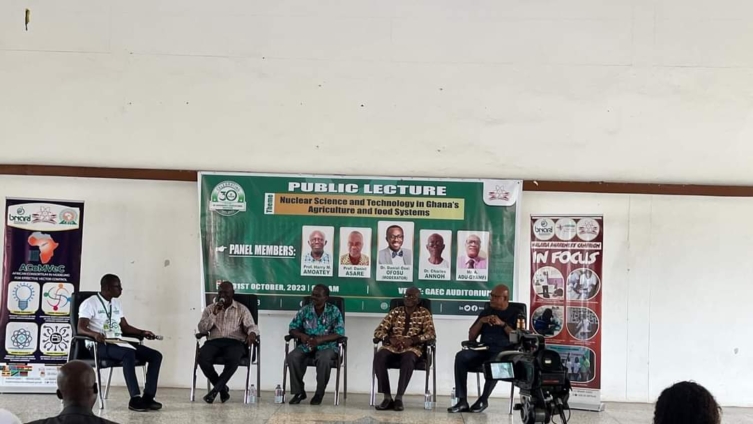
Mr. Adu-Gyamfi, speaking after a Public Lecture on Nuclear Science and Technology in Ghana’s Agriculture and Food Systems, highlighted the potential of food irradiation in curbing these losses and enhancing food security in the country.
He emphasised, "Food irradiation will enable us to eliminate pathogenic and spoilage microorganisms from food. Moreover, it can significantly reduce the levels of insects in maize and cereals."
Again, he stated that this method could effectively delay the ripening of fresh produce, enabling fruits to stay fresh for an extended period, which is essential for reaching markets where fresh products are in demand.
Furthermore, the process can inhibit sprouting in areas where rhizomes and bulbs are prevalent, consequently extending the shelf lives of these crops.
Regarding the accessibility of the technology, Mr. Adu-Gyamfi mentioned that their institution has organised various educational activities, including food fairs and site visits, aimed at sensitising farmers and other stakeholders.
He noted, "We have conducted food fairs where farmers have had the opportunity to taste irradiated foods. Additionally, we encourage producer groups to visit the Atomic Energy Commission to understand the functions of the facility."
In Africa, concerns about nutrition and food security remain paramount, especially with the continent's burgeoning population.
The issue of food loss and waste is particularly urgent. It's estimated that each year, a substantial percentage of grains, root crops, and fruits and vegetables are destroyed, impacting agricultural sustainability.
Smallholder farmers and local producers, the backbone of the agricultural sector, face financial setbacks due to increased produce losses, which restrict the availability of food.
By adopting food irradiation techniques and increasing awareness among stakeholders, Ghana stands to significantly reduce post-harvest losses, ensuring a more sustainable and efficient agricultural system for the future.
Latest Stories
-
Fuel prices set to rise again from Sept 1; petrol could hit GH¢16.21 – COPEC
2 hours -
REGSEC restricts Akwasidae celebrations in Denkyira amid security concerns
2 hours -
Eric Adjei distributes free fertiliser to farmers in Jaman North
2 hours -
Akufo-Addo urges NPP factions to unite behind Bawumia for 2028 victory
2 hours -
NDC mourns Western Regional Elections Director Papa Assan
2 hours -
Minerals Commission warns against fake job recruitment schemes
3 hours -
10 recruits dismissed for defying phone ban – Interior Minister
3 hours -
IEAG commends GoldBod, BoG for improving forex stability
3 hours -
Bawumia donates GH¢50,000 to St Jude Catholic Church at Weija
3 hours -
Mahama calls for faster mobilisation of AU Peace Fund resources
3 hours -
Improved roads bring new vehicle options to Tumu-Bolga, Tumu-Tamale, Tumu-Wa routes
3 hours -
Cedi records 7.9% depreciation against US dollar in first half of 2026
3 hours -
GIS launches operation on anti-human trafficking and exploitative street begging
3 hours -
Awutu-Senya District Assembly organises clean-up ahead of Awubia Festival
3 hours -
Vice President Opoku-Agyemang receives Democracy Cup
4 hours