

Audio By Carbonatix
Grace Ano Abbey, a Principal Executive Officer at the Department of Children in the Ministry of Gender, Children, and Social Protection, has identified poverty and irresponsible parenting as significant obstacles to the academic performance of girls in schools.
Abbey emphasized that the inability of some parents to monitor and support their children, combined with economic challenges, negatively impacts the educational journey of many girls.
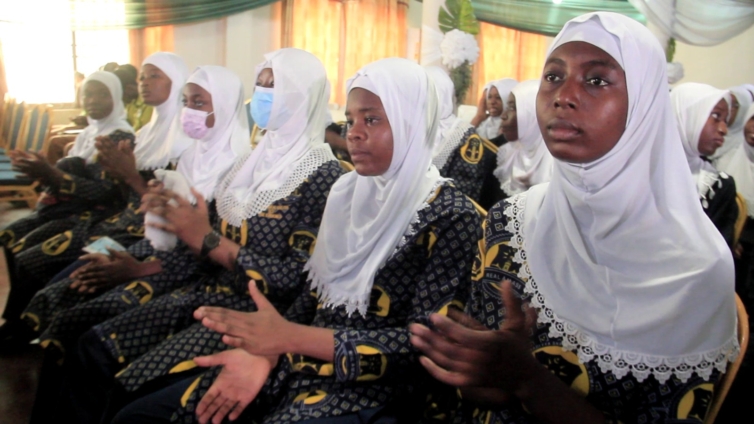
Speaking at the 14th Annual Conference of the Federation of Muslim Women's Association in Kumasi, Abbey highlighted the struggle faced by numerous girls in affording basic learning materials, which, in turn, has a substantial effect on their academic work.

The Ministry official underscored the importance of addressing these challenges to ensure that all girls have equal opportunities for academic success.
"The major challenges we have when it comes to girls is poverty, the basic things they need to go to school, they don't get it, some parents cannot afford those basic things," she said.
Abbey emphasized that some parents neglect their duty to supervise or monitor their children's education, showing indifference to whether their children attend school or not.
Abbey urged parents to actively support their daughters by providing essential items such as sanitary pads and learning materials. She stressed that these contributions are crucial for improving the academic performance of girls.

Additionally, Grace advised young girls to prioritize their education over excessive use of social media, highlighting the potential hindrance it poses to academic progress. Encouraging a focus on learning, Abbey emphasized the role of responsible parenting in creating an environment conducive to educational success for girls.
"Social media is always available, but they should focus on their studies so that they can excel and pursue careers as doctors and lawyers. Then, they can use social media more effectively," she added.
Hajia Hajara Mohammed Rufai, a Commission Member of the National Commission for Civil Education, underscored the adverse impact of insufficient educational facilities in the inner cities of Zongo communities on the academic development of children.
According to her, the absence of proper educational institutions poses a significant obstacle to the learning opportunities available to children in these areas.
Hajara Mohammed Rufai also pointed out additional challenges, including the lack of motivation and mentorship, which seriously deter children, especially girls, in Zongo areas from attending school. These issues, she emphasized, contribute to hindering the academic progress of children and underscored the need for concerted efforts to address these barriers to education in Zongo communities.
Latest Stories
-
YEA records GH¢110.4m surplus after turning around 2024 deficit – SIGA report
1 minute -
Madina MP Francis-Xavier Sosu prioritises road rehabilitation, education and healthcare
7 minutes -
Valco-Kpone road turns nightmare as motorists fume, tanker drivers threaten fresh strike
7 minutes -
STC cuts net loss by 93% to GH¢5.18m despite 12% revenue decline
14 minutes -
Tanker drivers threaten strike over deplorable VALCO-TOR-Kpone road
20 minutes -
NPA surplus jumps 76% to GH¢447m in 2025 – SIGA
23 minutes -
Railway workers push for completion of Takoradi-Nsuta line by 2027
27 minutes -
Police arrest 6 suspected notorious armed robbers in Kumasi
30 minutes -
Opinion: GHS1m is welcome, but Ghana Premier League’s biggest problem remains unsolved
31 minutes -
Stylen Boy’s ‘Adole’ featuring Kurl Songx hits No. 1 on Ghana iTunes
34 minutes -
CBG’s assets rise to GH¢17.86bn as deposits, revenue and equity grow in 2025 – SIGA Report
37 minutes -
KNUST SHS considers slashing admissions over infrastructure deficit
42 minutes -
GEXIM Bank’s capital adequacy ratio rises to 75.3% in 2025 – SIGA Report
46 minutes -
CPC’s revenue plunges 47% as net loss widens to GH¢144m — SIGA
46 minutes -
Ghana Water turns GH¢3.06bn loss into GH¢635.23m profit in 2025 – SIGA Report
47 minutes