

Audio By Carbonatix
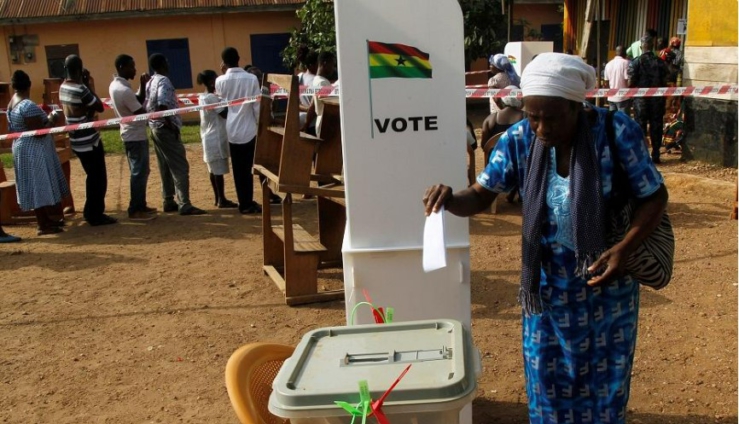
Stakeholders mandated to safeguard Ghana’s fledgling democracy have been urged to be vigilant of groups and individuals who seek to interfere with the election processes to influence the outcomes.
Professor Seidu Alidu, the Head of Political Science Department, University of Ghana, said people with vested interests may meddle in the country’s elections taking advantage of all kinds of vulnerabilities in the system to achieve their aim.
He explained that election interference was a purposeful action undertaken by state or non-state actors with the intention to influence the results.
“Thus citizens and all institutions responsible for protecting the sanctity of Ghana’s elections must be vigilant to detect any such moves as early as possible to nip them in the bud and protect our democracy,” he said.
Prof Alidu was speaking at a training workshop on “Managing the Risk of Election Interference in Ghana’s Election 2024” in Accra on Thursday.
The workshop, organised by the Institute for Democratic Governance (IDEG), was attended by the media, representatives of the security agencies, the Electoral Commission, National Commission for Civic Education, and political parties, among others.
It aims to sensitise participants on the strategies, nature and type of influence and manipulation in order to design preventive measures to counter them.
“Election meddling subverts the true will of the people and creates unfair electoral outcomes, which could lead to instability and further weaken the legitimacy of the democratic process,” Prof Alidu said.
The exposure of citizens and stakeholders to the electoral processes would empower them to be alert of possible interferences, which may manifest in different forms, and enhance their capabilities to help prevent same.
“If people are planning that kind of intervention, they should backoff because citizens are aware and they will be the vigilantes of our democracy,” he said.
Dr Joyce Manyo, Research Fellow, IDEG, making a presentation on: “Mechanism for Election Interference” noted that those who may interfere in the elections may employ misinformation to distort the media environment.
Some of the major methods of content manipulation include propagandistic news, fake news, paid commentators, bots (automatic accounts) and takeover of social media accounts.
She urged the relevant institutions, including the media, security agencies and individuals to be the watchdogs because if each one played his or role as expected, no external body could take advantage of the process.
Latest Stories
-
‘When you play Ghana, it’s a derby’ – Kessié sets tone for AFCON qualifying showdown
19 seconds -
Mahama urges global institutions to invest in Africa’s cultural infrastructure
6 minutes -
Kuami Eugene joins UNICEF Ghana to promote universal birth registration
9 minutes -
Renard warns Côte d’Ivoire against complacency Ahead of Ghana clash
11 minutes -
‘Can the patient feel the difference?’ – GMTF boss challenges health leaders
12 minutes -
Office of the Registrar of Companies marks Risk Awareness Week with push for risk-smart, resilient institution
23 minutes -
Full text: Mahama’s speech at high-level side event on return and restitution of cultural properties and heritage
26 minutes -
ICU urges Ghanaian smock weavers to scale up production for local and export markets
27 minutes -
Human remains are not collectibles, specimens – Mahama demands restitution of Africa’s heritage
27 minutes -
EOCO, Baffour Awuah clash: Article 117 does not give MPs blanket protection from arrest – Samson Ayenini
30 minutes -
Mahama unveils 3 pillars to advance global reparatory justice agenda
48 minutes -
JoyNews Democracy Is Not for Sale regional dialogue – My take
52 minutes -
US ready to work with Ghana on reparatory justice despite opposing UN resolution – Ablakwa
1 hour -
UK, Netherlands, Denmark ready to work with Ghana on reparatory justice – Ablakwa
1 hour -
Ghana TVET Service partners TOR to strengthen industry skills training
1 hour