

Audio By Carbonatix
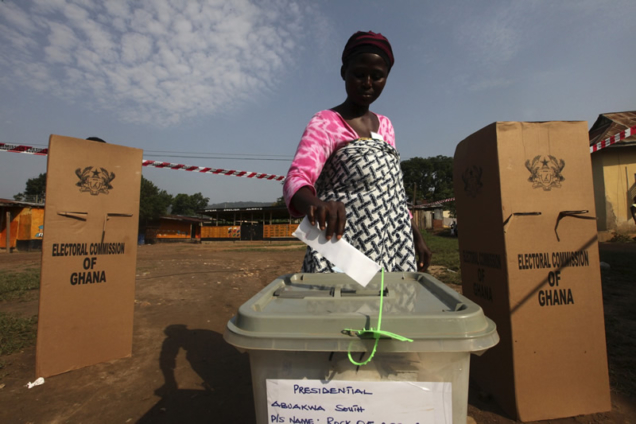
Voting in the district-level elections at the Methodist Church polling station in the Ga-North constituency of the Greater Accra Region recorded an interesting incident when an identical twin was refused voting because the biometric system had identified her as someone who had already voted.
Her twin sister had successfully voted after going through the identification process.
She turned up hours later after her sister had voted, hoping to exercise her franchise, however, she was identified as having already voted, and was therefore not allowed to vote.
The Presiding Officer at the centre explained that this was the first of its kind, adding that it might either be the same person posing as her other twin or a minor system failure.
However, residents say they know the twin sisters; therefore they were surprised the system identified them as the same person.
A man hinted that if the indelible ink was in place, this could have been avoided.
He questioned whether the same situation would arise if there were about 100 twins.
He appealed to the Electoral Commission to find a way of resolving this minor challenge because the twin who was denied her franchise only went home without complaining because it was a district-level election.
The Electoral Commission has announced that in this election and subsequent polls, there would be no need for indelible ink.
Indelible Ink is a semi-permanent dye applied to voters' fingerprints to indicate who has exercised their franchise and prevents double voting.
Speaking at a press conference ahead of the December 19 district-level election, the EC chair, Jean Mensa, said this was part of measures by the Commission to improve the electoral process and ensure a robust identification system.
“The issue of indelible ink, the question is when we were not doing biometric we were basically using your face, your card. We look at your face and we say this picture looks like you.
“The biometric technology makes it difficult for a person who has been verified and cast their vote to come a second time. So, there is no need for indelible ink. Once you have been verified, it goes into the system and you cannot come back a second time,” she said.
Latest Stories
-
GTA denies collecting money for US, Canada visas ahead of 2026 World Cup
14 seconds -
GTA CEO Maame Efua Houadjeto denies involvement in World Cup visa scandal
20 minutes -
Rockland Farms CEO Calls for Greater Support for Women in Agriculture
35 minutes -
AFCON 2027Q: Interim Black Stars technical team to take charge of November games
1 hour -
Gov’t suspends implementation of L.I. restricting preaching and hawking in moving vehicles
1 hour -
Three Saudi nationals killed in Houthi attacks on Riyadh airport
1 hour -
Jinapor demands accountability from energy sector agencies ahead of 2027
1 hour -
Cars torched and shops looted as anti-migrant violence erupts in South Africa
2 hours -
We’ll strengthen unity and party structures to win 2028 election – John Boadu assures Kufuor
2 hours -
Mahama’s meeting with UN financial inclusion renews focus on women’s access to finance – Joyce Bawah Mogtari
2 hours -
‘Africa is not the future; Africa is the now’ — Sammy Gyamfi tells African youth
2 hours -
Mahama begins 2-day ‘Resetting Ghana’ tour of Ahafo Region
2 hours -
It is a nuisance law; stop pretending it is a religious war
2 hours -
KGL U17 Colts 2026: Prempeh Elite Academy, Western Region, two others battle for final berths
2 hours -
LA 2028: Near misses and the crashouts, but Black Queens cannot afford another Olympic Games slip-up
3 hours