

Audio By Carbonatix
A recent webinar hosted by the Africa Center for Strategic Studies and the Women, Youth Peace and Security Institute (WYPSI) of the Kofi Annan International Peacekeeping Training Centre (KAIPTC) has highlighted the significant threat that disinformation poses to peace and security across Africa, particularly during elections.
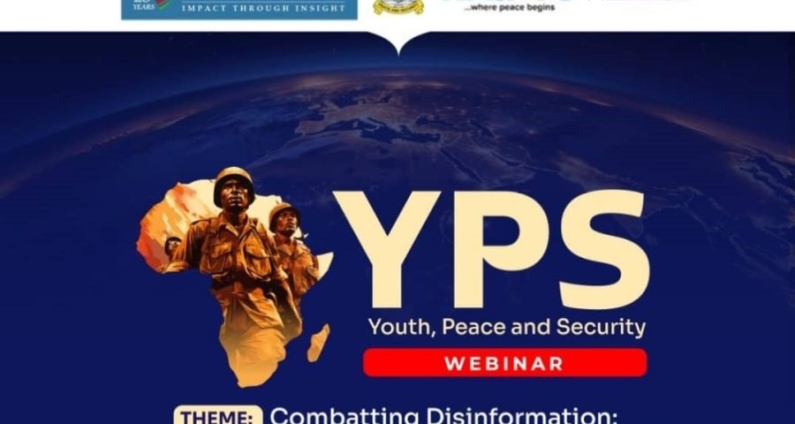
The event on the theme, “Combating Disinformation: Empowering African Youth for Peace and Security,” served as a platform for collective action, bringing together government officials, civil society actors, academics, and private sector representatives to combat disinformation and safeguard peace and security in their communities.
With the digital landscape rife with misinformation, it emphasised the urgency to foster critical thinking, media literacy, and ethical information-sharing practices.
Leading voices such as Edmund Akoto Bamfo of KAIPTC, Kúnlé Adébàjò of HumAngle (a fact-checking media organization), and Harriet Ofori of Penplusbytes, discussed the multifaceted dangers of disinformation and empowered young people to tackle it head-on.
The speakers underscored how disinformation not only deepens social divisions and erodes trust in institutions but also disrupts the very fabric of peace and security. They emphasized that young people, with their inherent digital fluency, are key actors in countering this threat.
With nearly 18 elections set to be held in Africa in 2024 alone, Edmund Akoto Bamfo highlighted KAIPTC – WYPSI’s commitment to equipping young people with the necessary skills and knowledge to combat disinformation.
He warned that manipulated photographs and other forms of disinformation could exacerbate tensions and fuel violence during these critical electoral periods.
Fake news, Mr Bamfo argued, undermines democracy, and addressing this threat requires multifaceted action from all stakeholders, including governments.
“Governments must improve the implementation of existing laws, collaborate more closely with journalists to combat disinformation, and in doing so, also endeavor to uphold press freedom,” he stated.
Kúnlé Adébàjò further shed light on the external factors influencing the spread of disinformation, citing Russia’s alleged interference in Nigerian elections as a prime example. He also addressed the issue of state-sponsored disinformation campaigns, highlighting the challenges they pose for public awareness and countermeasures.
To combat disinformation, Mr Adébàjò advocated for wider fact-checking efforts and strategic partnerships that grant access to powerful tools like Meltwater, Datawrapper, and Media Cloud, thereby empowering effective identification and mitigation of disinformation. He stressed the importance of collaboration among news organizations across Africa, arguing that by joining forces, “journalists can amplify their impact and effectively counter disinformation narratives.”
Highlighting the webinar’s alignment with the African Centre for Strategic Studies’ focus areas like cybersecurity, the Director, Amanda Dory, commended the organizers for their commitment to raising public awareness about the dangers of disinformation and its far-reaching impacts on society. Ms Dory reaffirmed the African Centre for Strategic Studies’ commitment to collaborate with KAIPTC-WYPSI in such crucial endeavours.
The Commandant of the KAIPTC, Major General Richard Addo Gyane, in his remarks emphasised the urgency to foster critical thinking, media literacy, and ethical information-sharing practices.
The digital landscape rife with misinformation emphasizes the urgency to foster critical thinking, media literacy, and ethical information-sharing practices so that disinformation that could fuel tensions, erode trust, and disrupt the delicate balance needed for peace are avoided.
Combatting it, the Commandant maintained, requires a united front, demanding collaboration across sectors and “this is what the webinar aimed at, to leverage the diverse perspectives and experiences of its participants to forge innovative strategies and share best practices in tackling disinformation,” Major General Gyane said.
KAIPTC, he stated, remains steadfast in its commitment to empowering the next generation of peacebuilders, by nurturing dialogue, enhancing critical thinking, and equipping young leaders with the tools to discern fact from fiction.
Latest Stories
-
TVET Service, Bank of Ghana explore partnership to boost skills development
33 minutes -
Ghana TVET Service, OR Foundation partner to promote sustainable fashion
46 minutes -
Achimota, Accra Academy, PRESEC Osu qualify for next stage of National Public Speaking Event
49 minutes -
NCPTA challenges GES directive on PTA dues, cites High Court injunction
52 minutes -
Majority opposes parliamentary probe into cocaine busts while investigations continue
57 minutes -
Salomey Baffoe detention is a facade to divert attention from cocaine scandal – Weija-Gbawe MP
1 hour -
Francis-Xavier Sosu is doing well after GIMPA incident – Office
1 hour -
Deputy Minority Leader appeals to First Lady, Vice President over Salomey Baffoe’s detention
1 hour -
Ecobank Group commits US$2.6bn to women-led businesses and agribusinesses across Africa
2 hours -
Ghana to host high-level conference on scaling education initiatives in emergencies
2 hours -
Democracy must not be for sale: Who pays for Ghana’s politics, and how do we confront money, influence and accountability?
2 hours -
Aburi Amanfrom landowners appeal for government support for Atwapim development project
2 hours -
Cargill Ghana and International Cocoa Initiative celebrate 111 young graduates building skills for the future
3 hours -
Video: Madina MP Francis-Xavier Sosu collapses while addressing students at GIMPA
3 hours -
Hunnyboy reveals how social media landed him Shatta Wale feature
3 hours