

Audio By Carbonatix
The Convener for the Affirmative Action Bill (AAB) Coalition, Sheila Minka-Premo, says the various calls from individuals and organisations are enough justification to fast-track the passage of the bill into law.
Madam Minka-Premo said the AAB, when passed into law, would address social, economic, and educational imbalances, eliminate discrimination, and champion the need for equal opportunities for both men and women.
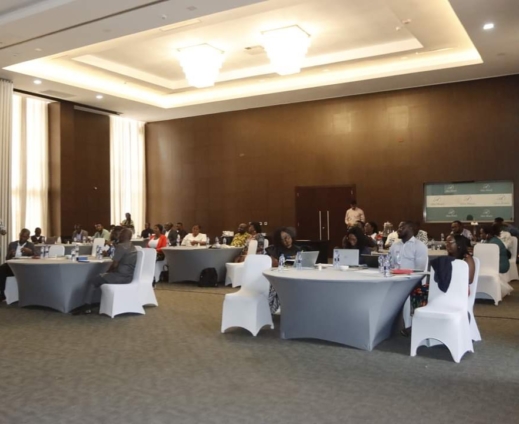
She made this known during a two-day workshop for journalists organised by the Centre for Democratic Development (CDD) in collaboration with CODEO and the Affirmative Action Bill Coalition with backing from the European Union (EU).
She emphasised that no country could achieve its full potential without the equal economic participation of both women and men, explaining that economic development would be on the decline if the highest portion of the population, being women, were discriminated against, stressing that there was a need for inclusion for the country to thrive.
She said the 40 women members of parliament out of 275 parliamentary seats in the country portrayed an imbalance in the system.
She said such a system was depriving women of their perspective on issues, and therefore called for breaking all barriers to enhance women’s participation in decision-making.
Madam Minka-Premo attributed the low representation of women to the patriarchal system in the country, where the course of men was championed and that of women was demeaned in almost all aspects of social, political, and economic life.
Outlining some critical areas the bill addressed, she mentioned that the marginalisation of women in public and economic life in Ghana was a result of gendered division of labour at home and the lack of legislation to ensure a change for gender equality to be duly dealt with.
The AAB Coalition convener, who is also a lawyer, said that some policies, such as the Girls Education Units of GES, the cabinet’s directive on affirmative action, scholarship schemes set up for females, and affirmative action policies in public universities favouring females for certain courses, have been inactive; therefore, the passage of the bill would address their ineffectiveness.
She added that research had proven that it made economic sense to ensure gender equality, as the economy had better opportunities to grow and become more resilient to crises if women and men have equal rights.
The workshop participants agreed on the need for the affirmative action bill to be passed into law.
Latest Stories
-
Are we marketing Ghana before fixing the experience? A hard question for our tourism ambition
1 minute -
AFCON 2027Q: Prince Adu Kwabena major doubt for Ghana after head injury
2 minutes -
Government to procure furniture to help more SHSs move from double-track — Haruna Iddrisu
9 minutes -
Adutwum spokesperson alleges ‘turf war’ between Education Ministry and GES over Free SHS
11 minutes -
Black Stars: Adu Kwabena a doubt for September-October games after head injury
24 minutes -
Fire guts four-bedroom apartment at Millennium City
25 minutes -
KMA seeks funding to restart stalled Kumasi Central Market Phase II project
46 minutes -
Government unveils new guidelines to improve regulation of non-profit organisations
51 minutes -
Annoh-Dompreh cautions against partisan application of law in political speech cases
58 minutes -
Oti Peace Council sensitises Assembly Members in Jasikan, Kadjebi on conflict prevention
1 hour -
Nawara petitions Ghana Police over alleged armed raid, gold seizure and destruction of mining equipment
1 hour -
Ahafo Ano South West DCE Abubakar Sedik dies after brief illness
1 hour -
Ghana must draw lessons from Nkrumah’s Seven-Year Development Plan — Kwesi Pratt
1 hour -
Oil hits over 1-week low on hopes of boost to diplomacy in Iran war
3 hours -
They take GH¢100, sometimes GH¢200 – Okada riders allege police extortion in Accra
3 hours