

Audio By Carbonatix
Ghana has taken a step toward gender equality with the passage of the Affirmative Action Bill into law.
This legislation is a turning point for women empowerment and guarantees development for the future of the nation.
As a journalist who largely covers stories on gender issues, women’s representation in local governance, and politics, this moment is personal and professional for me.
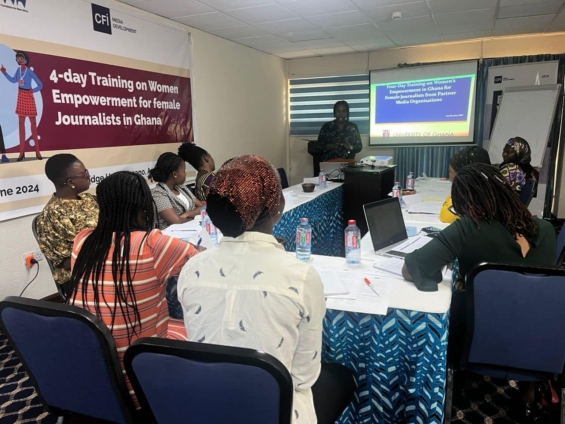
My journey includes intensive training on women empowerment and gender-sensitive reporting by the Media Foundation for West Africa and CFI’s Equal Voices project.
This bill shows the advocacy and commitment of many individuals and organizations working towards a more inclusive society.
The Affirmative Action Bill mandates that women should make up at least 40% of public decision-making bodies.
This provision is a step in addressing the gender imbalance that has long troubled our political and governance systems.
By ensuring that women have a presence in this domain, the bill will create a fairer environment where the voices of women are heard and valued.
"Every citizen shall have the right to participate in decision-making at every level of national life and in all aspects of national development," the bill states. This quote sums up the essence of the legislation: a commitment to inclusive governance that respects and incorporates the perspectives of all citizens, regardless of gender.
The bill also makes this point, "Special measures shall be adopted to ensure the full and effective participation of women in political, economic, social, and cultural life."
This calls attention to the comprehensive approach needed to address the multi-faceted nature of gender inequality.
Additionally, the bill states, "The State shall take appropriate measures to eliminate discrimination against women in all areas of life and promote their full development and advancement."
This strengthens the state's role in actively pulling down the barriers that hinder women's progress.
For the media fraternity, this law brings new responsibilities and opportunities.
Journalists must now be more vigilant and proactive in covering stories about less privileged women and those in governance and politics.
We must hold institutions accountable to the standards set by this law and ensure that the progress it promises is realized.
Gender-sensitive reporting becomes even more critical, as we have a duty to make known the successes and challenges women face in these new roles.
During my training, I learned the importance of amplifying the voices of women and framing stories in ways that challenge stereotypes and promote equality.
The passage of this bill buttresses the need for such journalistic practices.
It calls on us to celebrate the achievements of women leaders and scrutinize the barriers that still exist.
This law also serves as a call to action for young women across the country.
It sends a message that their aspirations in public service are valid and attainable.
By seeing more women in leadership positions, young girls can envision themselves in similar roles, encouraging a new generation of leaders who will continue to push the boundaries of what is possible.
The Affirmative Action Bill is an achievement, but it is just the beginning.
Real change will come from its implementation and the continuous effort to support women in every sector.
As a journalist, I am committed to playing my part in this journey, ensuring that the stories I tell contribute to a more just and equal Ghana.
Latest Stories
-
Power restoration fault suspected in Kumasi Central Market fire
4 hours -
The 7-foot giant of Ngleshie Amanfro: Seven-foot Ghanaian Ephraim Saawa dreams of joining the national basketball team
5 hours -
Government promises support for Kumasi Central Market fire victims
5 hours -
Vibes The Movie: Big Ghun’s Ghanaian film earns five nominations at 2026 REFFA
5 hours -
MamaCare CEO warns unresolved conflicts among health workers could undermine maternal and neonatal care
6 hours -
Health professionals urged to translate medical knowledge into practice to save mothers
6 hours -
Conflicts among care providers linked to maternal, neonatal deaths – Expert
7 hours -
GIS marks 10th TIME conference, champions improved teaching practices
7 hours -
BRICS Or Balance? What Ghana’s bid really means
8 hours -
GPRTU wants full TRAFFITECH-GH implementation to start in 2027
8 hours -
How 10-mile walks for basic education birthed a 50-year legal career for Justice Korbieh
8 hours -
Mahama announces plans to import electric wheelchairs for PWDs
8 hours -
KGL U17 Colts 2026: Western beat Prempeh Elite Academy to set up final final with Greater Accra Region
9 hours -
Late Solanke strike salvages 10-man Spurs draw at Man United
9 hours -
Gender Ministry to monitor welfare of Nana Akua Addo’s children amid domestic violence case
9 hours