

Audio By Carbonatix
April 2024 has been the hottest record month. Yet the transition from the scorching heatwaves to the heavy rains has been seamless as ‘hot’ April hands the baton to May’s ‘rainstorm and floods’.
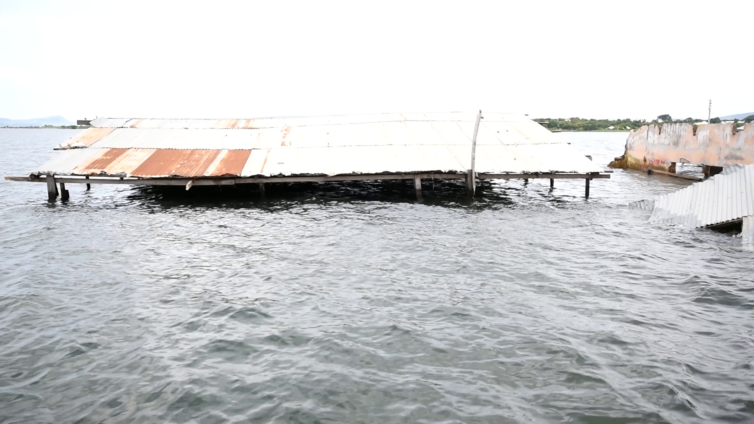
The hours between April and May have recorded the loss of hundreds of lives swept away by floods in Kenya, Tanzania and Brazil. In the UAE, up to 50,000 cars have been damaged by record rainfall and subsequent flooding, with preliminary insured loss exceeding $150 million.
And in Ghana, parts of Accra have already experienced flooding after heavy rains and strong winds uprooted trees, damaged vehicles, blocked roads and disrupted commuting.
The International Organization for Migration (IOM) says the “unprecedented and devastating” flooding in East Africa has triggered widespread displacement of thousands from their homes in Burundi, Ethiopia, Kenya, Rwanda, Somalia and Tanzania.
Roads, bridges, dams, homes and other infrastructure are damaged in such rainstorms. Businesses and other economic activities are adversely impacted and the health risks could also be profound, especially waterborne diseases like cholera and diarrhea.
When the Brazilian President said “we still don’t know the exact dimension of the floods”, and the people also say “we’ve never experienced anything like this” they are echoing the obvious critical reality of climate change.
These extreme weather events tell climate mitigation cannot wait.
The climate change factor
According to the forecast of the Ghana Meteorological Agency (GMET), regions of the north, Accra and other parts of the country will experience heavy rains and wind storms in the coming weeks till the end of July.
The GMet observed “it is likely that the winds will be stronger than what we have experienced lately” and cautioned the public to take safety precautions from the intense downpour and windstorms.
The exceptionally heavy rainfall hitting countries is an ever-increasing threat due to a warming climate.
A study by the World Weather Attribution (WWA) found that global warming “most likely” exacerbated the intense rains in UAE.
The recent heat waves, floods and storms are exacerbated by climate change, which recent analysis shows could cost global GDP by 17 percent by 2050.
Building resilience to mitigate and adapt
The economies of African countries remain fragile and vulnerable to the impacts of extreme weather events, like floods.
It takes a combination of resilience and adaptation techniques to properly handle the problems that extreme weather occurrences bring. While mitigation measures work to lessen the severity and impact of flooding occurrences, adaptation strategies concentrate on building resilience and decreasing susceptibility to floods and rainstorms.
Investing in resilient infrastructure designs that can withstand extreme weather events is crucial.
People would have to develop their own personal adaptation plans, such as avoiding low-lying regions that are prone to flooding as well as planting trees in their houses and other public spaces to act as windbreaks.
But at the national level, it is important to identify our vulnerabilities and prioritize adaptation measures, by integrating climate risk assessments into infrastructure planning and development processes.
In order to increase our resilience and provide extra co-benefits for ecosystems and communities, we also need to adopt nature-based solutions, such as green infrastructure and coastal restoration initiatives.
The construction of rainwater harvesting systems, retention ponds and permeable surfaces can also help reduce runoff and increase water infiltration.
We should also plan and develop our building transportation infrastructure to endure harsh weather conditions like flooding and heavy rain. During periods of heavy rainfall, the installation of suitable and efficient drainage systems can also aid in preventing water collection and lowering the chance of flooding.
In order to absorb surplus rainfall and lower the danger of floods, we should encourage sustainable urban development, which includes incorporating green spaces, water retention zones, and permeable surfaces into urban areas.
Extreme weather occurrences may be detected and predicted with the use of modern monitoring and early warning systems, giving time to prepare for emergencies and evacuation.
It is also important to ensure strict conduct of environmental impact assessments for all major projects, to incorporate flood risk analysis.
However, achieving sustainability will require good investment in research on climate change impacts and the deliberate quest to implement national policy on climate change.
Kofi Adu Domfeh is a journalist and a Climate Reality Leader. Email: adomfeh@gmail.com
Latest Stories
-
June 29 flood disaster: Accra will bounce back – Mahama
2 minutes -
Legal practitioner ousts incumbent to win Atwima Nwabiagya South NPP chairmanship
5 minutes -
GAF launches Burma Camp redevelopment project
9 minutes -
Nana Prof. Asante advocates stronger ADR to ease court congestion
12 minutes -
June 29 flood disaster: Mahama donates to Mamobi General/37 Military Hospitals
16 minutes -
Veep Opoku-Agyemang commends Ghanaians for participating in national cleanup exercise
21 minutes -
Eliminated Morocco turn attention to co-hosting 2030 World Cup
27 minutes -
Oil jumps 4% as new military strikes threaten Hormuz shipments
40 minutes -
Many Nigerian celebrities don’t know when to exit stage, evolve – Jim Iyke
51 minutes -
How men with female surnames are standing up to ridicule in Kenya
60 minutes -
Tribunals alone will not fix delays in Ghana’s courts; funding is the real solution – CLRL
1 hour -
South Africa says more than 53,000 foreigners deported in migration campaign
1 hour -
Thousands may have died in UK’s exceptional May and June heatwaves
1 hour -
At least 27 killed, eight critically injured in Bangkok bar fire
1 hour -
Will Trump Accounts deliver for American children?
2 hours