

Audio By Carbonatix
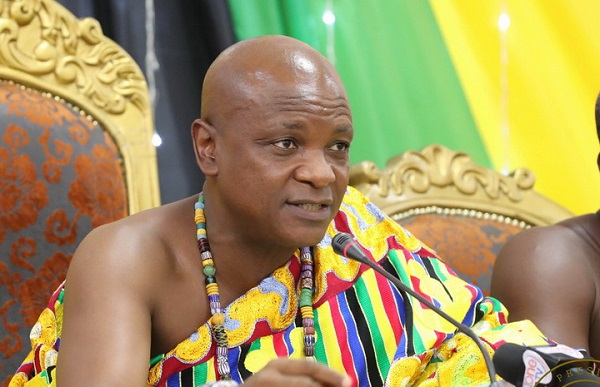
Togbe Afede XIV, the Agbogbomefia of the Asogli State and respected businessman, has voiced his concerns regarding the Bank of Ghana's (BoG) interest rates, emphasising their potential impact on the Ghanaian cedi's stability.
In his remarks, he asserted that the Ghanaian Cedi would continue to face detrimental consequences as long as interest rates remained "unnecessarily high."
The BoG recently highlighted forecasts indicating a potentially elevated trajectory, citing various factors such as potential adjustments in transport fares, utility tariffs, and higher fuel prices.
The Central Bank stated that some factors collectively contribute to economic pressures and could influence the country's financial landscape.
However, in a piece dated April 11, 2024, Togbe Afede XIV expressed his belief that the Cedi's stability would significantly affect other prices, including transport fares, utility tariffs, and fuel prices.
He underscored the interconnectedness of various economic variables and the repercussions of interest rate policies on overall economic stability.
According to the respected chief, the persistence of unnecessarily high interest rates exacerbates the challenges faced by the cedi, amplifying its vulnerability to adverse consequences.
Togbe Afede XIV urged the central bank to take proactive measures and reassess its approach to interest rate management to mitigate the negative impacts on the currency's stability.
“The truth is, all these variables are related. Whilst the policy rate is an important tool of monetary policy, its misuse, as in our case, can have damaging effects. As long as interest rates are kept unnecessarily high, our currency, the cedi, will continue to suffer adverse consequences, with pass-through effects on other prices, including transport fares, utility tariffs and fuel prices."
“Persistent cedi depreciation has been a key factor in our energy (including power) sector problems. We have always felt the need to adjust prices, not because consumers were not paying enough, but because the cedi has been depreciating," he said.
Currently, the demand for the dollar and the other major foreign currencies has surged, culminating in a sharp depreciation in recent times.
It is going for about GH¢14.50 to one US dollar GH¢18.00 to one British pound in the retail market.
Latest Stories
-
PZ Cussons Ghana promotes hand washing among schoolchildren through Camel campaign
14 minutes -
30 NDC aspirants file nominations in Upper West as regional election approaches
28 minutes -
UPSA launches laptop assembly plant, requiring new students to assemble their own devices
33 minutes -
UCC sociologist calls for action on gender inequality to end child marriage
35 minutes -
LSN questions Ghana’s proposed five-year presidential term and DCE election reforms
36 minutes -
AFCON 2027Q: Bjorkegren to lead Black Stars for Somalia doubleheader with Tanko and Attram as assistants
37 minutes -
AMA completes road repairs on Kwame Nkrumah Avenue
44 minutes -
Law Students’ Network warns executive dominance could undermine constitutional review
46 minutes -
Mahama to meet relevant stakeholders over concerns about the new Customs Act
54 minutes -
CHASS demands a 20% increase in SHS funding and payment of outstanding debts
56 minutes -
Investigation launched after male body found in County Cork
57 minutes -
We have been scammed by NDC, government is only doing PR – Abanga Fuseini
58 minutes -
Tamale Teaching Hospital records 44 new breast cancer cases in six months
60 minutes -
GES declares October 30 CPD day for private school teachers; learners to observe holiday
60 minutes -
South Korea to support Ghana’s forts and castles restoration with $4.5m over five years
1 hour