

Audio By Carbonatix
Commercial banks are increasingly reaching out to customers to offer loans, a development the Bank of Ghana says reflects easing interest rates, improved liquidity conditions and renewed confidence within the banking sector, following recent monetary policy easing.
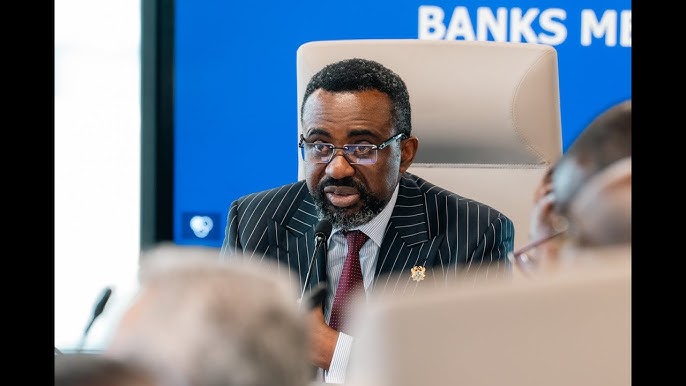
The Governor of the Bank of Ghana, Dr. Johnson Asiama, disclosed at the 128th Monetary Policy Committee (MPC) press briefing in Accra on Wednesday, January 28, that banks have begun proactively courting borrowers, offering credit at significantly lower interest rates.
“Banks are beginning to call clients if they need loans,” the Governor said.
Dr. Asiama described the trend as a positive signal of strengthening bank balance sheets, improved liquidity positions and a growing willingness by lenders to extend credit to the private sector.
“Someone told me this morning that his bank called him to come for a loan at a 15.0% per annum rate.”
The comments followed the Bank of Ghana’s decision to cut the Monetary Policy Rate (MPR) by 250 basis points, from 18% to 15.5%, marking the central bank’s first policy action for 2026.
The decision was announced after the MPC’s 128th meeting at Bank Square and builds on an earlier and more aggressive 350-basis-point cut in November 2025, when the policy rate was reduced from 21.5% to 18% amid easing inflationary pressures and improving macroeconomic conditions.
According to the Governor, the latest policy move was guided by forecasts and survey-based inflation expectations, which indicate that headline inflation is likely to remain within the medium-term target, despite potential risks from utility price adjustments and volatility in global commodity markets.
“GDP growth is expected to remain strong in 2026, with the output gap narrowing,” Dr. Asiama noted, adding that while this could introduce moderate demand-side pressures, overall monetary conditions remain tight relative to prevailing inflation dynamics.
The Governor emphasised that the rate cut underscores the central bank’s commitment to supporting economic growth and credit expansion without compromising price stability.
“Sustaining Ghana’s macroeconomic gains will hinge on disciplined fiscal policy, strong policy coordination, and targeted agricultural interventions to contain food inflation, while remaining vigilant to heightened geopolitical tensions,” he said.
With lending rates easing and banks increasingly willing to extend credit, expectations are growing that private sector activity will pick up in the coming months, providing a boost to investment, consumption and overall economic growth.
Latest Stories
-
NPP had more permanent fuel relief measures than current GH¢2 diesel cut – Amin Adam
13 minutes -
Photos from the 3rd Republic Bank-JoyNews Habitat Fair Clinic
16 minutes -
Ethiopia’s army promises restraint amid fears of new civil war
26 minutes -
Amin Adam calls for review of fuel taxes as diesel prices remain above GH¢18
57 minutes -
World Vision Ghana, Ahafo districts sign MoU for universal WASH coverage
1 hour -
When the gold engine stutters: What Ghana’s Cedi and reserves are telling us about the new economic architecture
2 hours -
Two reportedly die after being trapped in mining pit at Juaboso
2 hours -
Petrosol cleans up Wa Municipal Hospital, to donate medical equipment
2 hours -
‘If NPP was ‘insensitive’ over fuel prices, NDC must accept same description now’ — Amin Adam
2 hours -
KiDi brings the hits to London in sold-out UK headline concert
2 hours -
The last goodbye of Ghanaian shot dead in the US
3 hours -
MCC opens door to Ghana again as MiDA revives development partnership
3 hours -
CSIR moves to turn scientific research into jobs, national growth
3 hours -
More patrons troop in as 3rd Republic Bank-JoyNews Habitat Fair clinic enters final day stretch
3 hours -
German, Russian foreign ministers hold rare talks amid rising tensions
3 hours