

Audio By Carbonatix
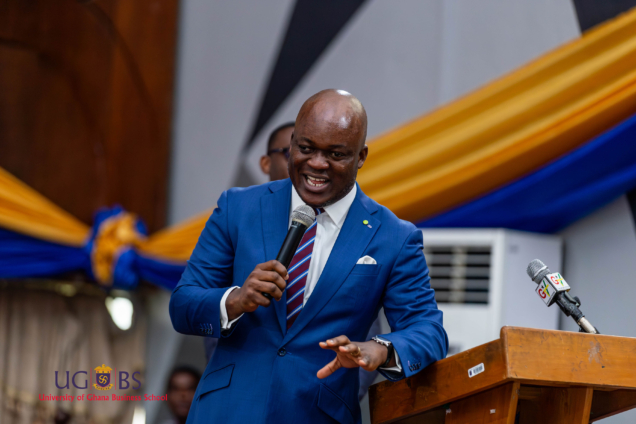
Partner, Assurance at Deloitte Ghana, Kwabena Situ, is advising all tertiary and secondary institutions to incorporate Artificial Intelligence, Cloud Computing, among other innovative digital tools, into their curriculum to train students with higher skill settings.
According to him, the future of the global economy is digitalization and therefore requires schools to position themselves digitally to adapt to the changing trends.
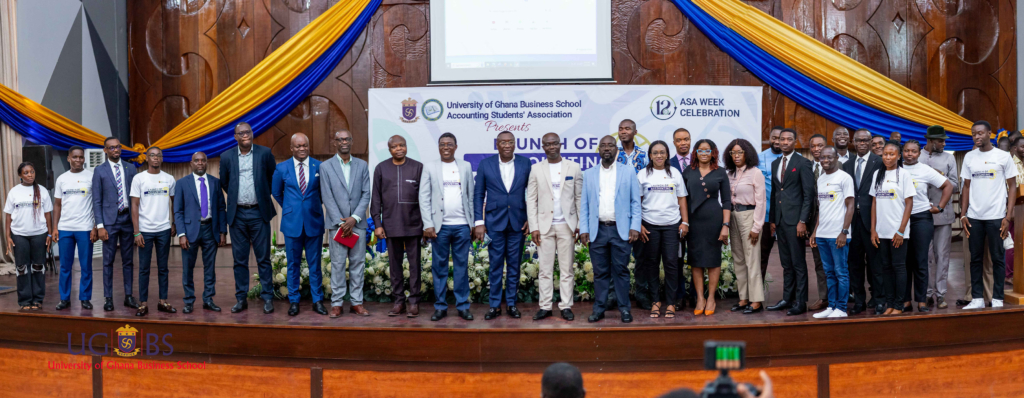
Speaking at the launch of the Accounting Software Curriculum by the University of Ghana Business School, Mr. Situ urged every school to embrace and prioritise technology, saying that every sector of the economy requires tech-savvy professionals.
“What is happening in our current environment is that decisions must be taken and these decisions must be taken very fast. To make such fast decisions, there must be data and information, and these data and information must be organised in a way that the decisions that must be taken will be very accurate. There is a gap in the application of technology, which is why I love what the University of Ghana is doing. Because they are bringing those required and needed skills to the doorsteps of the students. I think it is a very good one that every university and every institution [secondary schools] must emulate”.
“We should be thinking of setting up Artificial Intelligence centres in our various schools now. PRESEC has started one, so if a secondary school has taken the initiative, what is happening to the universities? So, these things must start in the schools now. There is a gap in the skillset, which is why this syllabus [Accounting Software Curriculum] is being put together just for the benefit of the students. By the time they leave school, they have acquired skills in data analytics, others”, he pointed out.
He said the industry can help support schools to establish these important technology centres.
“We need to liaise with these institutions and make sure that these things are institutionalized within the schools. So that when these students come out, they are fit for purpose. I think there needs to be a lot of support from the industry to educational institutions so that these skills can easily be built and then we at the industry side can benefit from these skillsets”.
Latest Stories
-
Mourinho prints out ‘red card’ incidents after Real lose derby
8 minutes -
Twelve Tribes of Israel Ghana to mark 40 years with anniversary celebration
47 minutes -
GPL 2026/27: Hearts held by Bechem as Kotoko, Samartex share spoils
1 hour -
My Story (Kwaku Antwi-Boasiako)
1 hour -
We expect growth rate to re-accelerate in second-half of 2026 – IC Insights
1 hour -
The ungodliness and unrighteousness underlying the National Cathedral mess!
1 hour -
T-bills auction: Government fails to achieve target; yield on 91-day-bill remains unchanged
2 hours -
It’s Ghana’s shame to denigrate Nkrumah when the whole world honours him as African of the Century – Asiedu Nketiah
2 hours -
No other nationalist can compare to Nkrumah – Asiedu Nketiah
2 hours -
Collateral Registry: Foreign banks accounted for GH¢19.9bn of secured credit in quarter 2, 2026
2 hours -
This government should expect scrutiny – Asiedu Nketiah
2 hours -
Two-year-old girl dies in domestic fire at Cantonments
3 hours -
Asiedu Nketiah urges better working conditions for journalists
3 hours -
JoyNews’ Precious Semevoh wins climate change reporting award at Bono GJA Awards
3 hours -
Kumasi Central Market phase 2 to begin in October after years of abandonment
3 hours