

Audio By Carbonatix
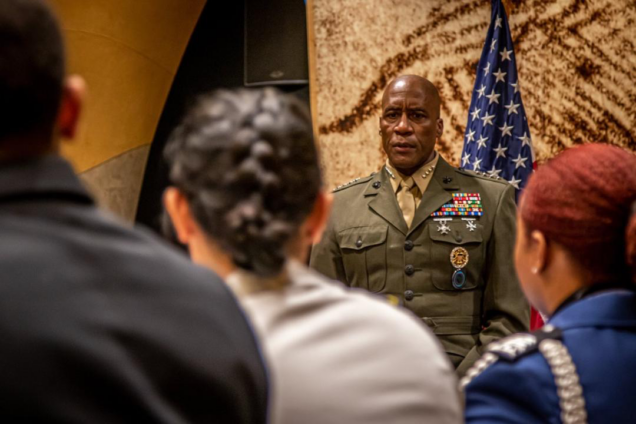
Commander of the United States Africa Command (AFRICOM), Marine Corps General Michael E. Langley, confirmed to the media on Thursday that he has travelled to coastal West African countries, including Ghana, following the withdrawal of U.S. military forces from Niger.
The U.S. troops were stationed in Niger until May this year to monitor regional violent extremism.
However, after the ouster of Niger's democratically elected president Mohamed Bazoum, the military junta agreed with U.S. authorities for a complete withdrawal of American forces by September 15, 2024.
Addressing a virtual news conference after a meeting of African Chiefs of Defense Staff in Gaborone, Botswana, General Langley expressed concerns about extremist organizations thriving on instability in regions with weak governance, leaving populations ungoverned.
He emphasized the dire situation in coastal West Africa, stating, "The bottom line answer is, it is less safe."
Moving forward, the military chief explained that AFRICOM intends to engage with countries in coastal West Africa to identify their needs and provide enduring solutions.
"In most cases, it will be a whole government approach on their end as well. And so that's where our 3D construct within AFRICOM comes into play, because we have those shared objectives, shared challenges, but also the throughput of how we address an enduring solution," he said.
When asked whether Benin, Ghana, or Ivory Coast are being considered for a U.S. military base after pulling out of Niger, General Langley confirmed, "Yes, I've travelled across West Africa, across coastal West Africa.
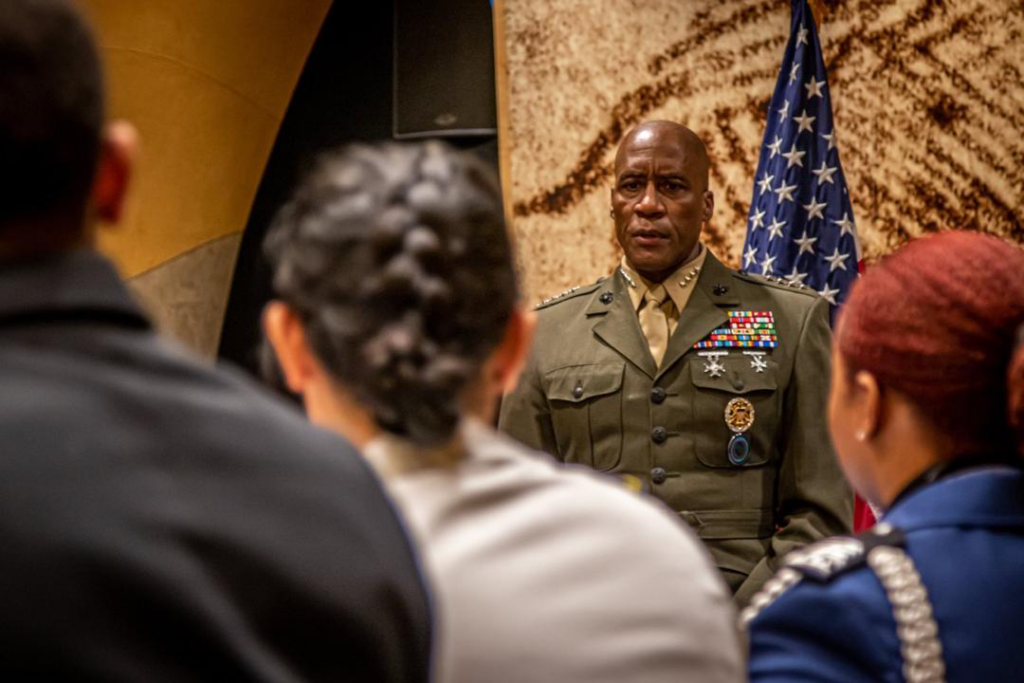
"Those that are up against the growing threat, whether it's on their borders or already across their borders, and I listen to what they need to be successful. They understand and they tell me it's a whole government approach."
General Langley added that AFRICOM remains focused on the growing terror threat in West Africa and considers the situation crucial for both its African partners and the protection of the U.S. homeland.
He emphasised the importance of building partnerships and capacity with African allies, ensuring that AFRICOM listens, learns, and understands their needs.
"This aligns with the Global Fragility Act, which promotes a strategy of preventing conflict and promoting stability. We work with our African partners to implement this strategy effectively and serve as an enduring solution to terrorism," General Langley added.
AFRICOM plans to further engage with civil society and communities in the coming days, aiming to provide services and build institutions at the local governance level while closing the civil-military divide, which is considered effective in countering terrorism.
Latest Stories
-
Jordan Ayew close to EFL Championship move as Sheffield Utd talks intensify
4 minutes -
WAEC questions why core-subject failure keeps shifting from one subject to another
14 minutes -
Herbert Mensah joins African Collaborations Group advisory board
15 minutes -
WAEC demands further study into persistent English Language failures
39 minutes -
Rybakina sweeps past Osaka to close in on number one ranking
56 minutes -
Zheng wins set from 5-0 down again to stun Swiatek
1 hour -
Court fines trader GH¢12,000 for selling counterfeit Amuzu Bitters
1 hour -
Daily Insight for CEOs: The CEO’s role in strengthening financial discipline
1 hour -
Food vendor jailed seven years over human trafficking, prostitution
1 hour -
When Man City call you don’t say no – Ndiaye
2 hours -
Peter Mac Manu buries wife on Saturday
2 hours -
Man found dead in open drain at Wa SSNIT Residence
2 hours -
VIDEO: Watch Bright Simons and Kpessa-Whyte clash over SIGA report on SOEs
2 hours -
EXPLAINER: Why Chief Justice Baffoe-Bonnie’s ‘past eight years’ comments have sparked controversy
2 hours -
Ghana, Uganda deepen upstream petroleum cooperation through peer learning
2 hours