

Audio By Carbonatix
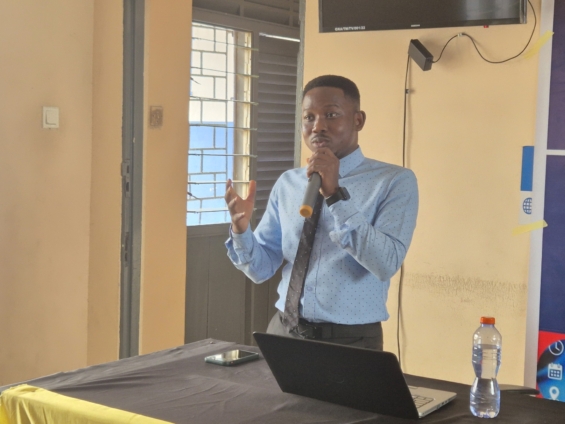
A Physician Assistant at the Pleasant Medical Centre, Rocky Tettedzie, has cautioned the public against the practice of taking drugs before being diagnosed with a health condition.
Mr Tettedzie emphasised that this approach is not an effective preventive strategy and highlighted the risks and effects associated with self-medicating prior to receiving a proper diagnosis from healthcare professionals.
Speaking at the 75th Anniversary of the Ghana Journalists Association-Tema Chapter on the topic “Preventive Healthcare," he explained that many individuals resort to self-medication upon experiencing some symptoms, often assuming they have malaria, and promptly obtain anti-malarial drugs without diagnosis.
He said that some symptoms mimicking malaria might indicate a different health condition, and using drugs before a proper diagnosis can mask the actual condition, leading to delayed or incorrect treatment.
“Taking drugs that have not been prescribed can cause side effects or adverse reactions, which can either worsen health conditions or prevent protection,” he said.
He added that, while there are anti-malarial drugs available for preventive use, especially for travellers visiting malaria-prone areas, these are prescribed based on the specific malaria strain in the region.
He stated that, “anti-malarial drugs used for treatment are different from those used for prevention, so taking malaria drugs without being diagnosed, does not provide the sustained protective effect needed to prevent malaria.”
Mr. Tettedzie also stressed that medication taken without diagnosis may not be the right type of dosage needed to prevent a health condition, therefore rendering them ineffective, and the misuse of these drugs can lead to drug resistance, making medications less effective or ineffective for treating actual health conditions in the future.
He advised that to avoid or reduce the risk of developing health problems, it is safer to take preventive measures such as vaccinations to ward off infectious diseases, routine medical examinations, and adopting healthy lifestyle behaviours like eating a balanced diet, regular physical activity, good hand hygiene, and following safe sex practices.
Latest Stories
-
SOE comments controversy: ‘We must never abandon our humanity because of judicial office’ – CJ
1 minute -
Samuel Kojo Brace declares intention to contest NPP parliamentary primary in Ahanta West
2 minutes -
Dr Apaak calls for evidence-based education response to emergencies
6 minutes -
Pilot may have sought to crash Israel-bound flight after stabbing other pilot, Netanyahu says
11 minutes -
Report flags potential money laundering, terrorist financing risks among Ghana’s NGOs
11 minutes -
Breast Cancer Awareness Month launched: 2,695 women die from breast cancer annually — Dr Ann-Dadzie
18 minutes -
Mahama’s proposed airline looks to South America, Caribbean as Ghana confronts mounting drug trafficking cases
34 minutes -
5% progress on Suame Interchange Phase One inadequate – Roads Minister tasks contractor to speed up work
36 minutes -
Photos: Vice President joins GAAS Awards to celebrate outstanding women leaders
38 minutes -
OSP vs Ken Ofori-Atta, SML and others: Court gives OSP four more weeks to serve Ofori-Atta with summons
39 minutes -
High Commission sends caution to Ghanaians in South Africa ahead of planned protests
42 minutes -
Okai Mintah outlines vision for NDC Youth Wing as he engages MMDCEs
48 minutes -
Mahama Ayariga leads renewed push for stronger local governance through partnerships
51 minutes -
NDC youth organiser aspirant Okai Mintah consults MMDCEs ahead of elections
52 minutes -
PHOTOS: Ayikuma Methodist Basic School wins National Juniors Challenge
55 minutes