

Audio By Carbonatix
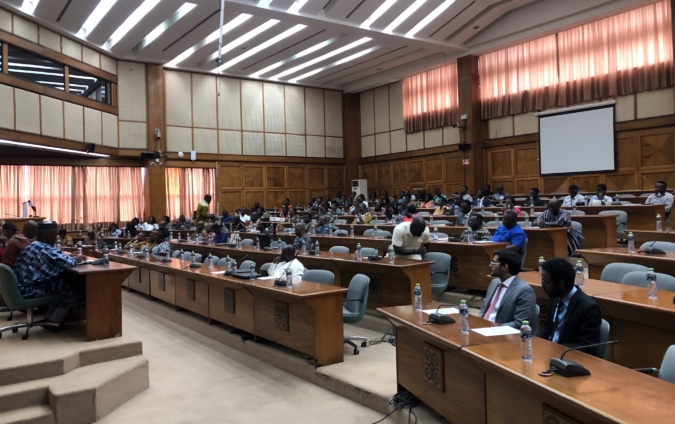
Stakeholders of the culture and creative industries converged at the Accra International Conference Centre on Tuesday, August 13, 2024 to review the final draft of the revised National Culture Policy before it is given parliamentary assent.
The Culture Policy of Ghana is a product of inclusive and extensive consultation, embodying the fundamental principles, values, and aspirations of the Ghanaian people.
This policy reaffirms the centrality of Ghana's indigenous culture as the bedrock of its national identity and the foundation of its development. It envisions a vibrant and prosperous society where culture is valued, promoted, and integrated into all aspects of national development.
The National Culture Policy is developed on the premise that Ghana has a rich cultural heritage, including its tangible and intangible assets, which is deployed to foster a sense of national identity and belonging among all Ghanaians.
It underscores the need to support the creative industries and cultural entrepreneurship and promote cultural diversity and inclusivity.
This document is, therefore, guided by the principles of the protection of Ghana's cultural rights and interests, cultural sovereignty and self-determination, respect for cultural diversity and inclusivity, integration of culture into development policies and programmes, community participation and ownership, intellectual property protection, collaboration and partnership, an organic link between culture and technology.
At the stakeholder engagement, the participants were grouped to critically analyse the continent of the draft of the National Culture Policy and make inputs.
They were also advised to provide further suggestions to the committee that worked on the policy later via email, if need be.
Present at the workshop where John Yaw Agbeko (Chief Director at the Ministry of Tourism, Arts and Culture), Edmond Munkala (UNESCO Country Head), Margo Pitura (European Union Country Head), Mark Okraku-Mantey (Minister of Tourism, Arts and Culture), Nana Kwesi Gyan Appenteng (Chairman of the Culture Policy Review Committee), among others.
In his speech the Deputy Minister of Tourism, Arts and Culture, Mark Okraku-Mantey, highlighted the essence of the exercise.
“We are not just revisiting a policy but re-affirming our commitment to affirming the cultural essence that define us as a people.
As we know, well-crafted culture policies served as roadmaps or the preservation, promotions and development of cultural assets,” he said.
The current cultural policy being revised was established in 2004. This new one seeks to address the changes in culture and its influences and how that impact the Ghanaian society. It is expected that when finally adopted, this document streamlines activities in Ghana's Culture and Creative Industries (CCIs).
Latest Stories
-
Stakeholders call for coordinated response to adolescent health challenges
5 minutes -
CNN and MS NOW say reporters denied White House access after Trump banned some media outlets
11 minutes -
Mahama directs AMA, sister assemblies to prevent renewed dumping at Agbogbloshie
19 minutes -
Deputy Health Minister charges military nurses to uphold compassion, excellence
30 minutes -
Deputy Health Minister charges military nurses, midwives to remain dedicated to service
44 minutes -
Three suspected robbers killed as police dismantle gang in Upper East
47 minutes -
EU Ambassador pays courtesy call on IGP to strengthen security cooperation
51 minutes -
Africa’s dependence on foreign powers betrays Nkrumah’s unfinished vision – P.L.O. Lumumba
59 minutes -
3 suspects shot dead, 2 officers injured in Tilly Forest robbery follow-up operation
1 hour -
Nkrumah’s unfinished Pan-African project must be completed – P.L.O. Lumumba
1 hour -
Mysterious illness leaves children struggling to walk, hear as Mafi Kope community appeals for urgent medical help
2 hours -
Ghana begins free rabies vaccination for 25,000 pets
2 hours -
Ghana Navy strengthens operational readiness with specialist seaman gunners training
2 hours -
Nkrumah’s legacy must be measured by action, not ceremonies – Armah-Kofi Buah
2 hours -
Kwesi Pratt Jnr questions Ghana-US defence cooperation agreement over sovereignty concerns
2 hours