

Audio By Carbonatix
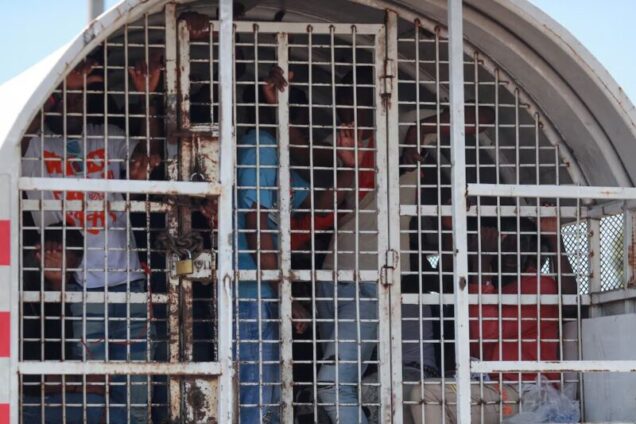
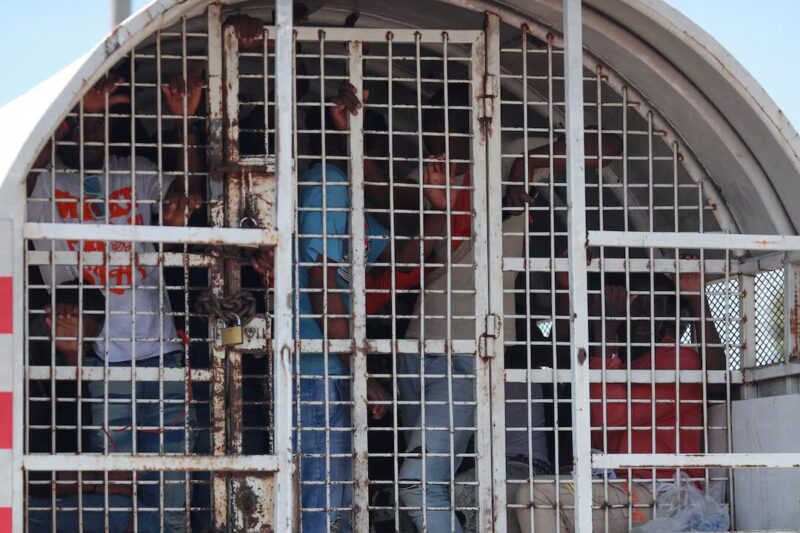
The Dominican Republic on Wednesday announced an "immediate" plan to deport up to 10,000 migrants per week, as it ramps up enforcement along its border with Haiti despite U.N. pleas for it not to expel people to its conflict-hit neighbour.
The announcement from the Caribbean island nation did not specify that the plan would target Haitians, but nationals from its neighbour have made up the vast majority of deportees.
If implemented, the plan would mark significant growth in deportations after more than 200,000 Haitians were forcibly returned last year, according to U.N. data.
In its statement, the president's office pointed to the slow progress and "limited" results of a U.N.-backed security mission sent to help Haitian police retake control of the capital from the growing presence of armed gangs.
"Faced with this reality, we're forced to act decisively," presidential spokesperson Homero Figueroa said in the statement.
The plan calls for more border inspectors, surveillance drones and building "temporary repatriation camps", while taking into account both security and human rights, Figueroa said.
A spokesperson for Haiti's prime minister did not immediately respond to a request for comment.
The United Nations has asked countries including the Dominican Republic and the United States to halt deportations to Haiti, where severe hunger has soared and is now affecting nearly half the population of around 11 million.
The number of Haitians internally displaced has nearly doubled in six months, surpassing 700,000 as gangs expand to areas around the capital.
The Dominican Republic, which shares the island of Hispaniola with Haiti, last year accounted for 96% of Haitians deported from countries around the world.
Dominican Republic President Luis Abinader was reelected this year, pledging to take a tough stance on Haitian migration.
Last year, the Dominican Republic shuttered border crossings citing a conflict over a canal being built in Haiti off a shared river. In 2022, it began building a border wall.
Local activists have for years protested deportations of vulnerable people such as pregnant women and the stripping of Dominican nationality from some 200,000 people born to Haitian parents over a decade ago.
Latest Stories
-
NPP must elect strong parliamentary candidates to reclaim Greater Accra seats – Patrick Boamah
30 seconds -
Abdul-Aziz Abdu-Rahaman elected NPP Upper West Regional Chairman
4 minutes -
Iddrisu Sulemana edges Clifford Braimah to become NPP Savannah Regional Chairman
6 minutes -
‘Arrogance of power’ is driving voters back to NPP in Ashanti Region – Paul Adom-Otchere
16 minutes -
They demolish buildings and tell us they’re building 24-hour markets – Paul Adom-Otchere
30 minutes -
NPP’s 2024 Bolgatanga Central Parliamentary Candidate elected Upper East Regional Chairman
42 minutes -
Incumbent Northern NPP Chair wins as new faces break through in party executive elections
46 minutes -
Former Health Minister Okoe Boye elected NPP Greater Accra Regional Chair
1 hour -
Joseph Kobinah Esibu elected NPP Central Regional Chairman
1 hour -
Fernandez booed by Chelsea fans as Alonso offers glimpse of blueprint
1 hour -
PSG sign World Cup winner Torres from Barcelona
1 hour -
Odeneho Kwaku Appiah beats former EPA boss Kokofu, to emerge NPP Ashanti chair
2 hours -
TDC defends statutory mandate, says its authority to develop Tema predates TMA
2 hours -
Ignatius Kwesi Afrifa elected NPP Western Regional Chairman
2 hours -
Galamsey will be a key issue for NPP’s 2028 campaign – Annoh-Dompreh
2 hours