

Audio By Carbonatix
The Director-General of the Ghana TVET Service, David Peprah, has disclosed that the government has made significant investments in retooling and equipping technical and vocational institutions across the country.
He explained that this strategic move is part of a broader effort to transform Technical and Vocational Education and Training (TVET) into a key driver of industrial growth and job creation in Ghana.
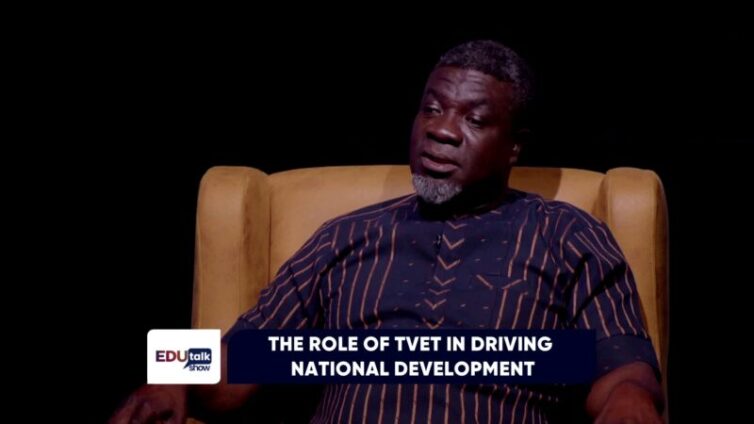
Speaking on JoyNews' EduTalk Show with host Emefa Apawu, Mr. Peprah detailed the extent of these investments, noting that many of the country’s giant TVET institutions have undergone substantial upgrades.
"The government has invested a substantial amount in retooling and equipping TVET institutions. Now, all the giant technical and vocational training institutions have been retooled and reequipped. Some have even been upgraded, facelifted," he said.
According to him, prior to 2017, Ghana had 34 National Vocational Training Institutes (NVTI), which, at the time, lacked the needed resources and infrastructure to deliver hands-on technical and vocational education.
However, he noted that since the retooling exercise, these institutions have transformed into centers of excellence.
"If you go there now, you’ll be astonished," Mr. Peprah said, using the Applied Technical and Technology Institute in East Legon as an example.
"It is one of the best auto engineering institutions in the country. The students there are not just learning to repair vehicles; they are learning how to assemble vehicles and ensure they function very well."
This shift towards vehicle assembly marks a significant milestone in Ghana's ambition to become a hub for vehicle manufacturing in West Africa. The government’s focus on TVET is expected to complement its industrialisation agenda, especially in sectors such as automotive, construction, and manufacturing.
By training students in more advanced skills like vehicle assembly, Ghana hopes to supply a skilled workforce for its growing auto industry, which includes local assembly plants by global brands like Volkswagen and Toyota.
One of the primary goals of this transformation is to tackle Ghana's high youth unemployment rate. Mr. Peprah credited the government’s focus on aligning TVET with industry needs for making vocational education more attractive to the youth. This, he said, is reflected in the surge in enrollment numbers across TVET institutions.
"Before 2017, TVET enrollment was below 50,000 students. Today, it has nearly quadrupled, with almost 200,000 students enrolled in various technical and vocational programmes," the director-general indicated.
He explained that this growth in enrollment is the direct result of government initiatives aimed at making TVET education more relevant and accessible to the younger population. The Free Senior High School (SHS) Policy has also extended to TVET institutions, removing financial barriers that previously prevented many young people from pursuing vocational training.
The Director-General emphasised that the retooling of TVET institutions is not just about upgrading equipment but also about ensuring that the curricula reflect the current demands of the job market.
He added that, "We have ensured that the courses taught in these institutions are industry-driven, so when students graduate, they have the skills needed to immediately contribute to the labor force. This is why we've seen an increase in students opting for TVET instead of traditional academic pathways."
Mr. Peprah highlighted that one of the critical factors in the success of the TVET transformation is the collaboration between educational institutions and industry players. He stressed that the partnership between TVET schools and industries is essential to ensuring that the training students receive is practical and relevant to the demands of the job market.
A key example of this collaboration is the automotive industry, where companies are working closely with TVET institutions to develop specialized training programs that equip students with skills in vehicle assembly, quality control, and advanced manufacturing techniques. Mr. Peprah noted that the Applied Technical and Technology Institute's focus on vehicle assembly is a direct response to the needs of the auto industry in Ghana.
The Director-General also revealed that TVET institutions are not only looking at local industry needs but are preparing students to compete globally. "We are making sure that our students are globally competitive. They are learning advanced skills that can be applied anywhere in the world," he said. This is particularly important as Ghana continues to position itself as a leading destination for industrial investment in Africa.
Looking ahead, the Director-General is optimistic about the future of TVET in Ghana. He expressed hope that with continued government support and industry collaboration, TVET will play an even more significant role in Ghana's development.
Latest Stories
-
Vibes The Movie: Big Ghun’s Ghanaian film earns five nominations at 2026 REFFA
8 minutes -
MamaCare CEO warns unresolved conflicts among health workers could undermine maternal and neonatal care
32 minutes -
Health professionals urged to translate medical knowledge into practice to save mothers
38 minutes -
Conflicts among care providers linked to maternal, neonatal deaths – Expert
2 hours -
GIS marks 10th TIME conference, champions improved teaching practices
2 hours -
BRICS Or Balance? What Ghana’s bid really means
3 hours -
GPRTU wants full TRAFFITECH-GH implementation to start in 2027
3 hours -
Mahama announces plans to import electric wheelchairs for PWDs
3 hours -
KGL U17 Colts 2026: Western beat Prempeh Elite Academy to set up final final with Greater Accra Region
3 hours -
Late Solanke strike salvages 10-man Spurs draw at Man United
4 hours -
Gender Ministry to monitor welfare of Nana Akua Addo’s children amid domestic violence case
4 hours -
Benedict Okyere Yeboah: Ghana’s football problem goes beyond sacking a coach
4 hours -
GPL 2026/27: Darkwah Wiafe’s winner sees All Blacks beat Kotoko
4 hours -
ITF World Tour : Patel Wins Boys’ Singles Final at J100 Accra
4 hours -
Ghana must pursue BRICS partnership if it brings economic benefits – Kpebu
4 hours