

Audio By Carbonatix
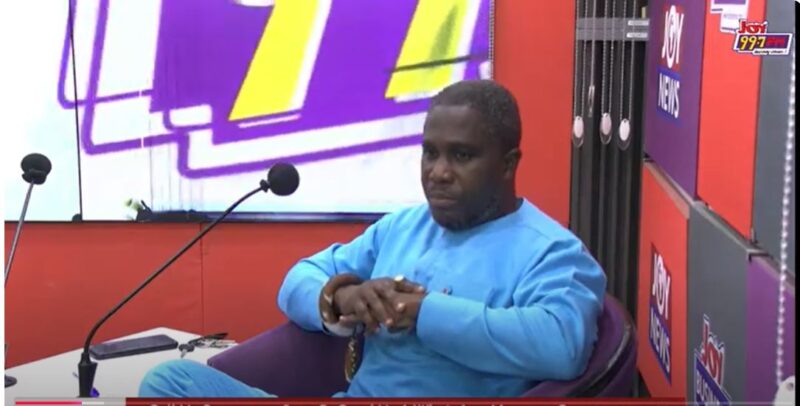
The Executive Director of the Institute of Energy Security (IES), Nana Amoasi VII, has raised concerns over the declining interest of international investors in Ghana's oil and gas sector.
Speaking on the state of the petroleum industry, he highlighted key challenges that have discouraged exploration and production activities, contributing to a consistent drop in oil and gas output over recent years.
“The reduction in upstream production is no surprise. Companies are struggling to find new fuel sources, with exploration activities declining due to regulatory challenges and uncertainties,” Mr Amoasi stated.
He pointed out that over the past five years, production has steadily declined as approvals for exploration and development became increasingly difficult to obtain, adding that "Processes are complicated and approvals are delayed, leaving investors frustrated."
"Today, Investors don't find Ghana's oil field or oil upstream sector attractive anymore, and so for us to have that attractiveness that we had initially, then we should be looking at our policies and our approval processes. This is very key." he indicated.
Mr Amoasi cited the exit of significant players like ENI, an Italian oil company that initially discovered oil in Ghana before also finding resources in Côte d'Ivoire.
“ENI found Côte d'Ivoire to be a haven, as they encountered fewer challenges compared to Ghana,” he said. Today, Côte d'Ivoire is seen as a safer and more attractive destination, with ENI choosing to operate there while only briefly entering Ghana to conduct essential business.”
He called for policy reforms to restore investor confidence, stressing that "policy certainty, transparency, and good governance" are crucial to reviving Ghana’s upstream sector.
He urged the government to simplify the approval processes to help boost oil and gas production.
The IES Executive Director also criticised political interference in the sector, warning that it drives investors away.
“If we allow political influence to dictate operations, this is what we get. The sector is time-bound; if you delay projects, investors will move to other countries eager for business.”
“To attract investors again, we must ensure clear, transparent, and efficient regulatory processes, free from political interference. Only then can we make Ghana’s oil and gas sector competitive once more,” he said.
Latest Stories
-
Black Stars: It’s our decision to leave Kudus to recover – Queiroz
14 minutes -
Sammy Gyamfi backs Mahama’s directive to restore NACOC’s at ports
17 minutes -
Queiroz provides insight into Kudus’ decision to withdraw from Black Stars squad
28 minutes -
I’m not changing after 47 Years – Queiroz fires back at critics
37 minutes -
Nkrumah Never Dies: Celebrating the visionary who awakened a continent
2 hours -
Hassan Ayariga calls for Ghanaian ownership in strategic investment deals
2 hours -
Black Stars: Thomas-Asante receives late call-up for September-October games
3 hours -
NPP Techiman South demands immediate release of detained Nurse Salomey Awiti Baffoe
3 hours -
‘Let’s stop the politics’ — Dafeamekpor calls for united fight against drug trafficking
3 hours -
Chief Justice Baffoe-Bonnie leads new 11-member Council for Legal Education and Training Board
3 hours -
Decades of silent diplomacy: Baba Issifu Kamara at 70
3 hours -
30% transport fare hike still on the table, talks resume Tuesday – GPRTU
3 hours -
KATH marks 70th anniversary with inter-directorate games
4 hours -
Black Stars: Godwin Attram replaces Desmond Ofei as assistant coach
4 hours -
Nkrumah never dies
5 hours