

Audio By Carbonatix
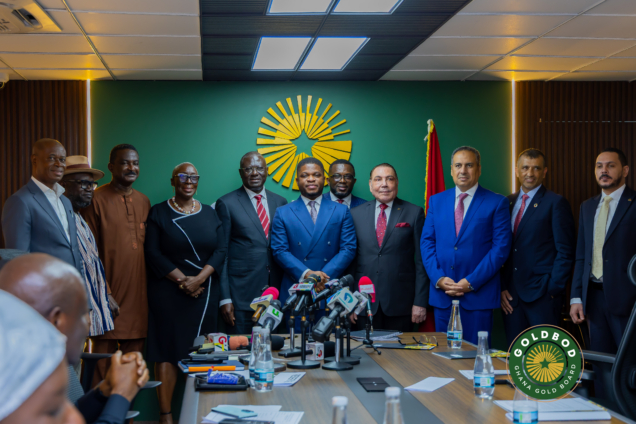
Ghana will begin refining one metric tonne of gold locally each week from February 2026, following a landmark agreement between the Ghana Gold Board and Gold Coast Refinery Limited aimed at strengthening value addition in the country’s gold industry.
The initiative represents a major policy shift from exporting gold in its raw form to processing it domestically, a move expected to increase export earnings, retain refining fees within the local economy and create additional jobs.
Speaking at the signing ceremony on Tuesday, January 20, Chief Executive Officer of the Ghana Gold Board, Sammy Gyamfi, described the agreement as a turning point in the management of Ghana’s mineral resources.
“This is a historic step that will fundamentally change how we manage our gold resources, especially in terms of value addition and full optimisation,” he said.
Under the agreement, up to 1,000 kilogrammes of gold exported by the Gold Board will be refined locally each week, with plans to gradually scale up production towards full local refining of Ghana’s gold exports.
Mr Gyamfi explained that the decision followed concerns that Ghana continued to export almost all its gold unrefined, despite having local refining capacity.
“It is worrying that nearly all the gold we export leaves the country in its raw state, even when we have the facilities to refine locally,” he noted.
He added that the policy direction was guided by President John Mahama’s vision to move Ghana from resource extraction to full value optimisation.
The agreement also gives the Republic of Ghana a 15 per cent free carried interest in Gold Coast Refinery, held by the Ghana Gold Board on behalf of the state, making the government a direct stakeholder in the refinery.
According to Mr Gyamfi, the partnership will ensure refined gold meets a minimum purity of 99.5 per cent, with capacity for higher international standards, while also attracting technical support from Rand Refinery of South Africa to help Ghana work towards London Bullion Market Association accreditation.
Beyond value addition, the deal is expected to retain millions of dollars in refining fees locally, boost tax and dividend revenues, support 24-hour refinery operations and strengthen Ghana’s position in the global gold value chain.
Latest Stories
-
Glasner suffers loss on Selhurst return as Palace beat Forest
9 minutes -
WAFU B U17: ‘We won but I expected more from my boys’ – Kassim Ocansey
14 minutes -
Man City cruise to statement win over 10-man Liverpool
23 minutes -
Be careful with cross-border lending, foreign currency exposures – BoG to financial institutions
3 hours -
GPL 2026/27: Medeama go three clear as Hearts of Oak recover and Bechem stage stunning comeback
3 hours -
Ntiamoah Foundation launches “BEYOND 20” anniversary campaign
3 hours -
Credit Risk Management Directive: BoG to begin implementation for banks, others from July 1, 2027
3 hours -
Ghana Brands Awards 2026: Leading brands, business trailblazers to shine on November 20
4 hours -
T-bills auction: Demand improves as government exceeds target by about 76%; interest rates soften
4 hours -
Ziope undertakes initiative to build a technologically inclined community, commissions self-help ICT lab
4 hours -
ECG announces power outage in parts of Tema, Central Region due to network fault, maintenance
5 hours -
When the Gospel Becomes a Weapon: The church, blackmail and the abuse of faith
5 hours -
JoyNews’ Jacqueline Ansomah Yeboah selected for UK Media Excellence for Emerging Technologies Fellowship
5 hours -
Mental Health Alliance urges government to operationalise Mental Health Fund
6 hours -
Ghana–Holy See agreement heads to Parliament after Cabinet approval
6 hours