

Audio By Carbonatix
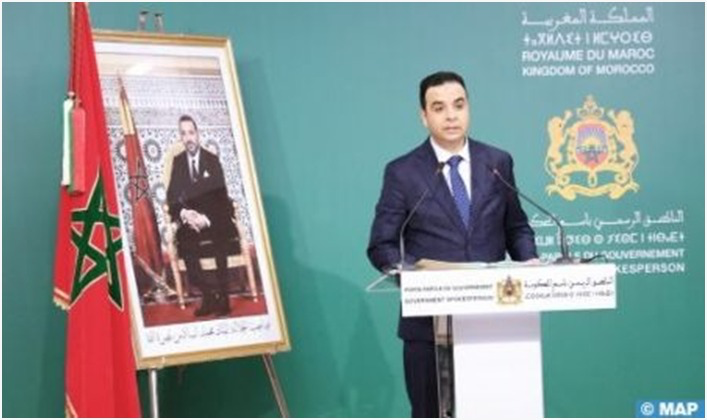
Moroccan government Spokesperson Mustapha Baitas announced on Thursday the formation of a drafting commission tasked with revising the Family Code.
The commission comprises key government ministries and the General Secretariat of the Government (SGG).
Speaking at a press briefing following the weekly Government Council meeting, Baitas stated that the Council established the commission due to the unique nature of the Family Code, ensuring that departments directly involved in its revision are represented.
The commission includes the Ministry of Justice, the Ministry of Endowments and Islamic Affairs, the Ministry of Solidarity, Social Inclusion, and Family, as well as the SGG, which was enlisted for its expertise and its role in harmonising the Family Code with other existing laws and draft legislation currently under parliamentary review.
The commission will be supported by legal and judicial experts, along with ulema (Islamic scholars), and may involve additional specialists from other fields if deemed necessary.
Baitas highlighted the government’s commitment to following the ongoing public debates surrounding the Family Code revision and emphasised its priority status since the government’s communication meeting on December 26.
This meeting, held in line with High Royal Instructions, outlined the key proposed amendments to the public.
“The presentations made during the communication meeting provided the broad outlines of the proposed revisions and the conclusions of the legal opinion on them,” Baitas stated.
“We are now in the process of legal drafting to determine the implementation modalities and necessary procedures.”
He cautioned that it is premature to speculate on the proposed revisions, their potential impacts, or challenges in implementation, as these depend on the finalised legal text.
The government will continue to provide updates while ensuring transparency throughout the drafting process, in accordance with the High Royal Instructions.
In response to public discussions on the revision, Baitas affirmed the government’s alignment with the constructive contributions of political parties, labour unions, and civil society organizations.
He also condemned any attempts to undermine the Supreme Ulema Council, emphasizing the respect due to its members and their authority as the sole institution permitted to issue officially recognized fatwas, as outlined in Article 41 of the Constitution.
Furthermore, Baitas reiterated the government’s openness to feedback from scholars, researchers, and all political and civil society stakeholders, noting that such contributions are rooted in Morocco’s religious principles and evolving social and legal contexts.
The ultimate goal, he stressed, is to ensure family stability and safeguard the rights of all its members.
Latest Stories
-
Journalists look back on a decade of breast cancer reporting in Ghana
15 minutes -
President Mahama ends Resetting Ghana tour of Ahafo Region
2 hours -
African negotiators seek delivery of climate commitments at COP31
2 hours -
BoG develops AI rules for financial sector
2 hours -
‘Big Push’: Government assures contractors of prompt payments
2 hours -
Court fines miner for breaking into gold buying shop
2 hours -
Tarkwa court jails labourer for three years over GH¢123,000 theft
3 hours -
GAEC must retain nuclear scientists for Ghana’s nuclear ambitions – Minister
4 hours -
Man reportedly mistaken for game and shot by hunter dead in forest
4 hours -
19-year-old mason jailed 15 years for defiling seven-year-old pupil
4 hours -
Ghana’s banking sector assets rise 20.47% to GH¢500.2bn – BoG Governor
4 hours -
22 injured as Sprinter bus overturns at Sege after tyre burst
4 hours -
UN housing expert urges Ghana to strengthen Rent Control Department amid housing affordability concerns
4 hours -
Delta-BCI partnership reaches 166,000 people with breast cancer education
4 hours -
Power restoration fault suspected in Kumasi Central Market fire
10 hours