

Audio By Carbonatix
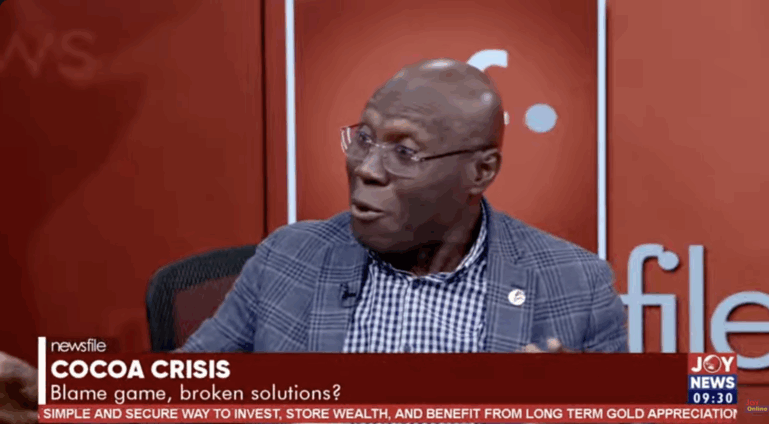
The Ghana Cocoa Board's (COCOBOD) syndicated loan model was never sustainable, with significant portions of borrowed funds spent on administration rather than core operations, former Lands and Natural Resources Minister Alhaji Inusah Fuseini has stated.
The former Tamale Central Member of Parliament, speaking on Joy FM's Newsfile programme, criticised the financial management that has left COCOBOD struggling with debt and unfulfilled delivery contracts.
"Anytime they took the syndicated loan, they spent a heavy part of the syndicated loan on themselves, on administration. We raised red flags that this model was not sustainable," Fuseini said.
The National Democratic Congress (NDC) stalwart drew particular attention to expenditure on cocoa roads during the period when COCOBOD was taking on substantial debt.
"You go and look at the cocoa roads. The amount of money in that period that was spent on cocoa roads. Then you ask yourself, what model was that? How can you rack in that debt and still think that an institution, a trading institution like COCOBOD, could survive?" he questioned.
The comments highlight long-standing concerns about resource allocation within COCOBOD, particularly whether infrastructure projects should have been prioritised while the institution was accumulating debt through annual syndicated loans.
Fuseini also addressed the implications of COCOBOD's forward-sale contracts, explaining that failure to deliver contracted quantities does not absolve the institution of its obligations.
"If you enter into a delivery contract and fail to deliver the quantities, you're not excused of that obligation. So, you had forward sold. And when you fail, and there's a rollover, you are still obligated to supply at that amount," he explained.
He emphasised that these contractual failures occurred not because buyers refused to take delivery, but because COCOBOD could not supply the agreed volumes – a critical distinction in terms of legal and financial liability.
The former minister noted that Ghana would have benefited from its forward-sale contracts only if cocoa prices in subsequent years had dropped below $2,600 per tonne.
Latest Stories
-
Muzic Mensah finds healing and renewed love in new single ‘WayƐ Late’
2 minutes -
FIFA to offer extra £2.6bn for football development
4 minutes -
Government backing is no EPA permit – Authority warns GoldBod, ministries
12 minutes -
Real Madrid produce stunning late fightback to down Roma
24 minutes -
EPA orders immediate halt to unpermitted reclamation and dredging nationwide
33 minutes -
Afenyo-Markin’s lawsuit against Sammy Gyamfi takes focus away from development – Kpebu
48 minutes -
FWSC urges media to guard against misinformation in proposed IPEC transition
48 minutes -
MoMo Fest 2026: Shatta Wale to Rock Accra Stadium on October 17
50 minutes -
GTEC’s letter directing public universities to reopen by October 16 is unprofessional – GAUA
1 hour -
Suspect in viral video assaulting wife jailed for 3 months
1 hour -
GAUA insists strike will end only after Fair Wages addresses market premium issue
1 hour -
Kpemka seeks compensation as he sues BOST over alleged unlawful termination
1 hour -
GES asks applicants to check status of 2026 promotion applications on October 15
2 hours -
Kobe Boujee joins Olympics.com team for Dakar 2026 Youth Olympic Games
2 hours -
Slaty egret’s shifting nesting sites offer clues to changing ecosystems
2 hours