

Audio By Carbonatix
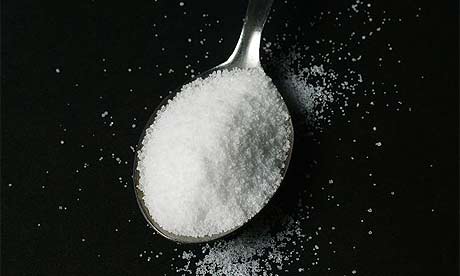
The Food and Drugs Authority (FDA) says it would soon clamp down on non-iodised salt products on the markets to curb the occurrence of iodine deficiency disorders.
The Authority stressed that producers found culpable would be made to face the law for flouting the regulation.
Salt is a core ingredient in almost every meal and holds essential nutrients for the development and survival of the human body.
However, it has been identified that most local salts on the market do not have the required iodine content, therefore, putting consumers at risk.
Consuming non-iodised salt products could lead to iodine deficiency disorders such as goitre, infertility, growth delays, and intellectual disability among others.
To ensure public safety, the Food and Drugs Authority with support from the United Nations International Children's Emergency Fund is sensitizing artisanal salt producers on the need to add iodine to their products.
The Director of the Food Safety and Consumer Education Directorate at FDA, Faustina Atupra, said the initiative would see the beneficiaries enlightened on the need to produce salt in a hygienic environment, add iodine to their products, and ensure their products meet the specified standard.
She said that the Public Health Act mandates that salt produced for the Ghanaian market should be iodized before consumed to ensure the safety of the citizenry.

“It is to ensure that the salt is iodized to a level that is 50 bpm according to the Ghana standard at the factory level to ensure that people who consume the salt will have enough iodine to improve the nutritional status of Ghanaians”, she explained.
She said her outfit would crack the whip after giving producers ample time to adjust and comply with the regulation.
“With iodisation what we do is that we do market surveillance activities, we pick [salt] from the production side, we pick through transportation, we pick at the market and then we check the iodine content of it.
"If we realise that you are not iodising it, regulation sanctions would be meted against you. We can trace from the market to the source and also at the factories or mining cities”, she stressed.

Participants, who are artisanal salt producers in the Keta enclave lauded the FDA on the enlightenment and promised to abide by the regulations to ensure public safety.
Latest Stories
-
Evangelism or Collection in God’s Name? The plight of Ghana’s captive passengers
2 minutes -
‘I don’t expect preferential treatment for me, my party or gov’t’ – Mahama to new EC deputies
19 minutes -
Mahama tasks new EC Deputy Chairpersons to protect electoral integrity
20 minutes -
Police arrest officer after shooting injures 2 at Ritz Junction
21 minutes -
‘Delete, retract, apologise’ – Agyinasare urges Ghanaians to take responsibility for misinformation
21 minutes -
Saudi minister vows ‘serious response’ to Houthi attacks on airports
44 minutes -
When dialogue fails and strikes speak: Is industrial action the only language government understands?
50 minutes -
Ghana launches Social Protection Act regulations and Affirmative Action Gender Equity Regulations
51 minutes -
Mahama swears in Emelia Afi Agbenyo, Joseph Kwaku Asamoah as EC Deputy Commissioners
1 hour -
Wetland communities in Northern Ghana face a hotter, flood-prone future as climate risks intensif
1 hour -
Sam George tasks KNUST to develop Twi AI model as Ghana plans local-language artificial intelligence
1 hour -
Poor roads choking eco-tourism potential – Avatime Paramount Chief cries out
1 hour -
DVLA records GH¢25 million surplus in 2025 as contributions to state funds reach GH¢98.1 million
1 hour -
Over 10 suspected scam centre kingpins arrested and remanded – CSA
1 hour -
Ministers, CEOs, policymakers to grace 7th Africa Public Sector Conference in Accra
1 hour