

Audio By Carbonatix
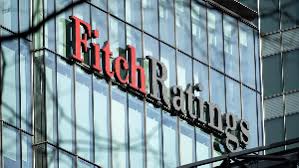
Ratings agency, Fitch, has stated that Ghana’s external debt restructuring is expected to be concluded in early 2025.
According to the UK-based firm, this could lead to an upgrade of Ghana's long-term Issuer Default Rating (IDR) and help reduce macroeconomic volatility, thereby reducing risks to banking capitalization.
These expectations, it said underpin its improving outlook for the Ghanaian banking sector in 2025.
In a recent webinar, an Associate Director at Fitch, Elie Maalouf, said the outlook of Ghana’s banking environment will improve, enabling capital ratios to continue recovering.
He pointed out that the vast majority of banks will be capital complaint this year.
“Our expectation is that profitability [banks] will remain strong in 2025 due to continued high Treasury bill yields. This will allow capital ratios to continue recovering and gives us confidence that the vast majority of banks will be comfortably capital-compliant at the end of 2025, when losses relating to the February 2023 DDEP [Domestic Debt Exchange Programme] are fully phased out”.
Solvency Pressures
He added that solvency pressures stemming from the sovereign default have not translated into heightened liquidity risk.
This is primarily due to the banking sector's funding structure, which is dominated by customer deposits and includes limited market and external debt funding, which Fitch considers less stable sources of funding.
“Foreign currency deposits are significant, but non-resident deposits are negligible, which has reduced the banking sector's exposure to capital flight. The sovereign default is less the sum deposits migrating from smaller banks to perceived safer, larger foreign-owned banks, but we are not aware of any bank experiencing a deposit run”, he added.
He continued that foreign currency liquidity coverage is expected to remain robust, with offshore bank placements tending to cover a high percentage of foreign currency deposits and short-term funding.
As a result, he alluded that a high number of Ghanaian banks are subsidiaries of large pan-African banking groups, and “we believe their foreign currency liquidity will continue to benefit from ordinary support from their parents”.
However, he concluded that local currency liquidity will remain tight, with the banking sector reliant on treasury bills and cash for liquidity coverage.
Latest Stories
-
HIDAH Foundation equips youth with future-ready skills at free 2-day development programme
4 minutes -
Mahama: 24-Hour Markets will boost economic activity across districts
5 minutes -
Ablakwa celebrates PRESEC’s 9th NSMQ triumph, rewards contestants, staff with MacBooks and cash
18 minutes -
Free Primary Healthcare targets most deprived districts – GHS Director General
24 minutes -
Gov’t unveils ambitious cut-flower export corridor from from Daboya to Europe, West Africa and Gulf
34 minutes -
‘Life Is Short’ gospel music hitmaker Bernice Offei dies at 63
1 hour -
Ghana’s economy has moved from standing on broomsticks to concrete pillars – Mahama
1 hour -
Systemic vulnerabilities within banking industry remain broadly subdued- BoG
1 hour -
Ghana, Côte d’Ivoire’s export sectors face heightened risks due to El l Niño – Fitch Solutions
2 hours -
Norway’s Princess Astrid dies two days after attending brother King Harald’s funeral
2 hours -
NCA awards 700MHz spectrum to MTN Ghana for US$109.9m
2 hours -
Saudi Arabia shuts key oil pipeline after drone attack launched from Iraq
2 hours -
Passenger train derails in France leaving at least 44 injured
2 hours -
Ukraine faces ‘toughest winter’ since Russia’s full-scale invasion, UN official tells BBC
2 hours -
Close race in Sweden as hard right eyes role in government
2 hours