

Audio By Carbonatix
Energy Minister John Jinapor has revealed that Ghana’s energy sector is grappling with outstanding liabilities of approximately GH₵80 billion, with the debt continuing to rise.
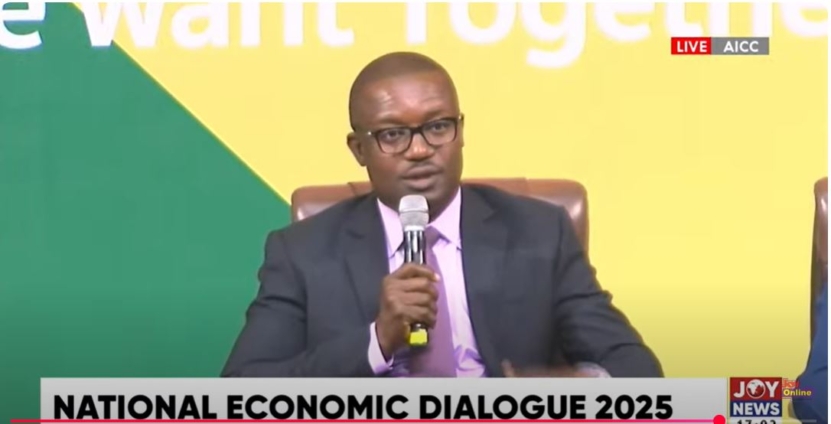
Speaking during Day 2 of the National Economic Dialogue, the minister warned that restoring the sector to stability would require clearing this massive debt burden.
“Today, the outstanding liabilities stand at about GH₵80 billion, and it keeps increasing. If we were to fully revive the energy sector, we would need to flush out this debt. Clearly, this situation is unsustainable,” he stated on Tuesday, March 4.
Beyond the existing liabilities, Mr Jinapor highlighted an even more concerning issue—the sector's monthly financial shortfall. According to him, “Our total bill, especially in the power sector, is about $170 million per month, but collections are less than $100 million. This means we are accumulating an additional $70 million in liabilities every month."
Mr Jinapor highlighted inefficiencies within the energy sector, citing financial indiscipline as a major concern. He noted that in 2023, the Public Utilities Regulatory Commission (PURC) approved $200 million as a capital expenditure cap for the Electricity Company of Ghana (ECG), but ECG ended up incurring $700 million, exceeding the approved amount by $500 million.
This excess spending, he explained, was not factored into the tariff structure, worsening the sector’s financial crisis.
The minister further emphasised the need for private sector involvement in managing the energy sector, warning that failure to do so could lead to its collapse.
He disclosed that some power producers have already shut down their plants due to non-payment of their bills, stressing that tough decisions must be made to prevent a total breakdown.
Mr Jinapor also called for an urgent transition from liquid fuel to gas for power generation, arguing that Ghana has stranded gas that is not being utilized, while the country continues to spend heavily on liquid fuel.
He revealed that the cost of liquid fuel this year alone is projected to reach $1 billion, whereas half of that amount could build a gas processing plant that would save the country $600 million annually. He maintained that constructing the plant is non-negotiable, as it would not only cut costs but also reduce corruption and waste in the sector.
Latest Stories
-
PRESEC, Augusco and Accra Academy battle for 2026 NSMQ crown today
6 minutes -
GH₵12 cement price increase: GPHA clarifies attribution to port congestion
8 minutes -
Pythagoras won’t balance your books
10 minutes -
Pay me by Sept. 11 or face the court – Kow Essuman demands salary, benefits from Finance Minister
29 minutes -
Bawumia’s destiny lies in the hands of God; not you – Muslim Forum for Peace and Unity replies Rev. Owusu Bempah
31 minutes -
NPP NEC meets today to discuss and approve party’s position paper on Constitution Review proposals
37 minutes -
Today’s frontpages: Thursday, September 10, 2026
44 minutes -
Ghana Garden and Flower Show returns on Sept 11 with focus on green jobs, business and wellbeing
45 minutes -
Titus-Glover camp says Mustapha Salam wasn’t pressured to withdraw from National Organiser race
47 minutes -
Ghana’s acclaimed Christian – Muslim unity bigger than Owusu Bempah’s hatred and bigotry – Muslim Forum for Peace and Unity
49 minutes -
Karpowership lights up young minds on International Literacy Day
59 minutes -
Banking sector NPLs fall to GH¢19.9bn as asset quality improves
1 hour -
Republic Bank Ghana, UPSA sign strategic MoU to advance professional development and industry-academia collaboration
1 hour -
MTN 30th Anniversary CEO Invitational Golf Tournament set to tee off at Achimota
1 hour -
Ghana woos Australian investors into critical minerals
1 hour